

Blogs & Editorials
Appeal to My Fellow Classical Architects: Current Government Threatens Architectural Heritage
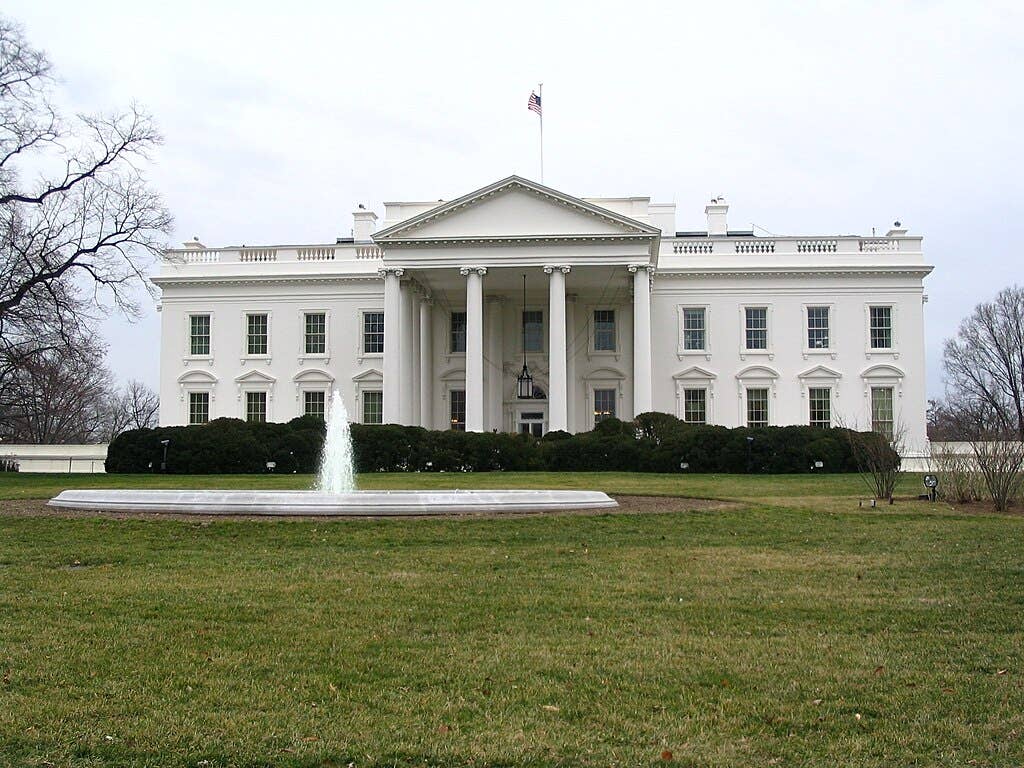
Like so many other aspects of contemporary American life, the issue of new classical architecture has become polarized and politicized, starting with the executive order signed by President Trump in his first term mandating that new federal buildings be primarily classical. In response, there were those who were opposed to any contemporary use of the formal language of antiquity on principle but the classical community itself was split on the issue: Some saw this as an opportunity to achieve the goal of reestablishing a classical building culture throughout our country. Like many of my colleagues, I wanted to yell from the rooftops, “If this were from any other president!” After the executive order was reinstated when Donald Trump returned to the White House, we all waited with bated breath to see what would happen.
The president himself took the initiative by proposing the ballroom addition, which many of us found too large and out of place at the time. Then, as we watched in horror, a series of revised schemes continued to grow in bulk and impact on the historic site. The East Wing was summarily demolished without public review or administrative approval. This led to lawsuits, including one against the president from the National Trust for Historic Preservation—something that would have been unimaginable had it not, in fact, happened.
Political or partisan disagreement aside, shouldn’t we be pleased to see a commitment to classical design at the top levels of the federal government? Wouldn’t the ballroom be a great way to initiate a new Golden Age of “The Grand Manner”? Yes, it would, except that the design of the building after the initial architect, James McCrery, stepped aside was seriously problematic precisely from the classical point of view.
Why the New Ballroom Doesn't Honor Classical Principles
Despite a veritable fiesta of Corinthian columns, the current ballroom design is not a convincing essay in the classical manner. The designers seemed to ignore the principles of the Renaissance treatises on architecture and elaborated in my book, The Architecture of the Classical Interior, published over twenty years ago. This isn’t about “following the rules;” one can simply compare the current design for the ballroom with many examples of classical refinement within walking distance of the White House to understand how disappointing the current design is. John Blatteau’s Benjamin Franklin Dining Room and Allan Greenberg’s Treaty Room and Secretary of State Offices (1985) in the State Department, John Russell Pope’s DAR Constitution Hall (1929) and Arthur Brown Jr’s Andrew W. Mellon Auditorium (1935), to name only a few, would show the designers how it’s done.
It is a generally accepted principle in historic preservation internationally that an addition to a historic structure should defer to the original building in size and scale so that additions do not absorb or overwhelm the historic part. This principle is enshrined in the government’s own policy on preservation, the Secretary of the Interior’s Standards for the Treatment of Historic Properties first issued in 1977. The ballroom proposal is a clear violation of that policy, proposing an addition that would dwarf the White House. The current bulk also removes the vista of the White House from the Capitol called for by Pierre L’Enfant’s 1791 plan for Washington. Architect McCrery tried, unsuccessfully, to reduce the volume but it seems that the current program vastly exceeds what could be built on the site while remaining deferential to the original building. The responsible approach would be to look for an alternative, such as the Treasury Building across the street, which, if thoughtfully adapted, would easily accommodate the proposed space without imposing on the President's House. I have never found convincing the arguments that such a space is needed for grand dinners and events—does the President of France have such a room in the Elysee Palace? Or the British Prime Minister at 10 Downing Street? But even if that argument were sound, this is the wrong site for it. Develop the ballroom space near but not on the grounds of the White House and spare the People’s House this inappropriate alteration.
While some will object to the proposal because it is classical, the current design is disappointing to me precisely from a classical point of view. In a setting that would have challenged the talents of a Carrere & Hastings or a McKim, Mead & White, where the greatest discretion and taste are required, the current design is simply incompetent. Its massive colonnades and arched windows are not only monotonous and heavy-handed, but they also destroy the balanced relationship between the original White House and its two wings. The colonnade and pediment on the east elevation are over scaled and asymmetrically placed both with respect to the overall elevation and with respect to the rooms behind them and the massive Corinthian colonnade wrapping the southern end of the wing (a useless portico without any access from the interior of the building) overwhelms the graceful South Portico of the original White House. Counterproposals by the National Trust show that a more appropriate solution is possible. In my view, the only responsible decision is to rebuild the East Wing largely as it was, at least with respect to its external appearance, and build the ballroom somewhere else.
We cannot ignore the new addition’s negative impact on the historic landscape of the White House grounds, painfully encroaching on the Frederick Law Olmsted-designed South Lawn and its elegant walks and driveways, especially at the southwest corner of the new wing. The designers also must find a landscape solution that does not destroy the Jacqueline Kennedy Garden. The entire park around the White House forms a consistent and beautiful landscape that should be respected as much as the residence itself.
“In my view, the only responsible decision is to rebuild the East Wing largely as it was, at least with respect to its external appearance, and build the ballroom somewhere else.”
As the ballroom scheme sparked a lively public debate, it was joined by others: First, an oversized and inelegant triumphal arch proposed to be built on the Virginia side of the Potomac. We are told the Arch is intended to be a national monument celebrating the 250th anniversary of our republic but why this particular form and site are appropriate expressions of the occasion has not been explained. If built, it would ruin the delicate balance between the Lincoln Memorial and Arlington House, a relationship that expresses our national reconciliation after the Civil War.
Second, we have watched the steady spread of polished gold leaf across the walls and moldings of the Oval Office, as if the White House were not sufficiently grand. As has been pointed out by many, the White House is the property of the United States, not of the president, and should not be subject to unilateral redecoration on the president’s whim, especially not in a way that radically changes its character and meaning.
Third, it was suggested that the imbalance between the new ballroom and the original White House could be eased by upgrading the Ionic order on the presidential residence to Corinthian by replacing the capitals, indifferent to issues of decorum, proportion, or historic significance. We now see, paradoxically, that the threat to our architectural heritage in Washington is not just from modernists or admirers of Brutalism, but now also from a group who claim to promote the classical tradition but are, at best, uncertain about what that might mean.
An Appeal to Classical Architects
And so I am making this appeal to those of you who consider yourselves classical architects and who are working directly or indirectly for the Trump administration: Some of you are esteemed professional acquaintances and some of you are my former colleagues or students at the University of Notre Dame. Whatever your academic or professional status, I appeal to you to distance yourself now from the federal government as long as it continues to threaten our architectural heritage and promote a false version of classical architecture.
I am asking you to step aside now because anyone who continues to be associated with the current government risks not only irreparably damaging their professional career and personal credibility but also risks complicity in the destruction of historic monuments and the classical culture that has seen a renewal over the last several decades. We must act now to defend the values of democracy and heritage conservation, or classical art and architecture will remain associated with this administration long after it has left the stage, as it inevitably must, but a true resurgence of the classical in the United States will have been rendered impossible.
And to those of you who have remained uninvolved with the current administration, it is time for you to join me in speaking out and letting everyone know that classical architecture is not owned by any one political party or set of policies. The classical way of building is an art form and a discipline thousands of years old and it deserves respect. I call on all of you to defend the classical as the architecture of democracy and traditional urbanism as the means to create a public realm worthy of a free people. Do not remain silent. Take back classical architecture now.
Designer, fabricator, finisher & installer of fine quality custom ornamental metalwork for a national market. Products include Stair and balcony railings, fences, gates, custom, metal doors & windows, lighting, grilles, canopies and more. Wiemann is a national sales representatives for Crittall Steel Windows. All cast & wrought-metal alloys, finishes & architectural styles. Since 1940.