


Blogs & Editorials
The State of Affordable Rental Housing: Nansledan & Stone Mill Lofts
Nansledan
Credit: Hugh HastingsI recently returned from the annual Arthur Ross Awards ceremony at Cipriani in New York—a high-profile black-tie affair produced by the Institute of Classical Architecture & Art. Dinner guests included a who’s who of the traditional design and building world, many of them readers of Traditional Building. The event feels a bit like the Academy Awards for classicists.
Designers, artists, artisans, and educators were celebrated for exceptional work, much of it commissioned by the very wealthy.
Less widely known, however, is the ICAA’s accompanying symposium on affordable housing, where the Raymond L. Gindroz Award is presented. The prize honors organizations, firms, and projects that demonstrate excellence in affordable housing through the use of traditional and vernacular design principles.
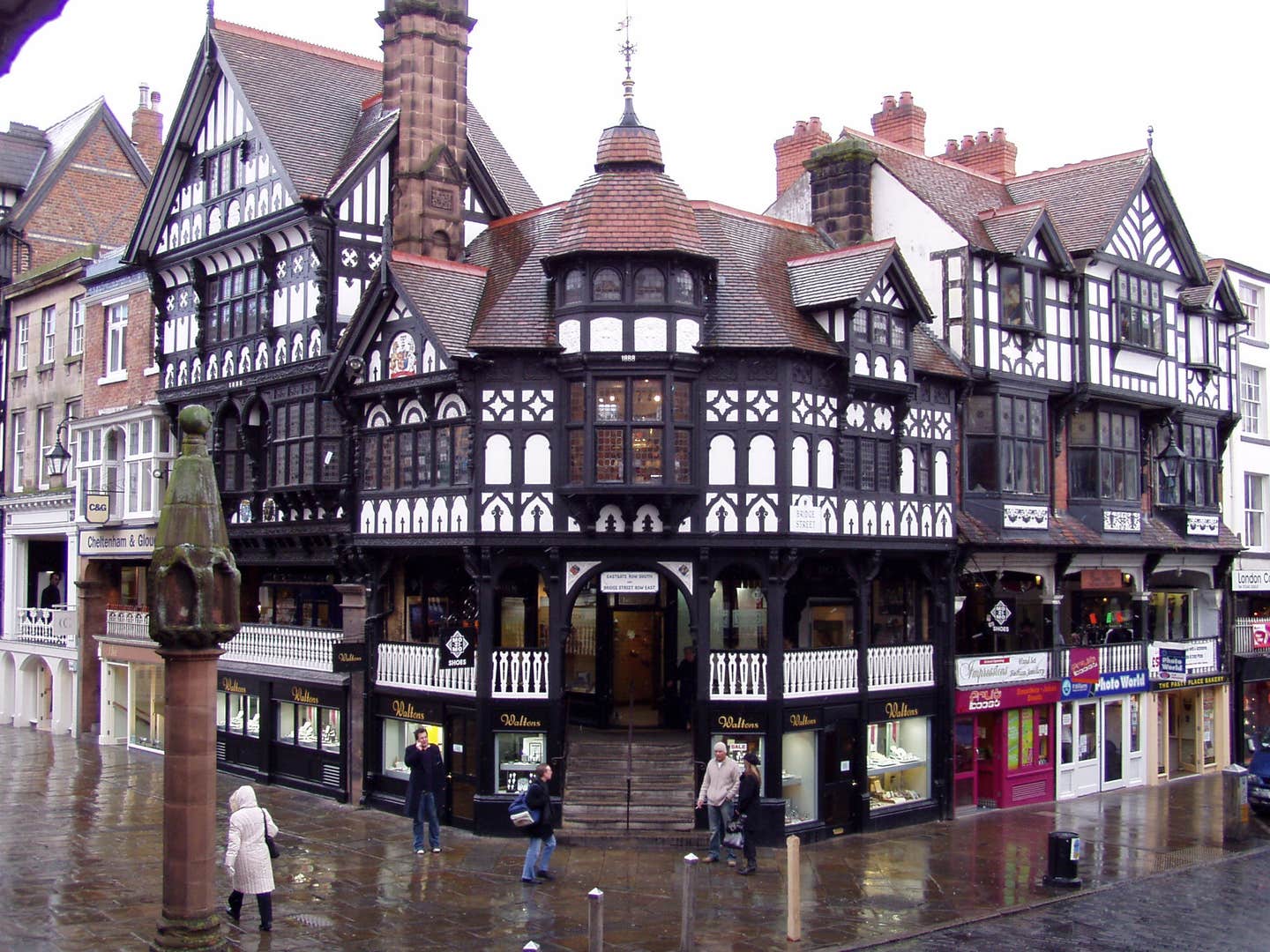
Last year’s winner was Nansledan, a mixed-use development in southwest England designed by master planner Hugh Petter of ADAM Architecture.
Thirty percent of Nansledan is dedicated to affordable housing within a broader plan that will eventually include more than 4,000 homes interspersed among elegant, multi-colored residences lining pedestrian-first streets. The defining feature of the project is the integration of high- and low-priced housing rather than their separation. It is also a live-work community designed to encourage walking, interaction, and social diversity.
“Classicism cannot just be for the rich,” urban planner Andrés Duany has said. Classical principles—contextual planning, familiar vernacular forms, and durable local materials—can be successfully applied to affordable housing as well.
The Institute of Classical Architecture & Art deserves credit for recognizing the importance of affordable housing through the Gindroz Award and symposium. Architect Donald Powers of Union Studio summarized the goal succinctly: “Affordable homes should be normal-looking homes that help residents feel dignity, ownership, belonging, and community.”
Affordable housing is often rental housing, a market segment that surged during the pandemic but has since cooled, according to recent research from Harvard’s Joint Center for Housing Studies.
“The most recent data from RealPage showed a 36% year-over-year decline in fourth-quarter starts for professionally managed apartments,” the report notes, “potentially signaling a broader slowdown on the horizon.”
The decline is attributed partly to reduced federal funding for affordable housing and partly to an over-built apartment market of 996,000 in 2023. The report also points to rising construction costs: “Between January 2022 and December 2025, the prices of all material inputs to new residential construction increased 42%, dwarfing the 7% growth between 2014 and 2019. Additionally, the employment cost index for private industry construction workers was up 24%.”
New urban planners and traditional designers often approach affordable housing differently from historic preservationists, though both are motivated by similar civic concerns. An excellent example of the preservationist approach is Stone Mill Lofts in Lawrence, Massachusetts, an adaptive reuse project by WinnDevelopment involving the 200-year-old Essex Machine Shop building. The $39.2 million, 149,220-square-foot redevelopment created 86 mixed-income rental apartments, including 17 market-rate units.
The project qualified for state and federal historic tax credits by preserving the granite fieldstone exterior, replacing the slate roof in kind, and restoring the original windows.
“We wanted the building to look like it did when it was first constructed,” project architect Scott Maenpaa explained. “We wanted to bring out its natural beauty without adding too many new elements.”
Inside, The Architectural Team of Chelsea, Massachusetts, balanced energy efficiency, livability, and historic preservation by leveraging the building’s natural insulation while retaining original wood beams, trim, and polished slate floors.
In addition to one-, two-, and three-bedroom apartments, Stone Mill offers a notably generous range of amenities, including shared lounges, work-from-home spaces, a children’s playroom, fitness center, laundry facilities on every floor, outdoor terraces, and thoughtfully designed landscaping.
Along with historic tax credits, WinnDevelopment received $2.8 million from a regional rebuilding fund, along with support from MassHousing, the City of Lawrence, and Massachusetts’ Executive Office of Housing and Livable Communities.
This type of layered financing reflects a broader reality identified in Harvard’s rental housing report: as federal support contracts, state and local governments increasingly must fill the gap.
Stone Mill in Massachusetts and Nansledan in southwest England demonstrate that thoughtful traditional design and historic preservation can—and should—serve people across the socioeconomic spectrum.

Designer, fabricator, finisher & installer of fine quality custom ornamental metalwork for a national market. Products include Stair and balcony railings, fences, gates, custom, metal doors & windows, lighting, grilles, canopies and more. Wiemann is a national sales representatives for Crittall Steel Windows. All cast & wrought-metal alloys, finishes & architectural styles. Since 1940.