


Projects
Temples by the Sea: Greek Revival in Southeastern New England
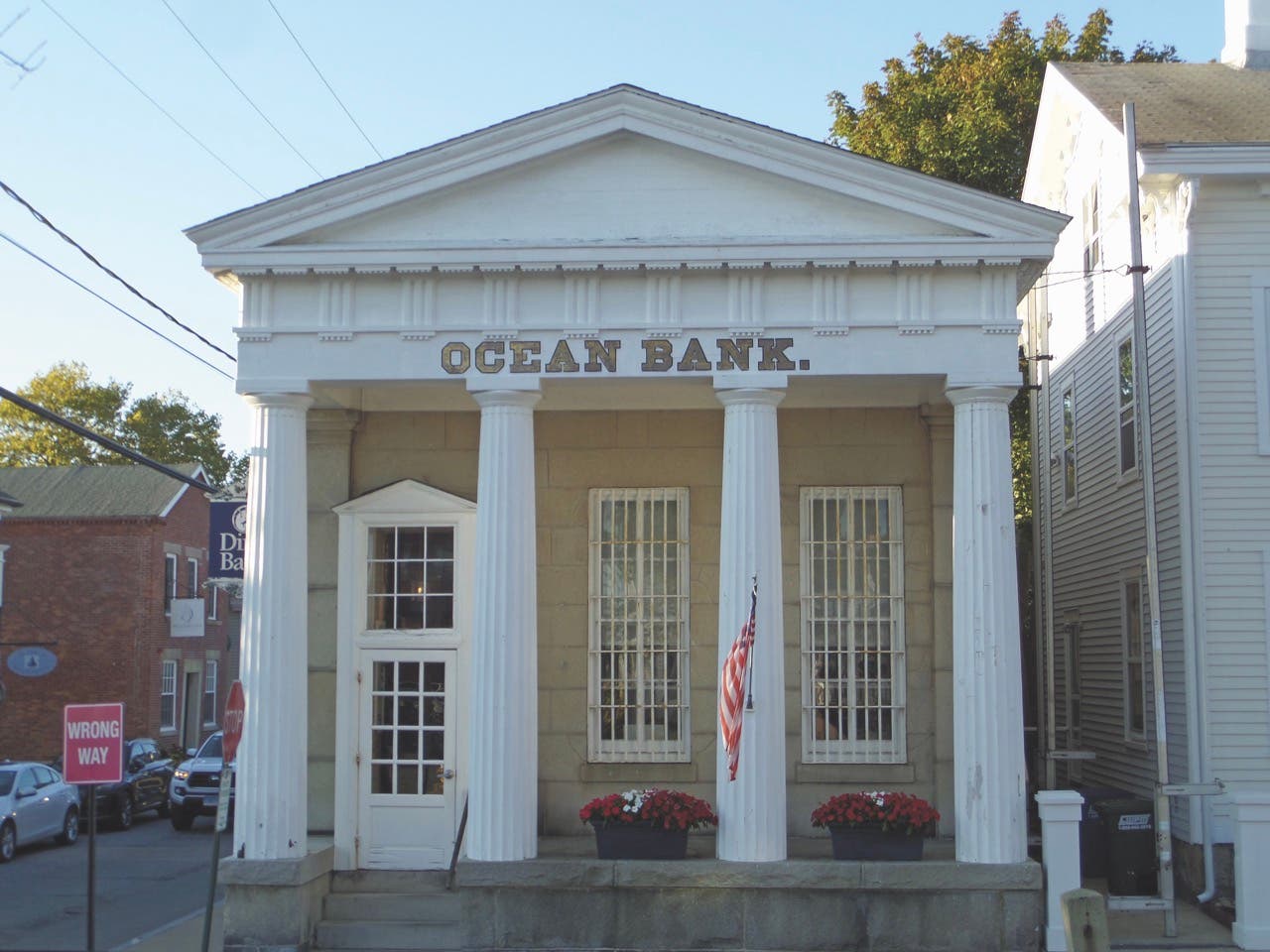
Ocean Bank (1851).
The granite walls and doric columns and entablature is a
masterwork of Greek Revival proportion and detail.
How did a two-thousand-year-old building tradition makes its way across three thousand miles of ocean and express itself on the shores of southeastern New England? It is a tale of cultural idealism and architectural pragmatism. In the decades between 1820 and 1860, the United States was a new republic born of Greek democratic ideals and Roman law. It was a nation occupied by European settlement with ties to the old world but keen on establishing a new identity. The ancient temple served as the template for an architecture based on the past and adapted to local climate, materials, and construction methods. While used for so many building types from courthouse to warehouse, it is in the private realm that the Greek Revival assumed its most popular and long-lasting form: the private house. Whether a grand mansion or a simple cottage, the style proved to be adaptable and affordable. One could dwell in a temple at almost any price.
The Greek Revival determined the appearance of the new capital at Washington, DC and could be seen from Maine to Mississippi and the Mid-West. In the 1820s, Greece fought and gained its independence from the Ottoman empire, a cause much celebrated in America, where many saw similarities with their own break with Great Britain only a few decades before. If one did not have the desire or the funds for elaborate columns, one could still have a temple, of sorts. The minimalist white box, turned with its triangular gable end facing the street and raised boards at the sides could mimic a temple. Frame the front door in solid planks and one inferred an ancient form. Asher Benjamin’s books, such as The Country Builder’s Assistant (1797) and The Architect, or, Practical House Carpenter (1830) provided useful guides to the local builder for adapting Greek forms and details to a variety of architectural types. This article focuses on the maritime communities of southeastern New England as a case study in the flexibility of this manner of design to suit the needs of powerful merchant or the more modest craftsperson. Three prosperous ports on the south coast of New England, with protected harbors warmed by the waters of the Gulf Stream, are the basis of this tale: Stonington, Connecticut; Westport, Massachusetts; and Bristol, Rhode Island. In each of these seafaring communities, all experiencing significant economic growth in the early 1800s, the Greek Revival played a major role in determining the character of place.
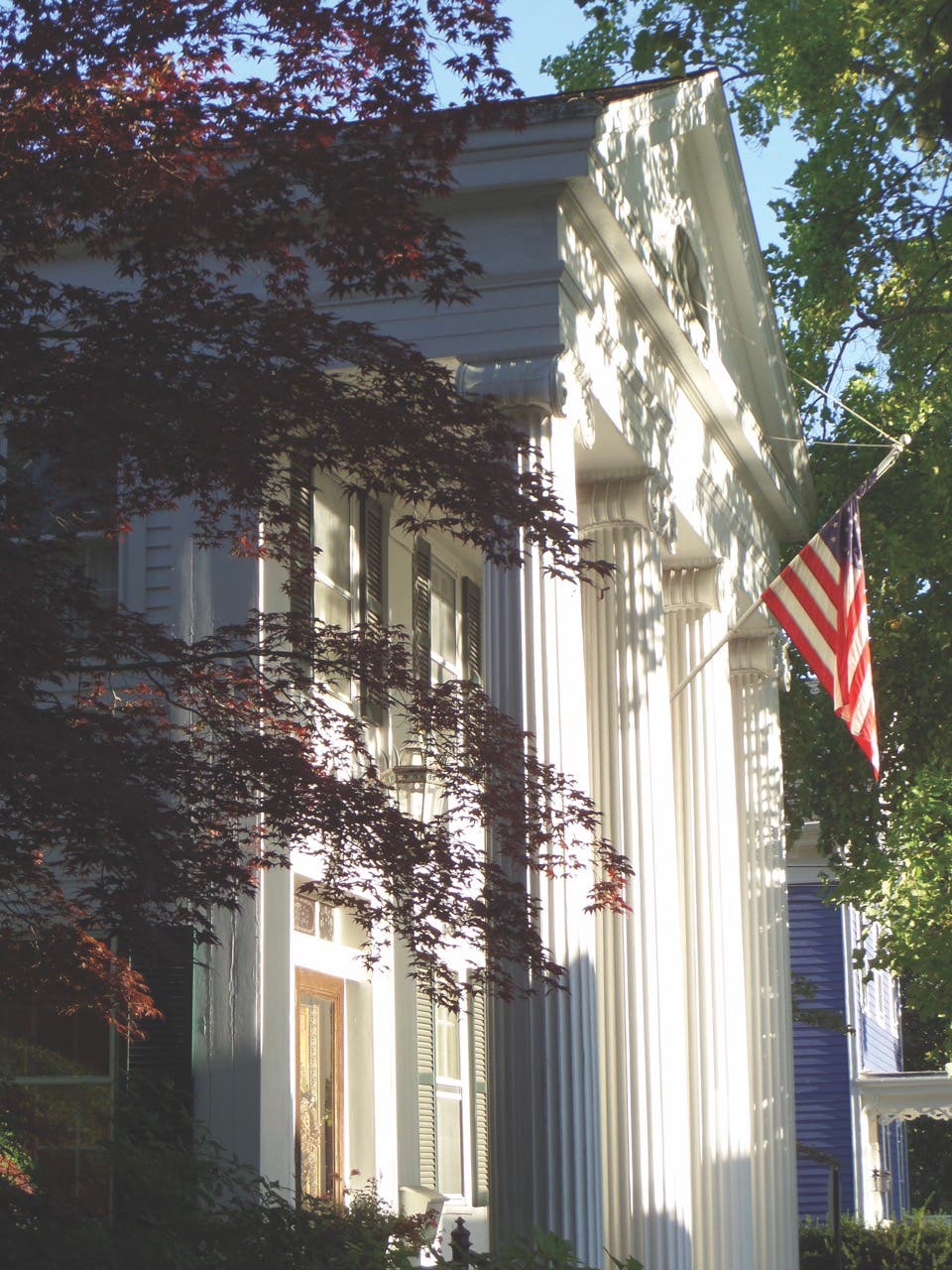
capitals of the ionic order define the classical portico of this
grand house on Main Street.
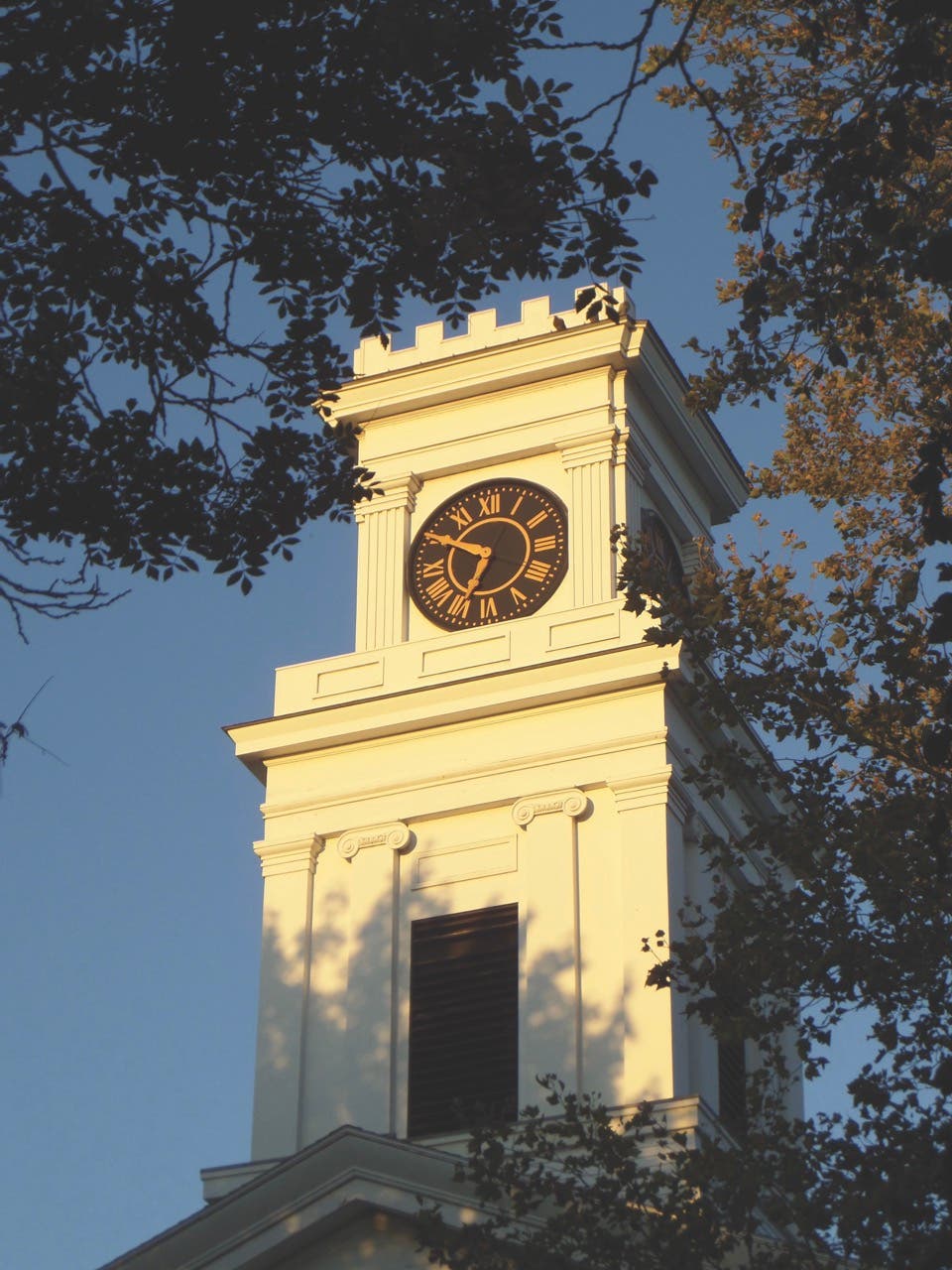
Church of Stonington in 1950. A combination of ionic
pilasters, the tower is Greek Revival, but with the hint of an
emerging style, the Gothic Revival.
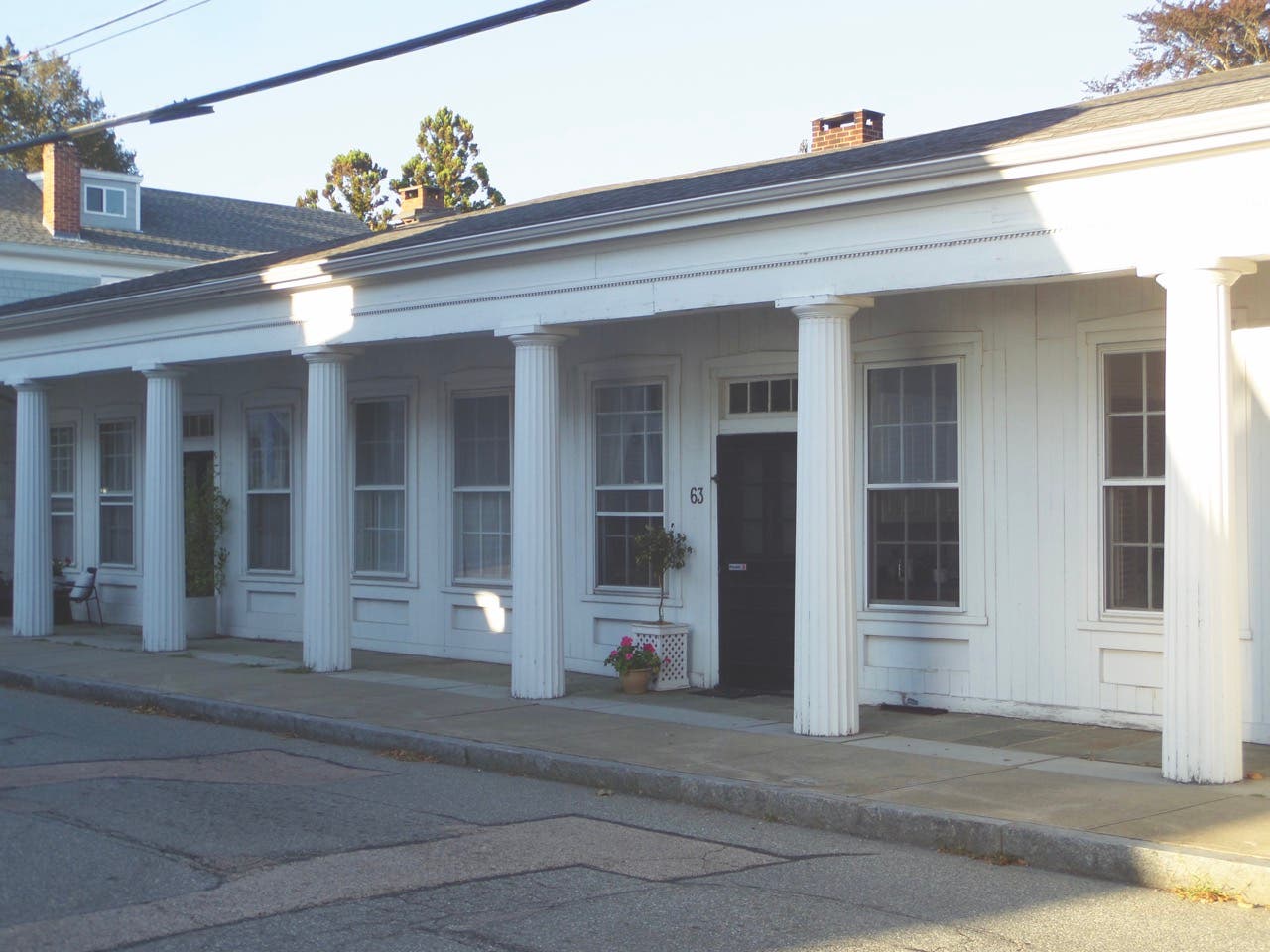
colonnade lining a row of residences and shops, reminiscent
of the stoas, or galleried halls, of ancient Greec
Stonington, Connecticut, established in 1649 on lands of the Pequot peoples, rose first as a port for seal hunting and whaling. With the appearance of the railroad, the village became a stop on the main route between New York and Boston. Wealth and civic pride were expressed in the Greek Revival for major buildings, such as the Customs House, banks, and churches, and lavish mansions and modest dwellings. Built in the Doric style, The Arcade (1837) is a series of small shops and residences inspired by the galleried Greek stoa. This one story columned-lined building is not typical of the Greek Revival, reflecting a free approach to adapting ancient models to contemporary use. Opulent houses for Charles Phelps Williams House (1840) and William Pendleton House (1846-48) are monumental in scale marked by Corinthian columns with refined acanthus leaf ornament.
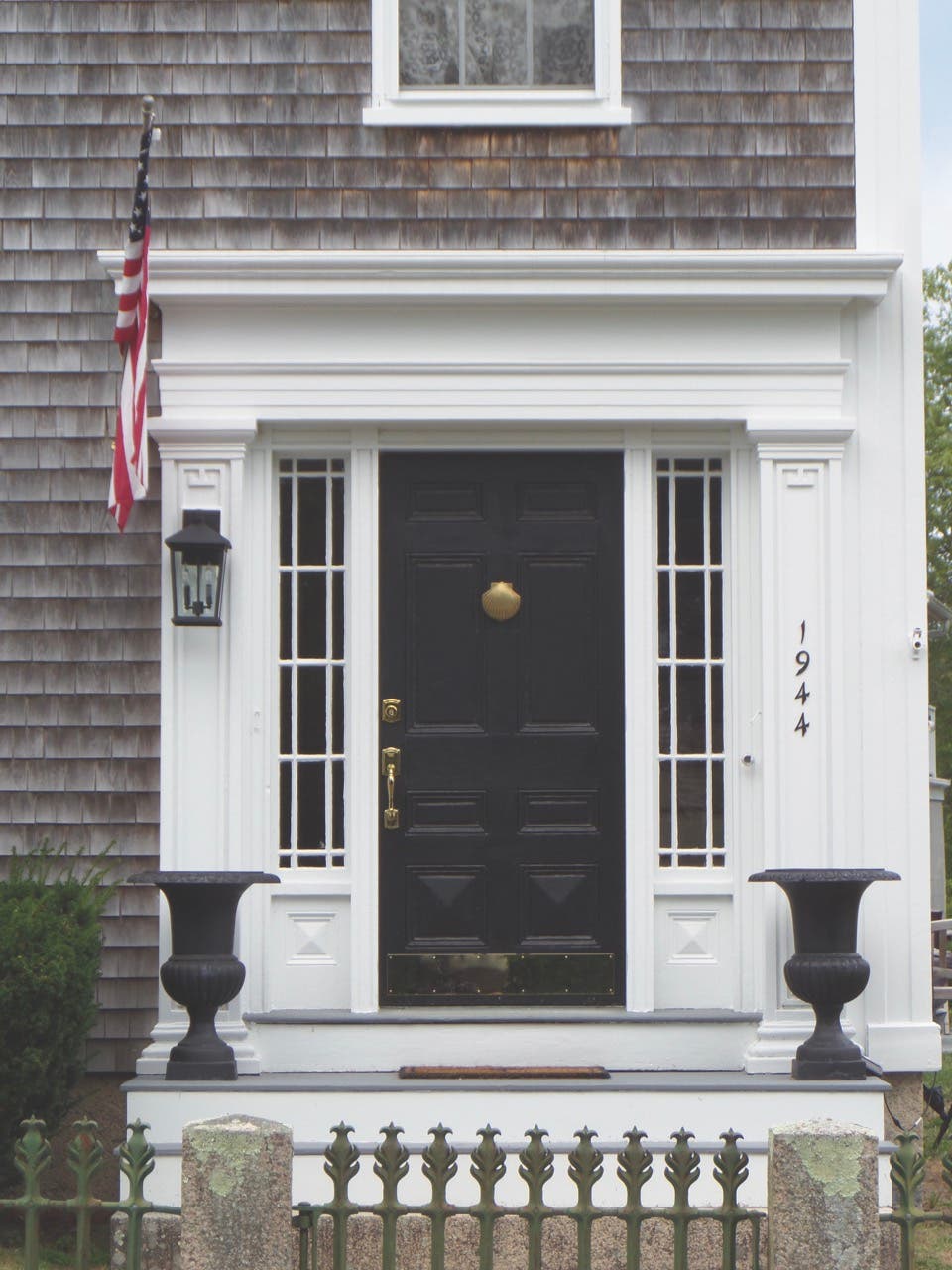
simple shingled house is ennobled by the application of pilasters.
The unadorned layering of wooden planks and framing details
create a classical entry at modest cost.
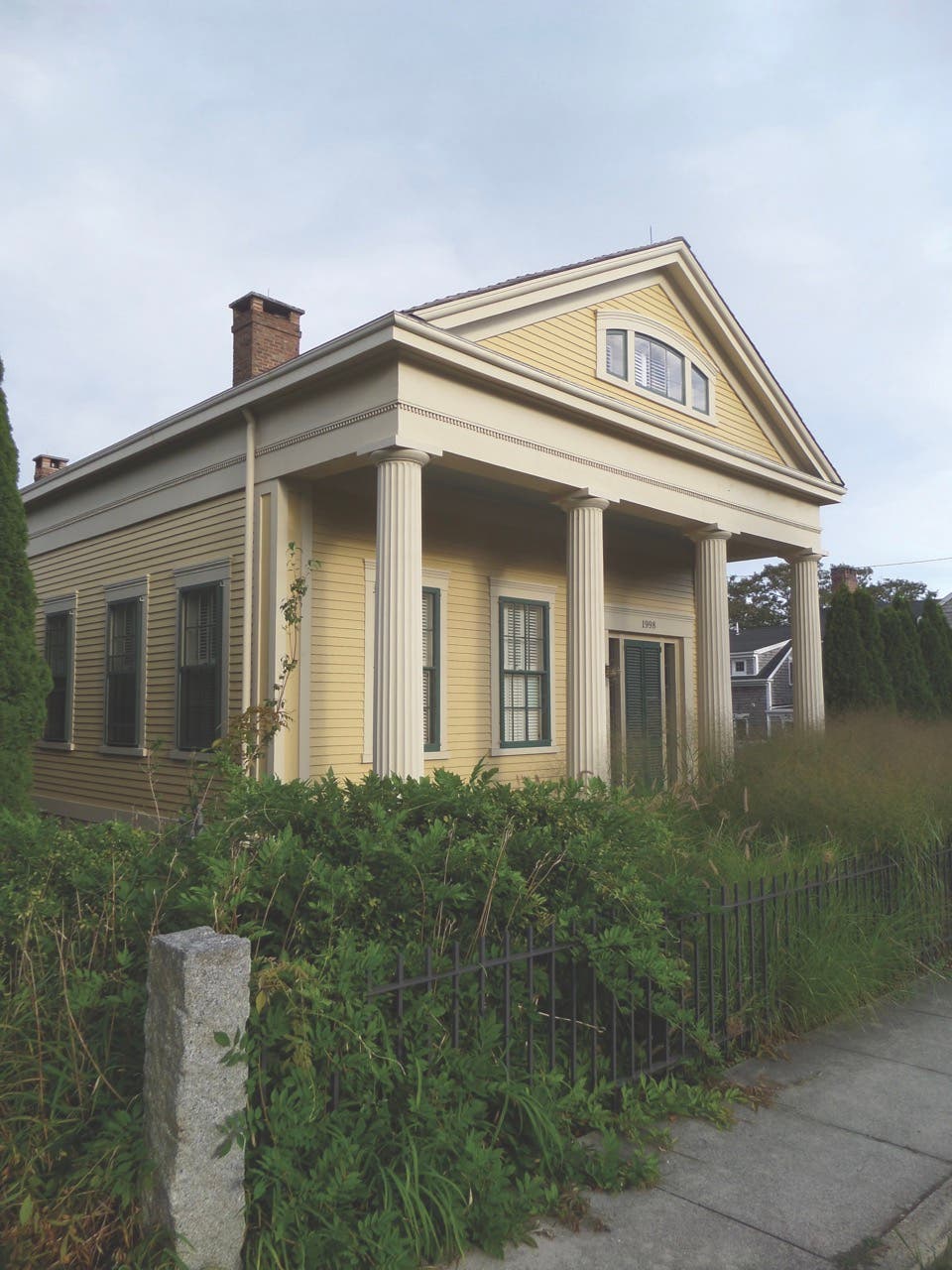
structure with a grand effect, this one story temple in Westport
sports a Doric portico.
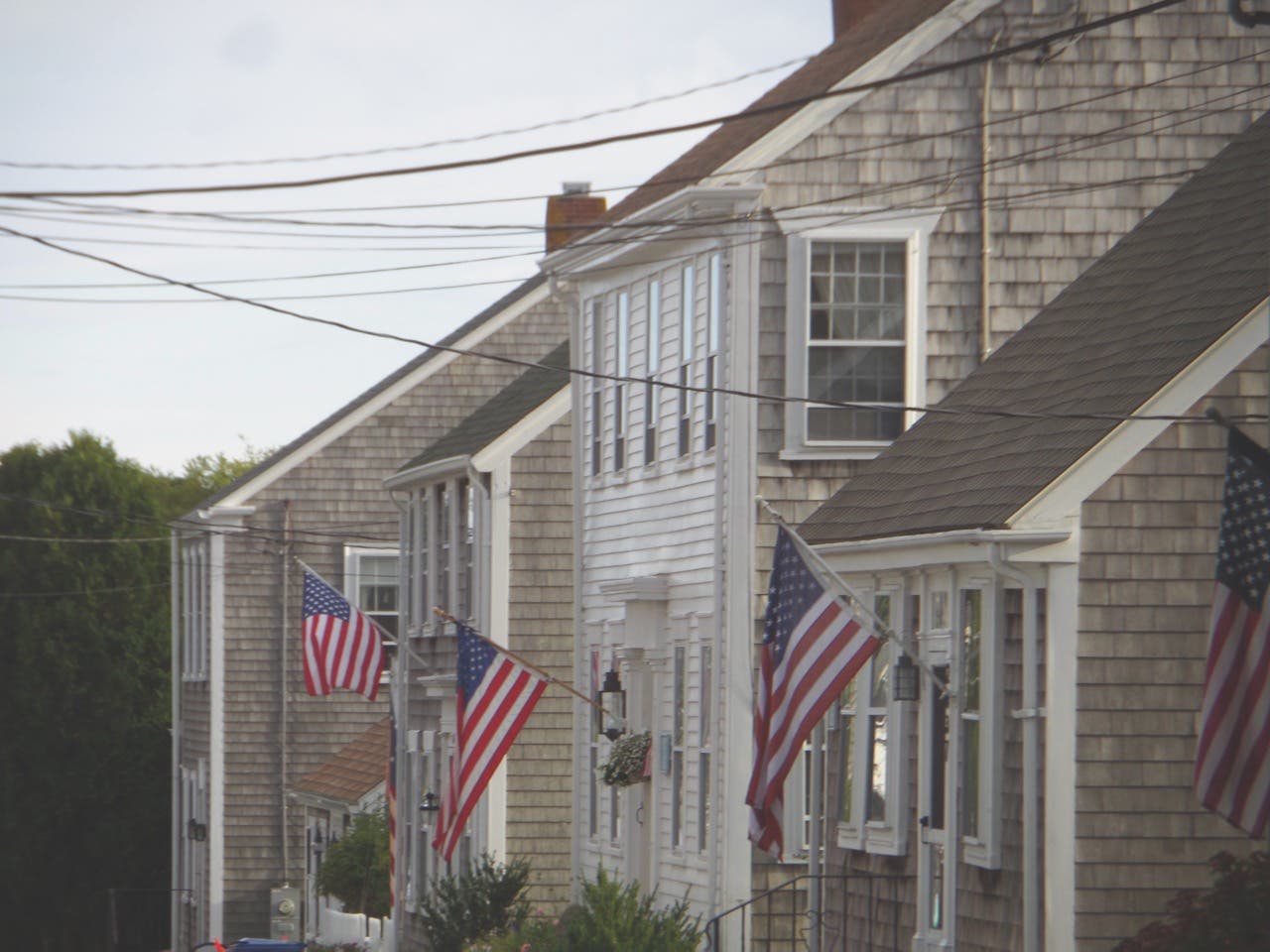
strong wooden cubic houses with shingled facades, or clapboard
if one wanted to spend more on a dwellin
Westport Point, Massachusetts, settled in the 1650s, rich in farmland and salt water inlets abundant in shellfish, made its living on agriculture, fishing, and whaling. Set on a narrow peninsula bounded by the waters of two branches of the Westport River and sheltered from the Atlantic Ocean by barrier beaches, flourished as a fishing village. A single street contains the houses of fishermen, carpenters and maritime suppliers. One house is a plain cube while another is of the same scale but with a Doric colonnade and pediment. Small did not mean one could not have august architectural forms. The house of Captain Charles Ball and Ruth Wilcox (1839) is diminutive in scale but still displays a Doric style portico topped by a pediment, a temple in miniature.
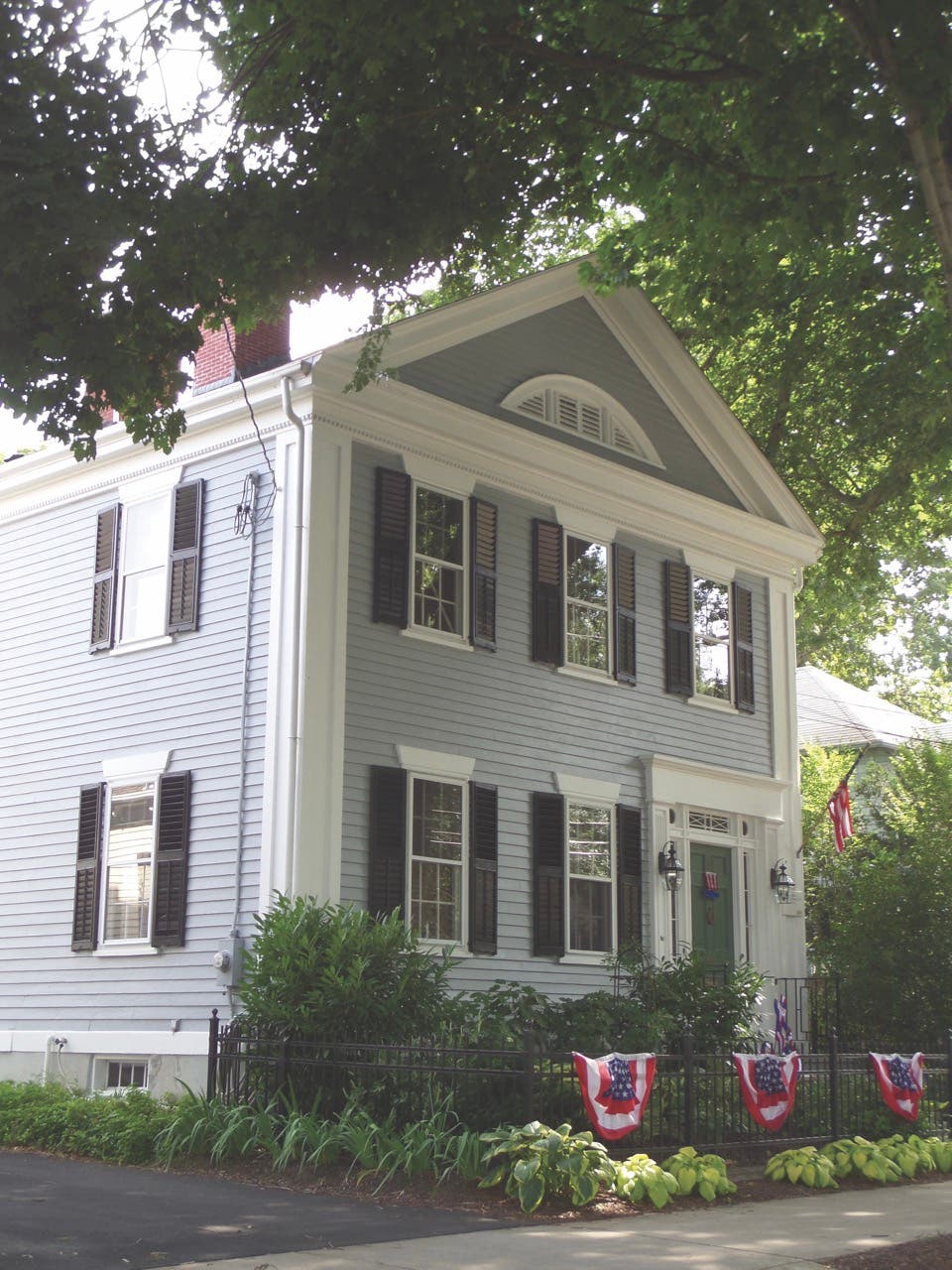
end comprises the main façade and creates the effect
of a classical temple form without the expense of a
columned portico topped by a triangular pediment.
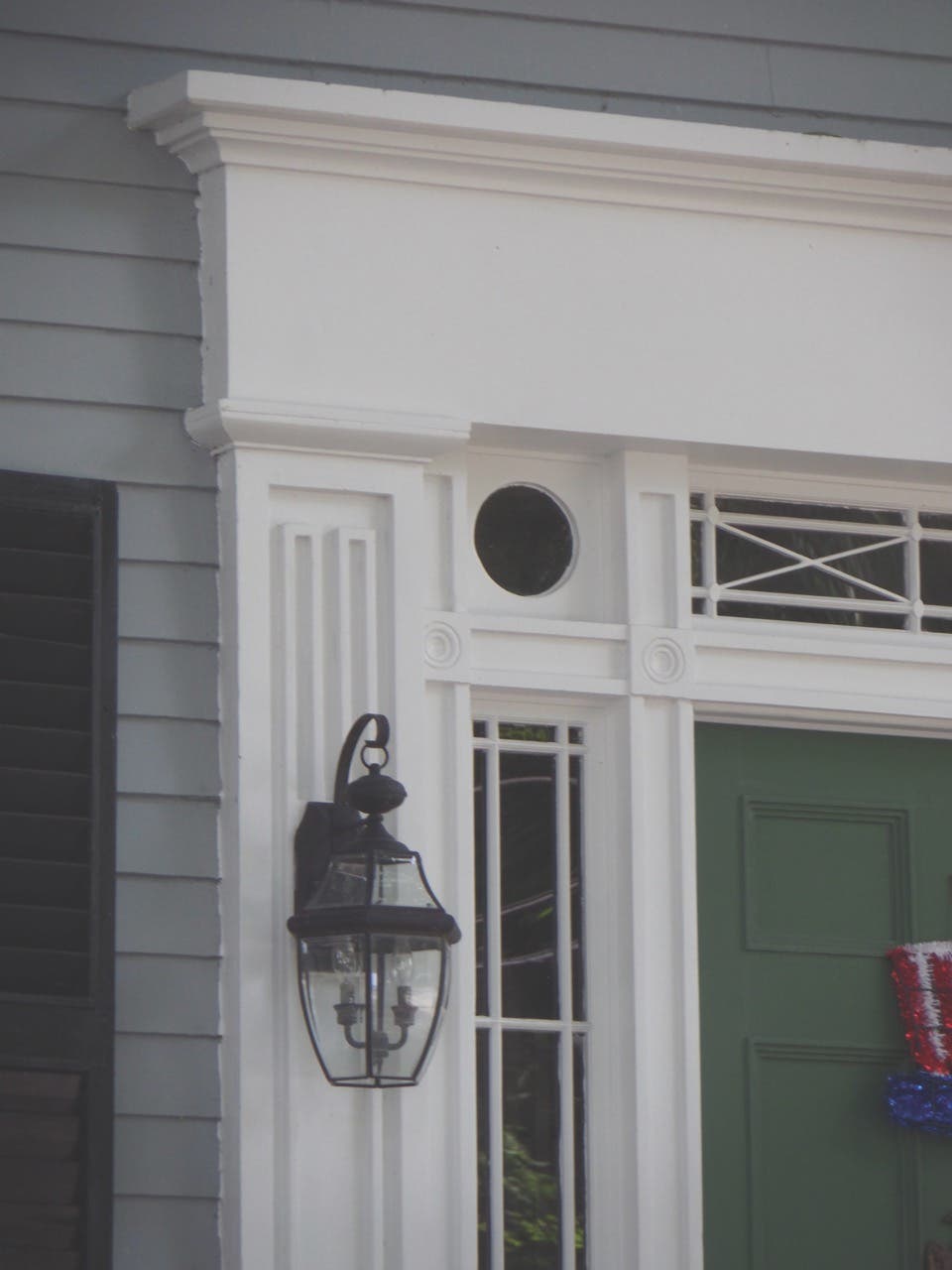
(ca. 1850). As the focal point of a house, the door
frame became the canvas of Greek Revival detail,
seen here in half columns adorned with thin slats of
wood arranged in version of a Greek key pattern
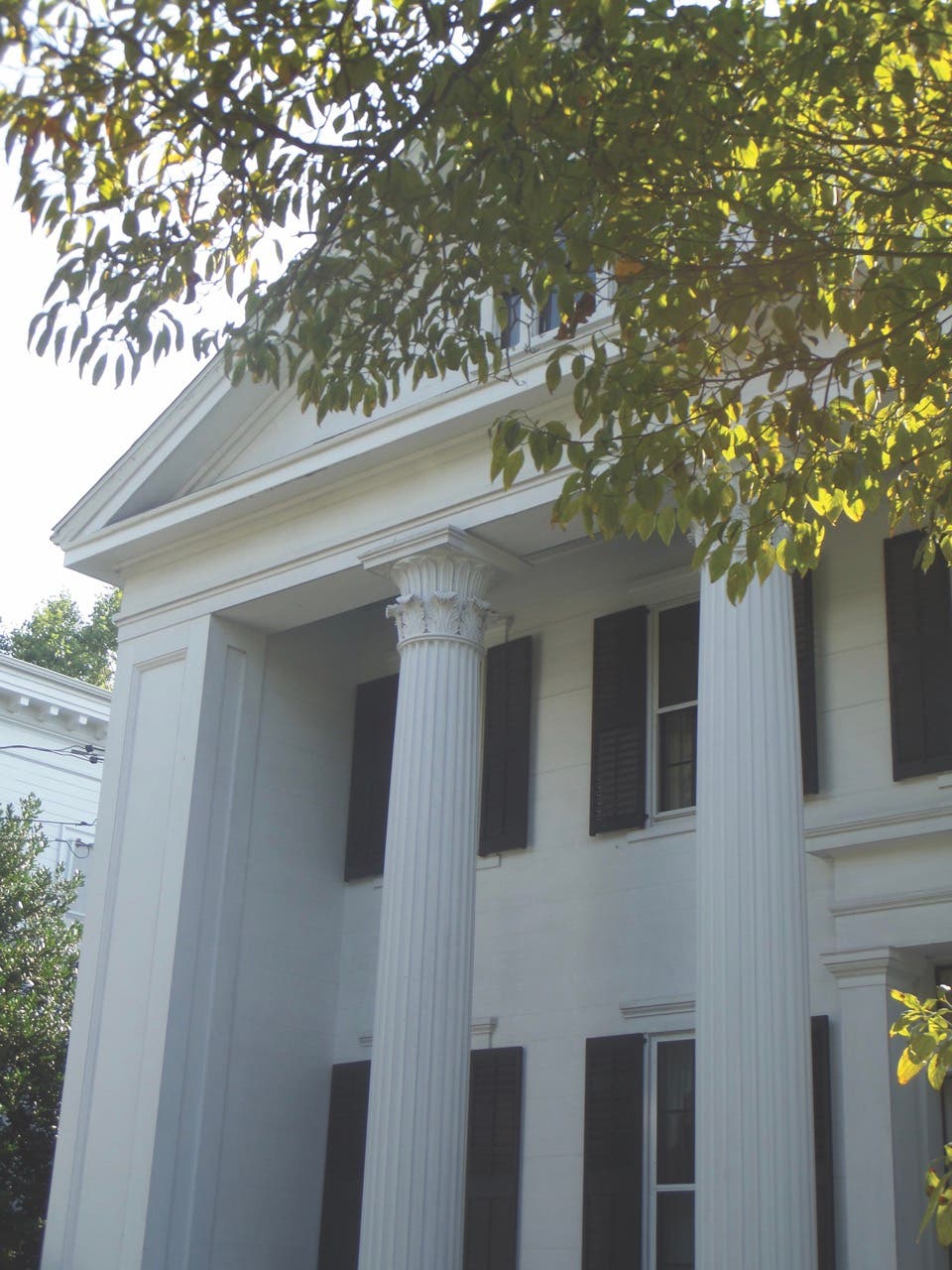
House (1838). A high style house for a major figure in
Bristol’s maritime life.
Founded in 1680 as a port on Mount Hope Bay in Rhode Island, Bristol retains its original urban plan, an orderly grid with a town common and wharves lining the waterfront. Rich with the proceeds of sea trade, and for some the wealth accrued from the darker side in the enslavement of Africans, the townsfolk had the means to build well. The Josiah Talbot House (1838) by Russell Warren expresses the combination of cultural sophistication with economic common sense. A basic rectangle in wood, as with so many other Bristol houses, with clapboard on its side and rear facades, it reflects the straightforward building practices of the 18th century right up to the early 1800s. However, its main facade speaks of noble intentions. Two columns, with capitals based on those at the Tower of the Winds in Athens, are set “in antis,” within the body of the structure. Majesty is achieved by this insertion of two columns. Captain Talbot had his temple. He could have had a house with four columns, like his neighbor to the south, but he chose the more affordable path, achieving an August appearance to his abode with two beautifully carved columns. The Tower of the Winds was an often-illustrated image at the time and had far reaching influence in the United States.
Noble cultural associations and adaptable craft practices made the Greek Revival and enduring manner of design and construction. What began as the style of a nation immersed in agricultural and maritime commerce, also served as the style for a burgeoning industrial society. By the 1840s, the romantic styles of the Gothic Revival and Italianate entered the scene but they did not entirely displace the Greek Revival, which remained popular through the 1860s. This is a testament to the appeal of its cultural symbolism and the application of its architectural pragmatism. TB

Supplier of molding: Stock & custom moldings for residential & commercial projects; embossed moldings, custom millwork, mantels, entrances, cabinet & panel work, custom doors.