

Religious Buildings
A Small Church Saves a Masterpiece: Restoring Pyzhov’s Russian Orthodox Frescoes in New York
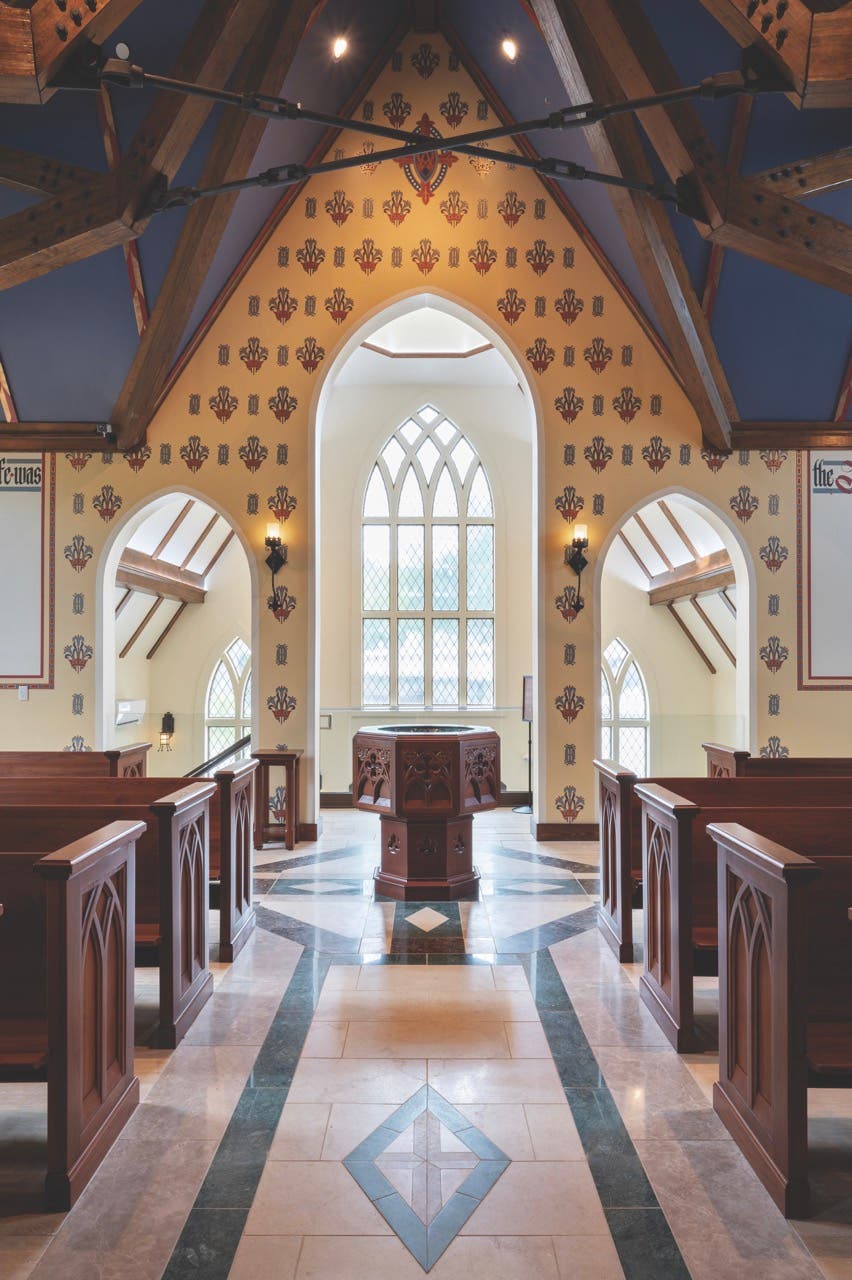
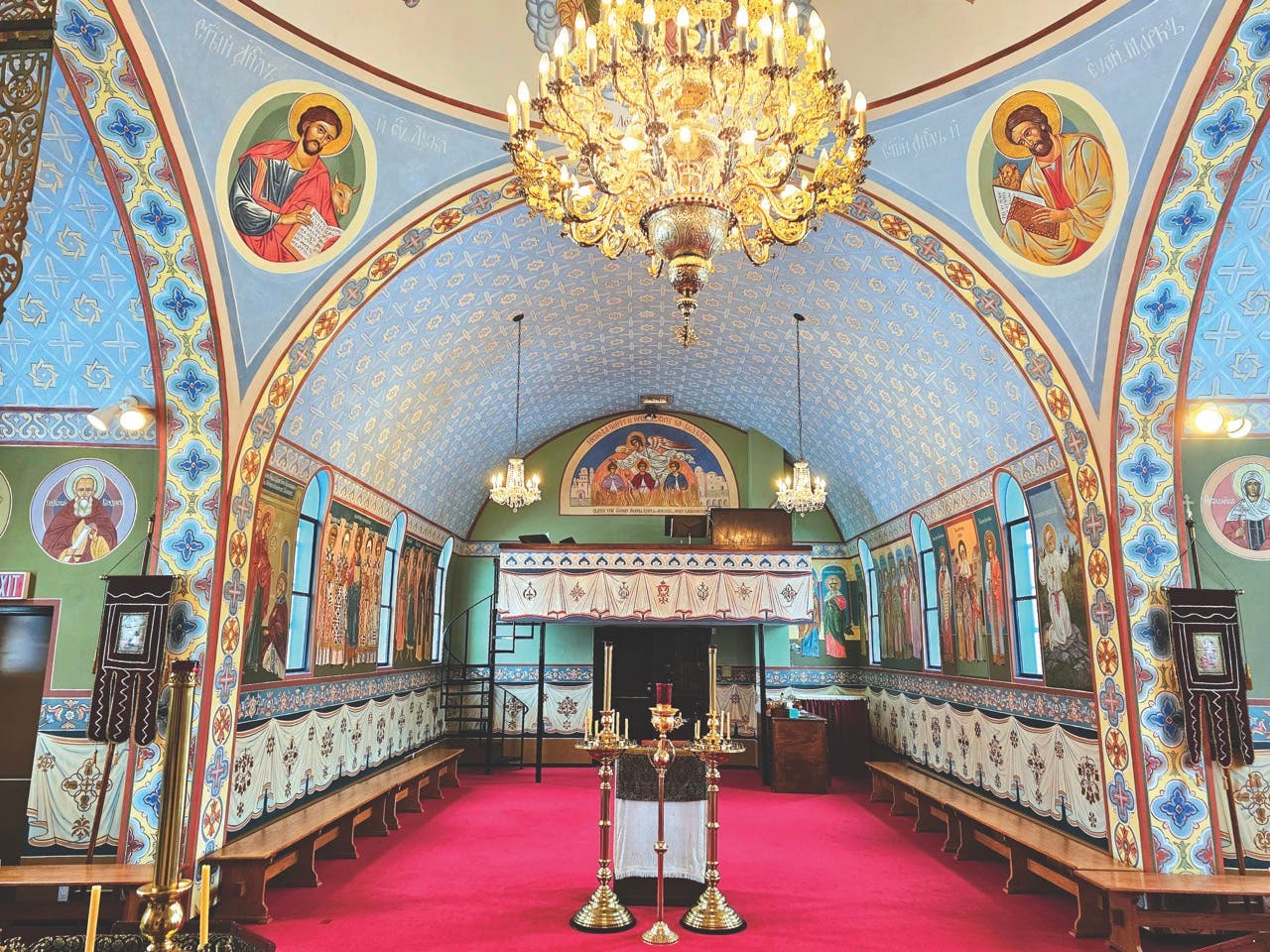
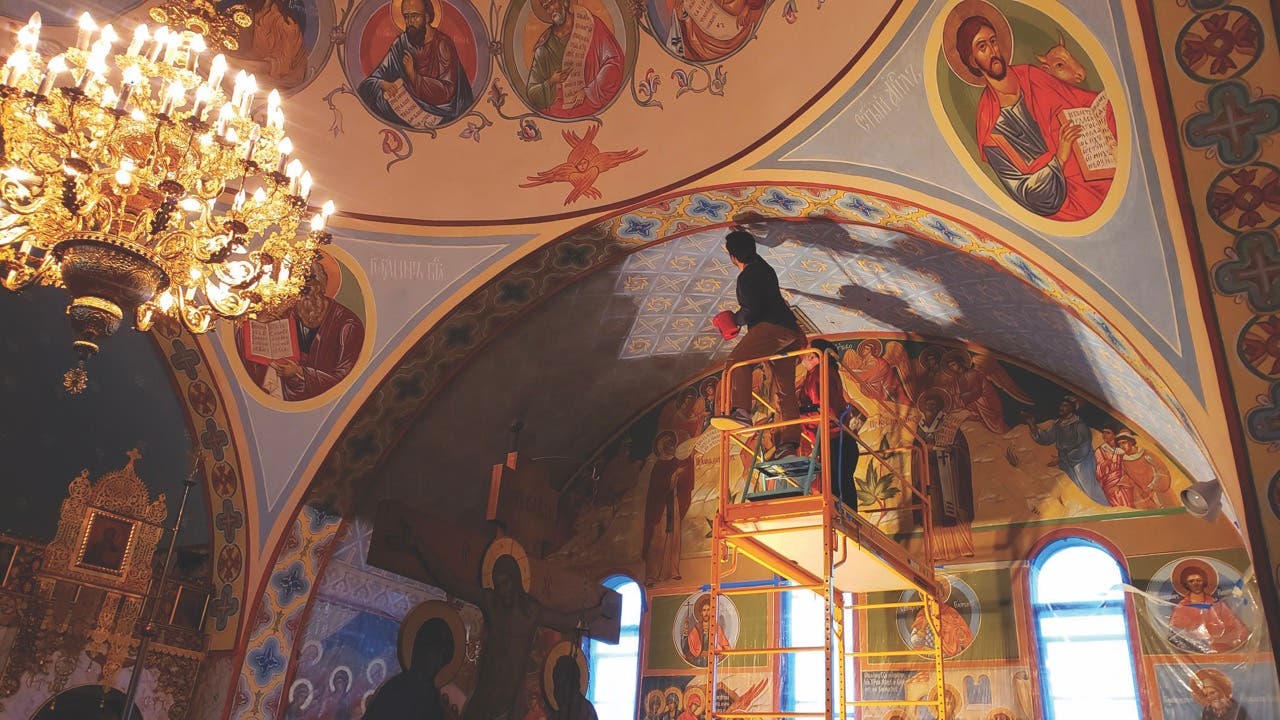
Frescoes in the Entrance into the Temple of the Theotokos in Jamesville, N.Y. were created by Archimandrite Cyprian Pyzhov.
Shakespeare said it first: “Though she be but little, she is fierce!” But we’re not talking about A Midsummer Night’s Dream here. Instead, we’re admiring a tiny Russian Orthodox community in Jamesville, N.Y., one that’s stepped up boldly to protect its artistic legacy.
With a congregation of just 60 members, the church known as the Entrance into the Temple of the Theotokos has restored the work of one of the most celebrated iconographers of Russia’s 20th-century diaspora.
The 2,000-square-foot church dates to the late 1970s. It was designed and built in the basilica style by Italian architects and artisans from nearby Syracuse. And its frescoes are the work of an artistic virtuoso.
They were created by Archimandrite Cyprian Pyzhov, a devout artist inducted into the clergy in 1937. He was born into Imperial Russia in 1904, studied at the Montparnasse School of Painting in Paris, then worked on churches across Europe. Wars and health issues kept him on the move around the world until the 1950s, when he settled in Jordanville, N.Y. There, he would live and paint until his death in 2001.
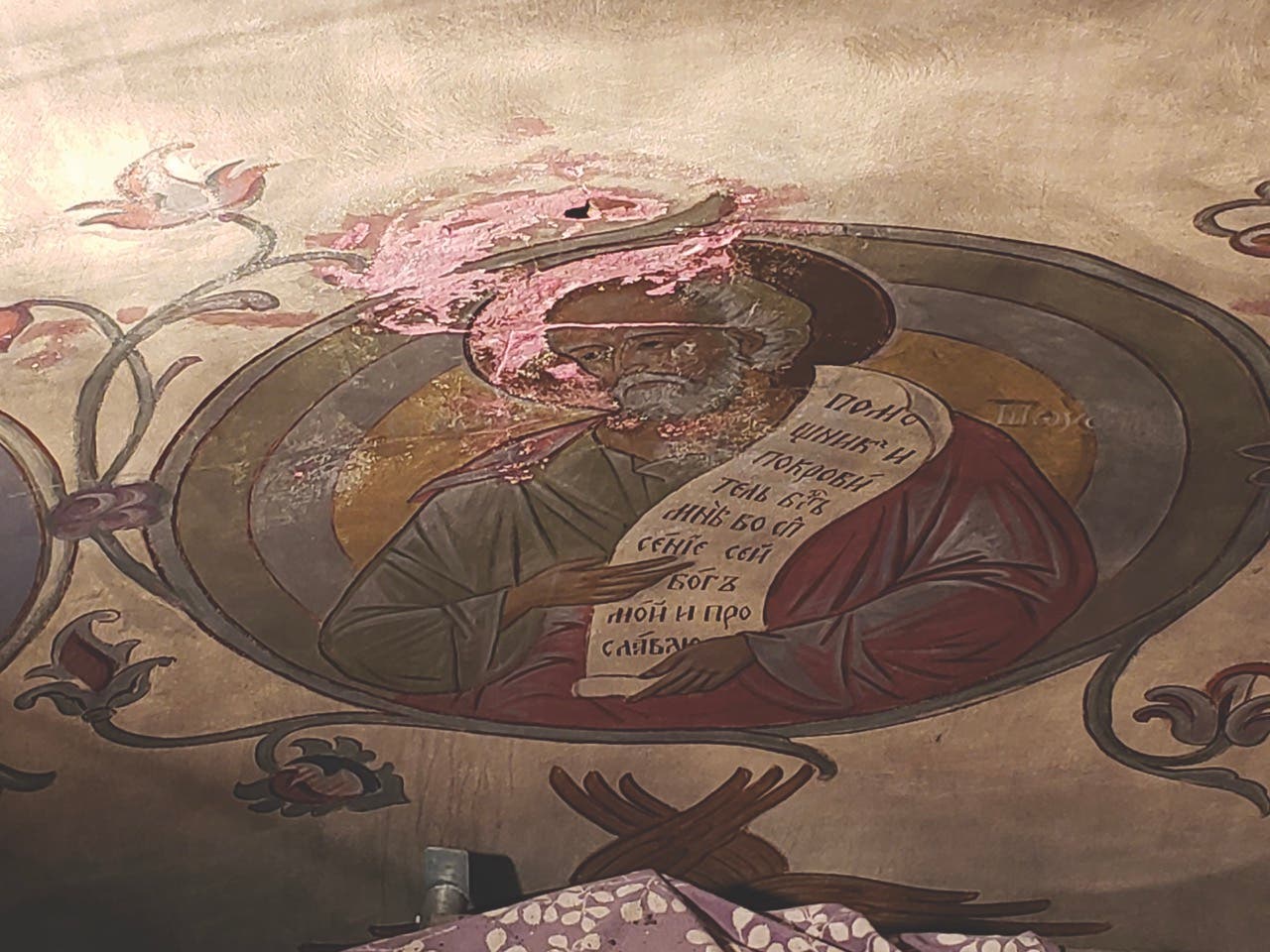
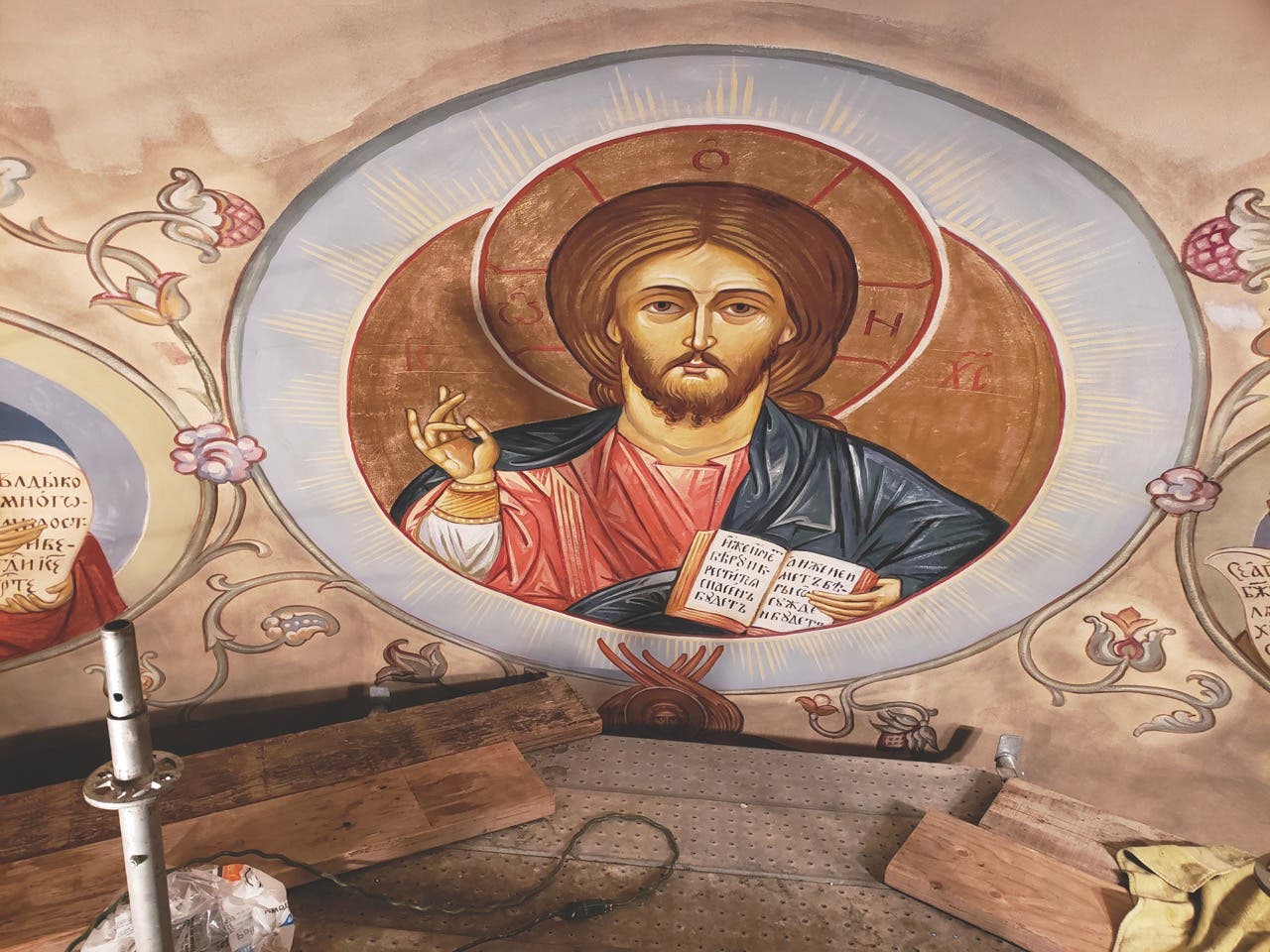
At the Entrance into the Temple of the Theotokos, his work graces the interior with images of Christ, the Russian saints, and one of the first martyrs of the Russian Revolution. “Like many Orthodox churches, it’s wall-to-wall murals,” says Victoria Jean Bingham, founder of Fayetteville-based Buon Fresco, the firm responsible for the restoration. “But these are not just any murals– they are the work of what was arguably the most important iconographer in the world at that time.”
Alas, his frescoes would not endure. By 2020, 50 years of smoke, soot, settling, and water had taken their toll, and the church began seeking out professionals to restore them.
“Orthodoxy in the U.S. remains a small number of people, so they were reaching out, calling around, and checking in with questions about others who had been used for restoration,” says Father John Malcom, current cleric of the church. “It’s a word-of-mouth type of endeavor, and iconography is so special, particularly in frescoes of this scale.”
As it turns out, a Buon Fresco van painted with murals on both sides was spotted in a grocery store parking lot and sparked the restoration. A phone call to Buon Fresco ensued, and a low-six-figure estimate spurred two years of fundraising to finance the work.
Eighty percent of the funds came from the estate of Mr. and Mrs. Nikolai Emeliano, who’d been members of the church for more than 40 years; the rest came from a series of smaller doners.
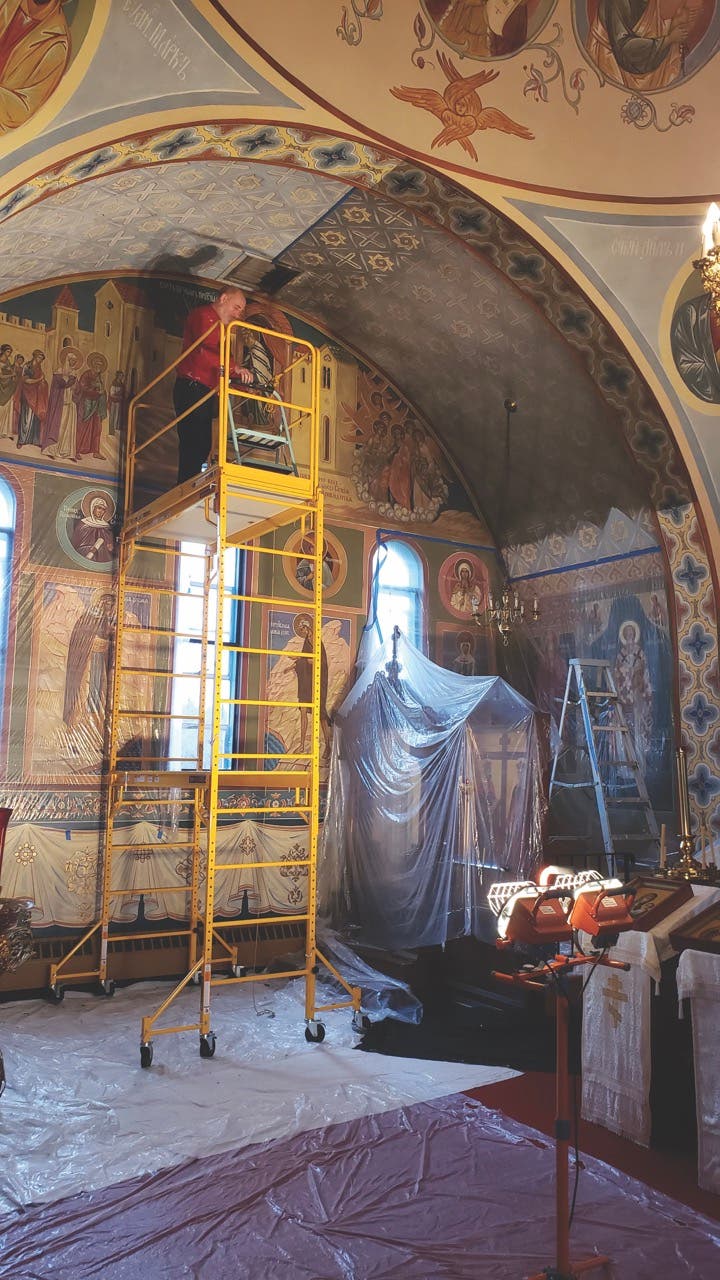
Cleaning the frescoes was the first order of business. “Over time we noticed that things developed on the frescoes from incense and candles, but ours were not so bad,” Fr. Malcom says. “Beeswax candles like ours do not produce paraffin, but you still end up with some discoloration.”
By 2022, Buon Fresco was restoring the dome and cupola. In 2023 the firm was under contract to complete the cleaning and restore the rest of the church, including its transepts, altar, nave, and balcony.
“When we first saw the art, it all was a homogeneous brown and much of the imagery was indistinguishable,” Bingham says. “Our mission was to take the prestigious art back to its glorious beginnings.”
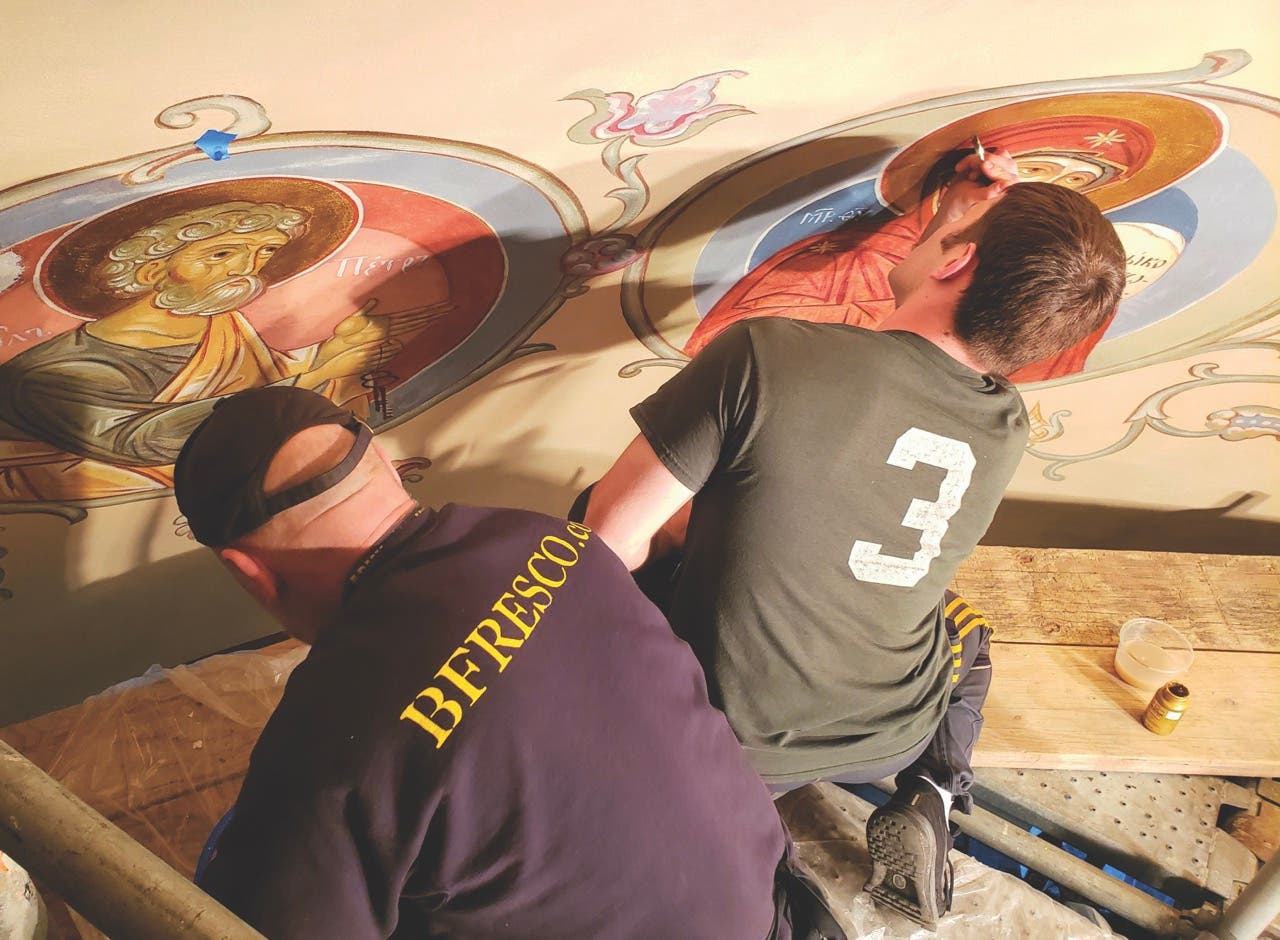
Russian-born Andre Nikolaevich Kouznestov served as principal artist for this 21st-century restoration. Ironically, he was born in St. Petersburg, where Archimandrite Cyprian Pyzhov, the frescoes’ original artist, was born a few decades before him.
Kouznestov first had to deal with the effects of decades of neglect. Walls and ceilings were damaged by water, and mold spilled from the frescoes. “I touched them with my hand, and it would fall like dust,” he says. “Under the dust was plaster that wasn’t in very good condition, so the first situation I met was how to restore the original plaster under the damage.”
He used a plaster glue, or weld, to prevent further deterioration, then added a conven-tional plaster to create a smooth surface atop. To match colors in his initial touch-ups, he applied watercolors to fresh plaster and created his frescoes. “I let this dry, and after that, if the colors were right, I started to use acrylics because they’re stronger and more protective,” he says.
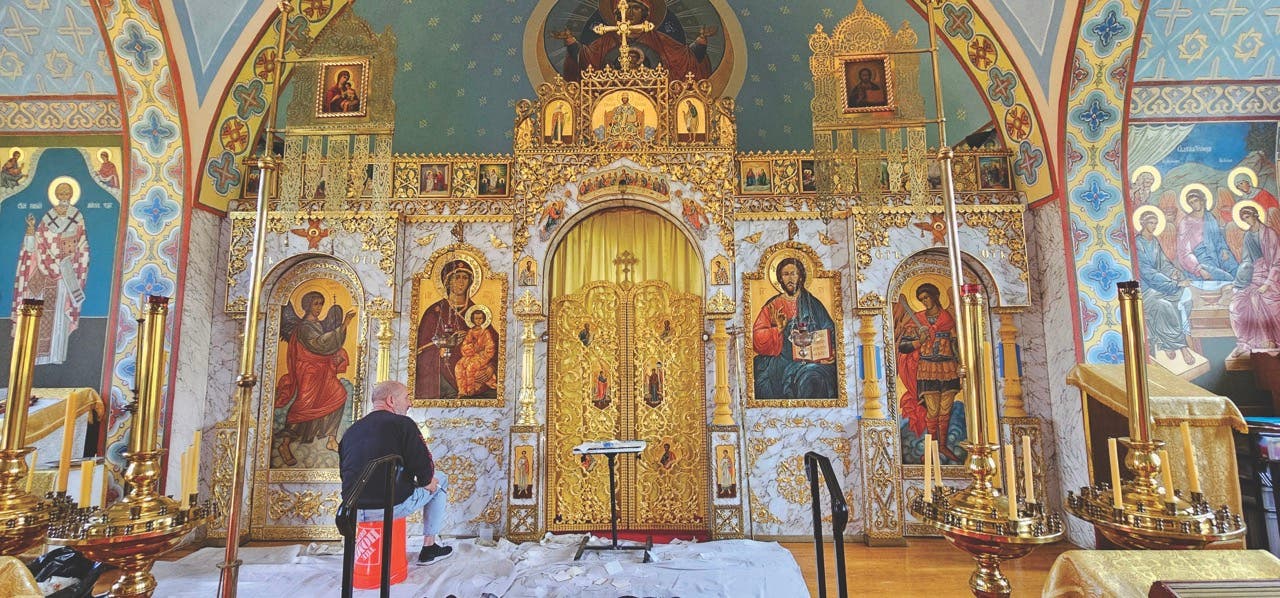
historic colors.
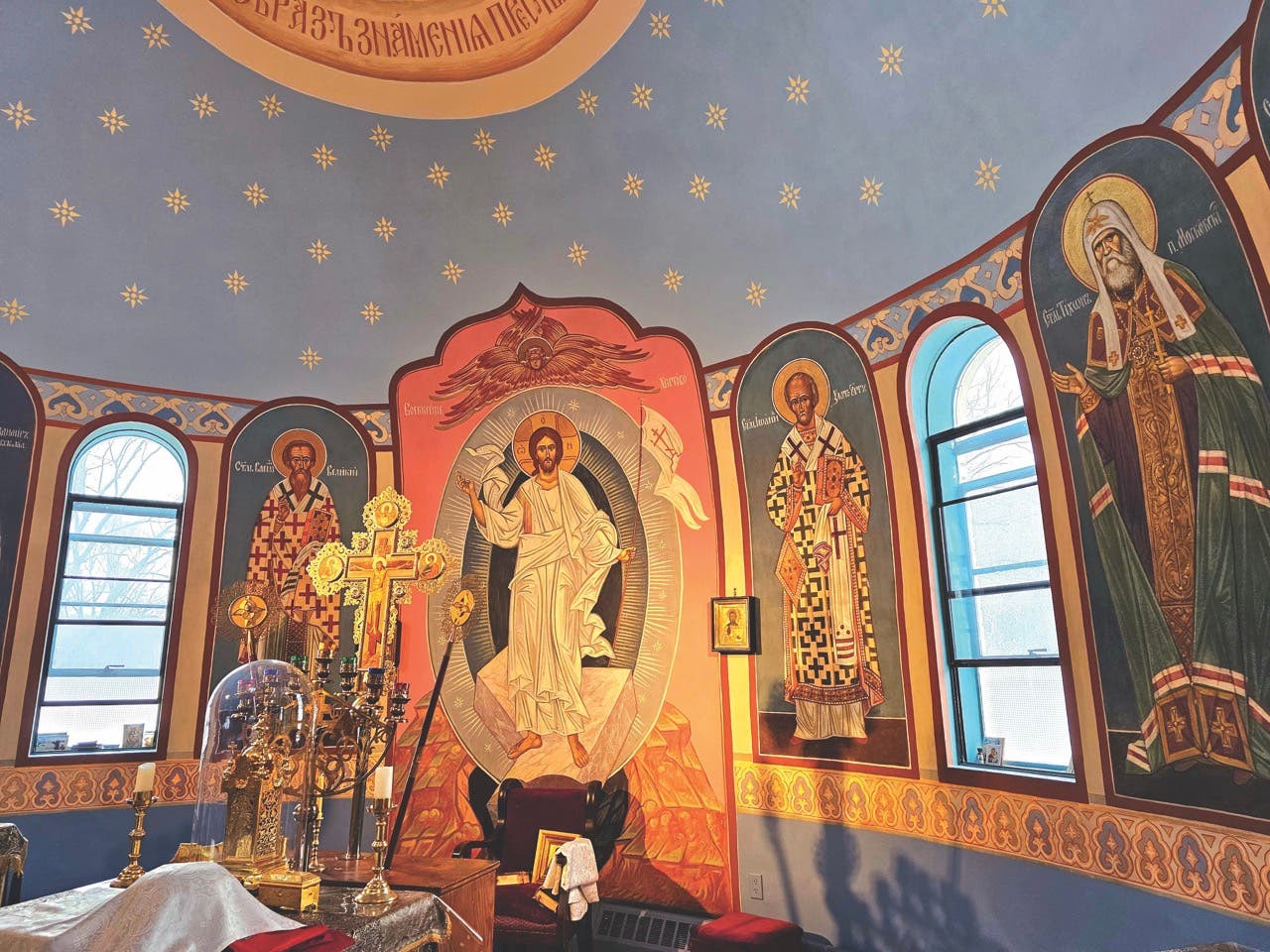
historic colors.
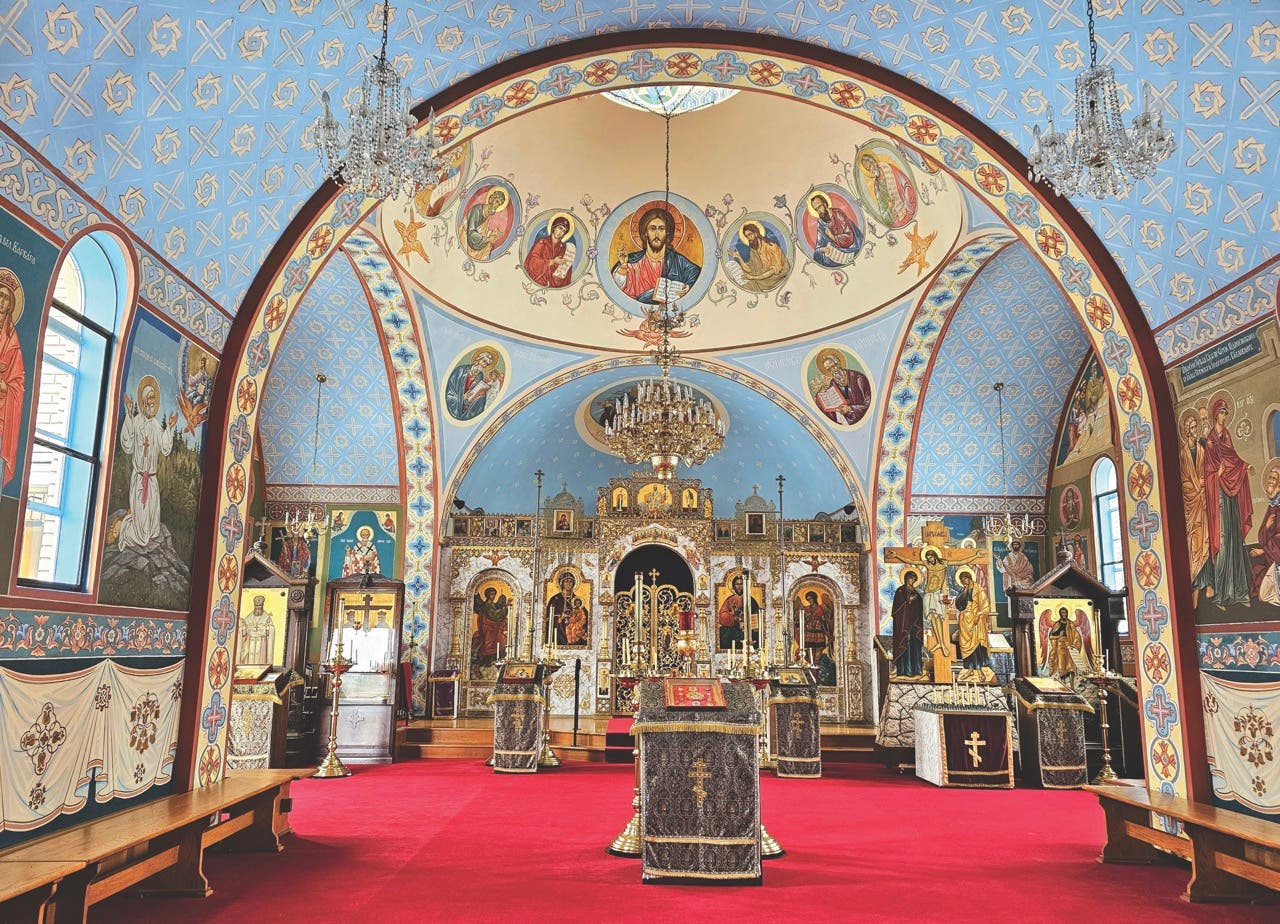
historic colors.
As his work progressed, so did his appreciation for the frescoes’ original artist. “His strokes are amazing,” he says. “To this day, I look at it and say: ‘This is a masterpiece.’”
That opinion seems to be unanimous. When Fr. Malcom walked into the restored church with his wife at its completion, she offered her one-of-a-kind perspective. “She said it looks like it did when it was first finished years ago,” he says. “It’s like brand-new again.”
That’s a tribute to its collaborators–tiny in number, but perseverant in spirit. TB
Manufacturer of handcrafted solid-bronze architectural hardware: door, window, bath, sink & cabinet hardware & kitchen accessories; 7 different finishes; traditional, contemporary & other styles.