

Public Buildings
Reclaiming a Gothic Landmark for Gathering
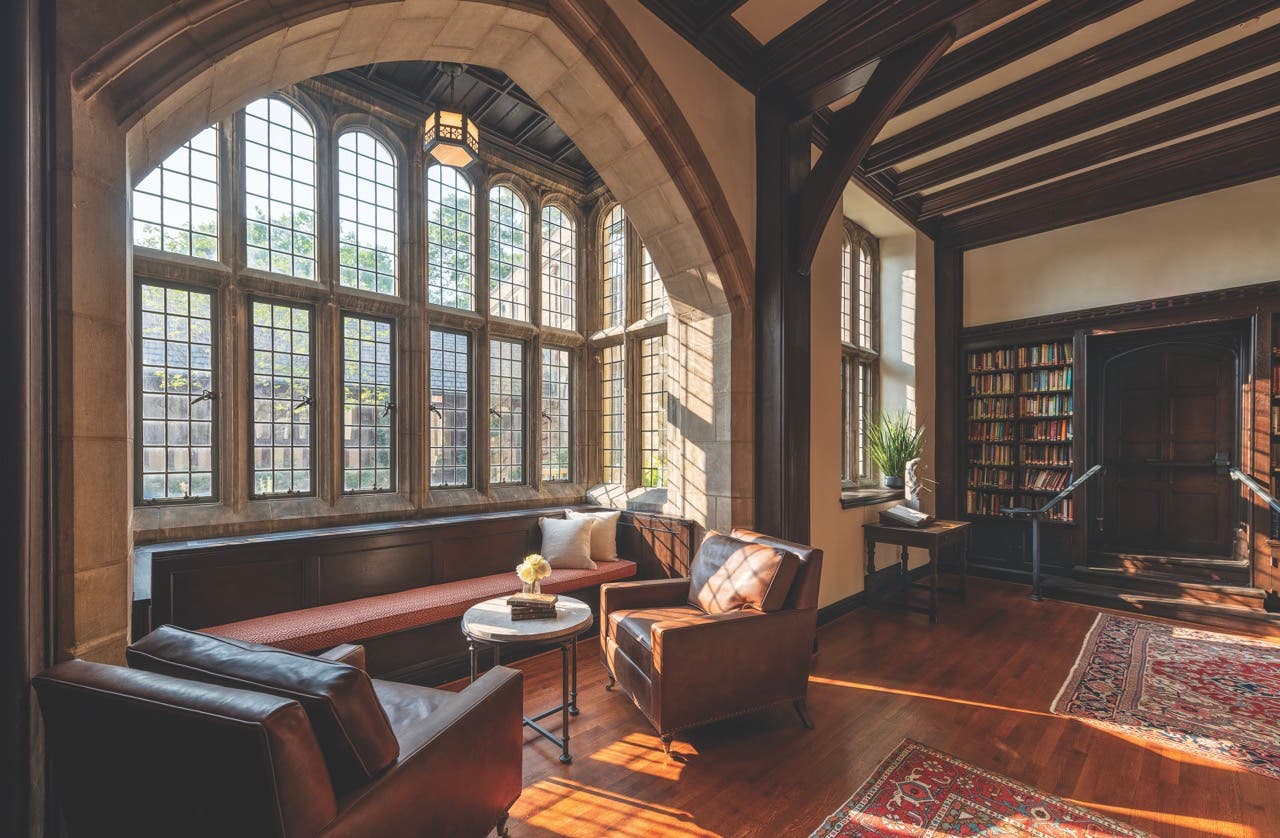
a window seat in the library. Throughout the building there are
areas for individual and group study, prayer and meditation.
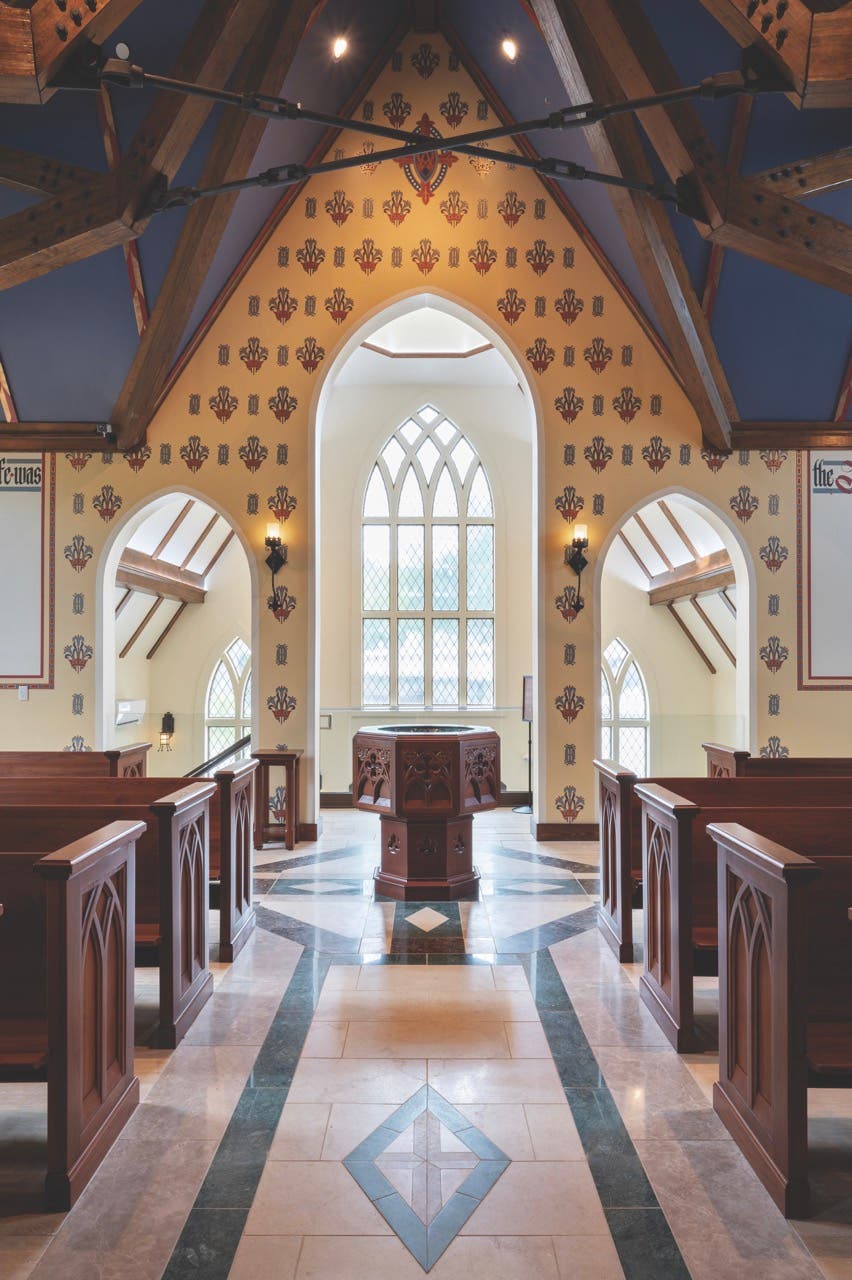
Long before its rehabilitation, restoration, and renaming, the Neogothic building that now houses the Virginia Mae Center in Washington, D.C., was always intended to be a place for convening. Designed by Philip Hubert Frohman and dubbed the College of Preachers upon completion in 1929, the 27,000-square-foot structure was a critical piece of the original 30-acre, Frederick Law Olmsted Jr.-designed landscape surrounding Washington National Cathedral, where Episcopalian clergy gathered for religious study for nearly 80 years. But when the 2008 recession arrived and dire financial straits forced the institution (by then known as Cathedral College) to shutter, its future became an open question.
As the vacancy stretched on—ultimately for more than a decade—supporters began to imagine a new future for the building, one in which its interior was reconfigured for conferences, seminars, and retreats that would complement and amplify the programming at the Cathedral. In this vision, says Jim Shepherd, vice president and director of historic preservation for the storied design firm SmithGroup, visitors “could stay overnight for a longer period of time and have opportunities to mingle and convene within the building that fostered more dialogue around faith.” After securing a critical mass of private donations, including a key gift from the late Virginia Mae Critella Mars, SmithGroup embarked on creating a design.
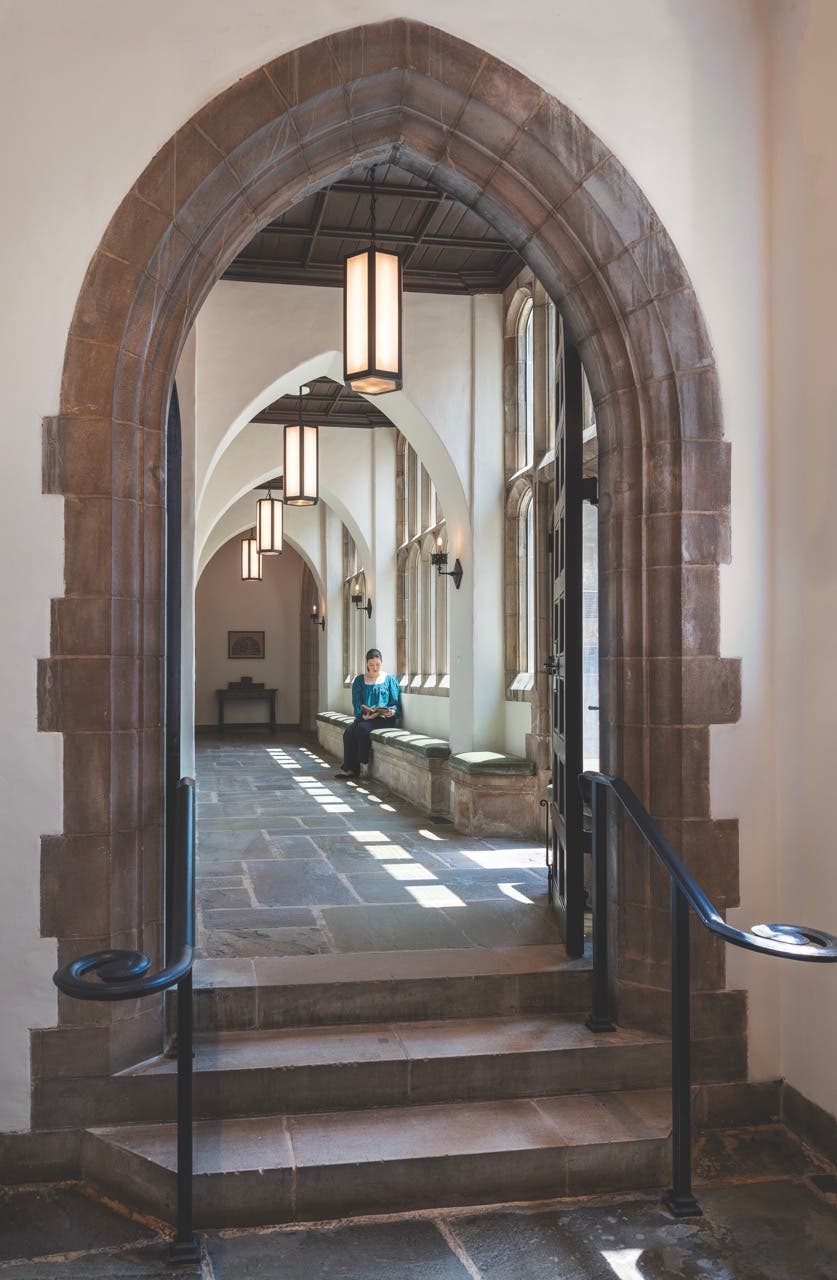
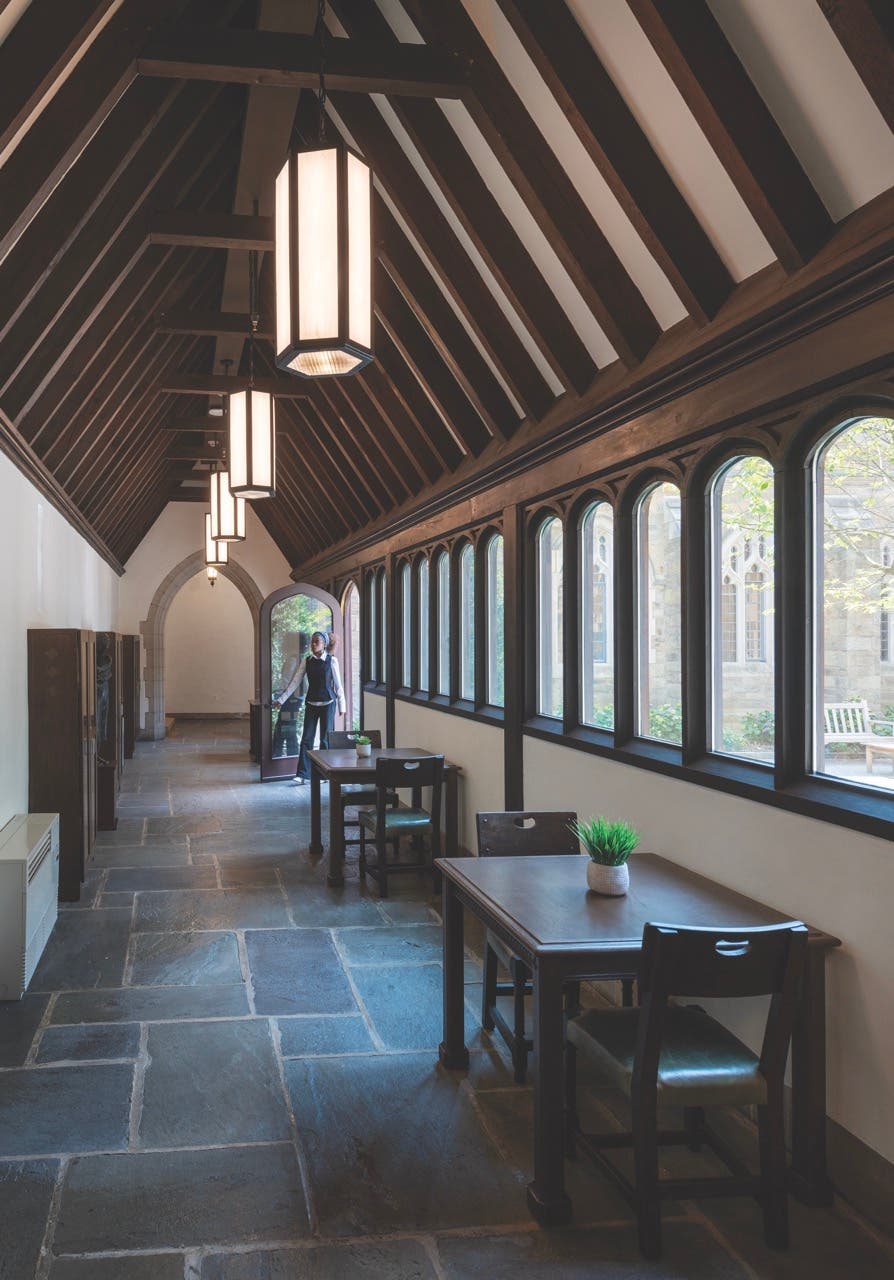
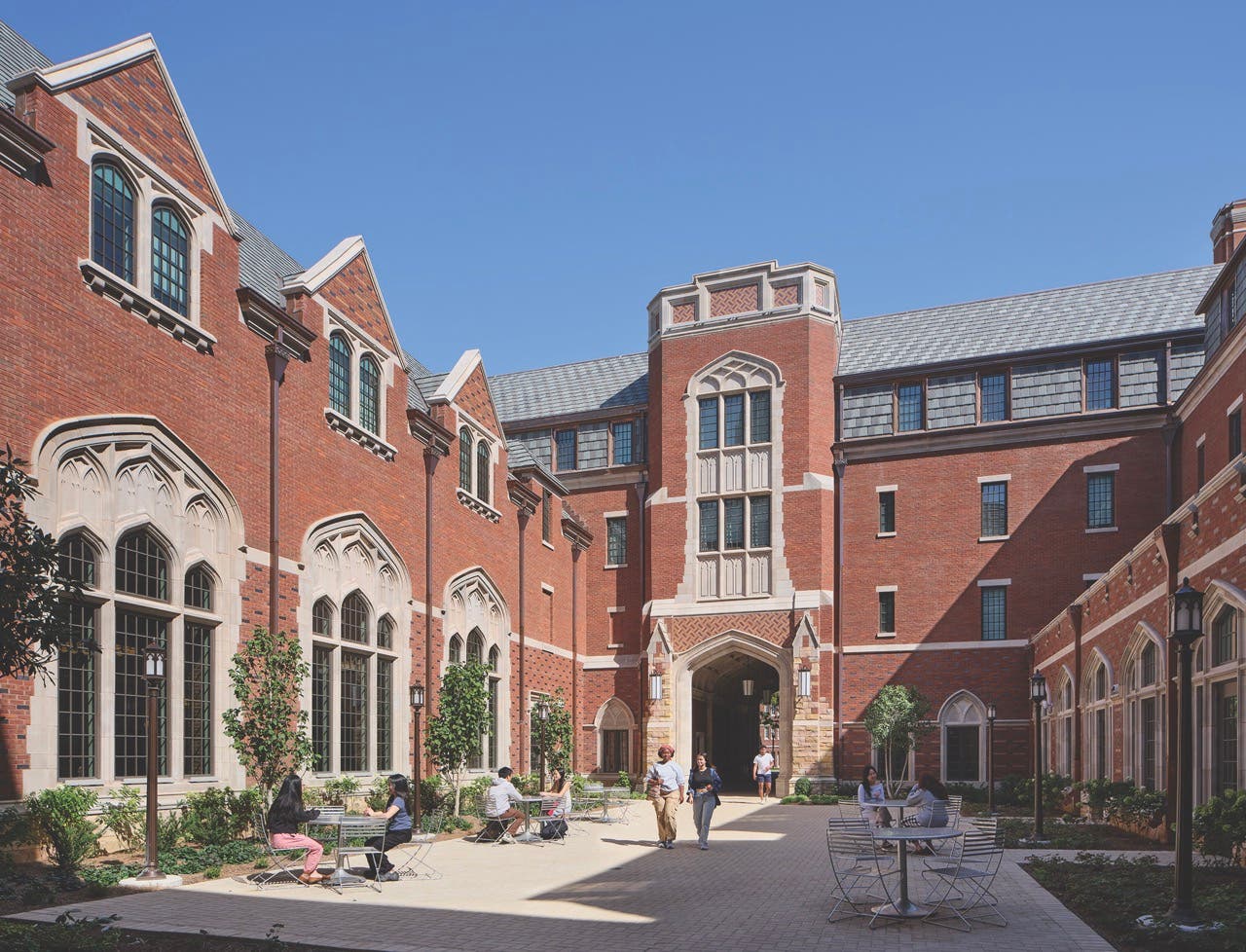
to the Garth provides seating
areas for quiet study.
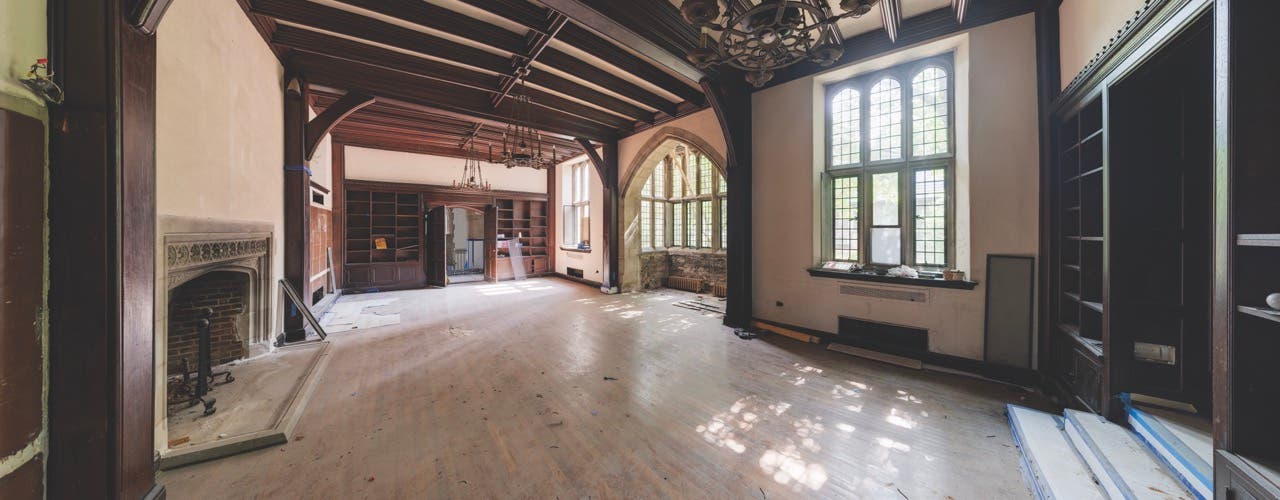
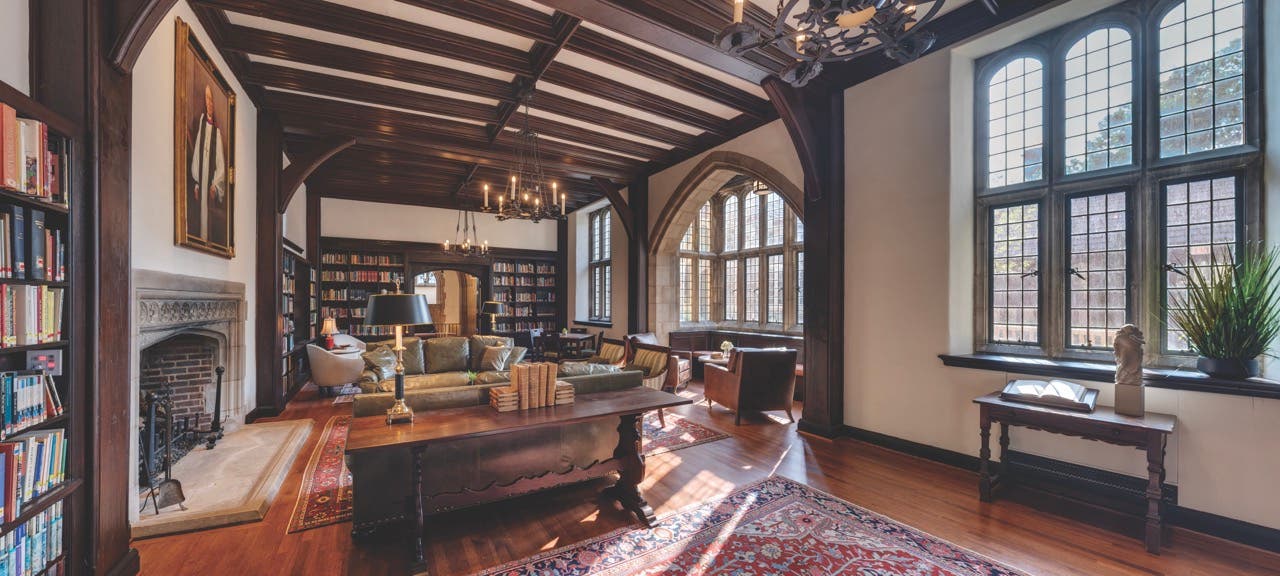
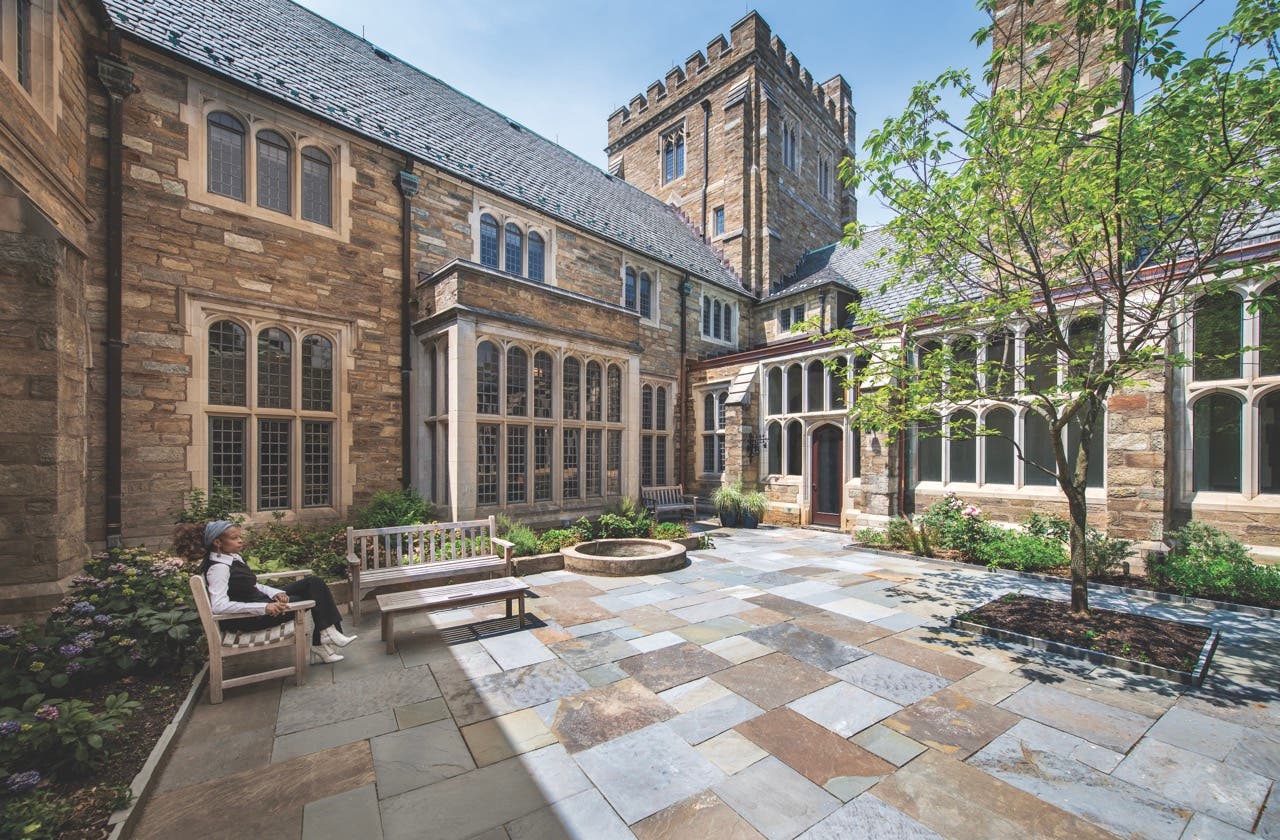
the buiding’s network of spaces.
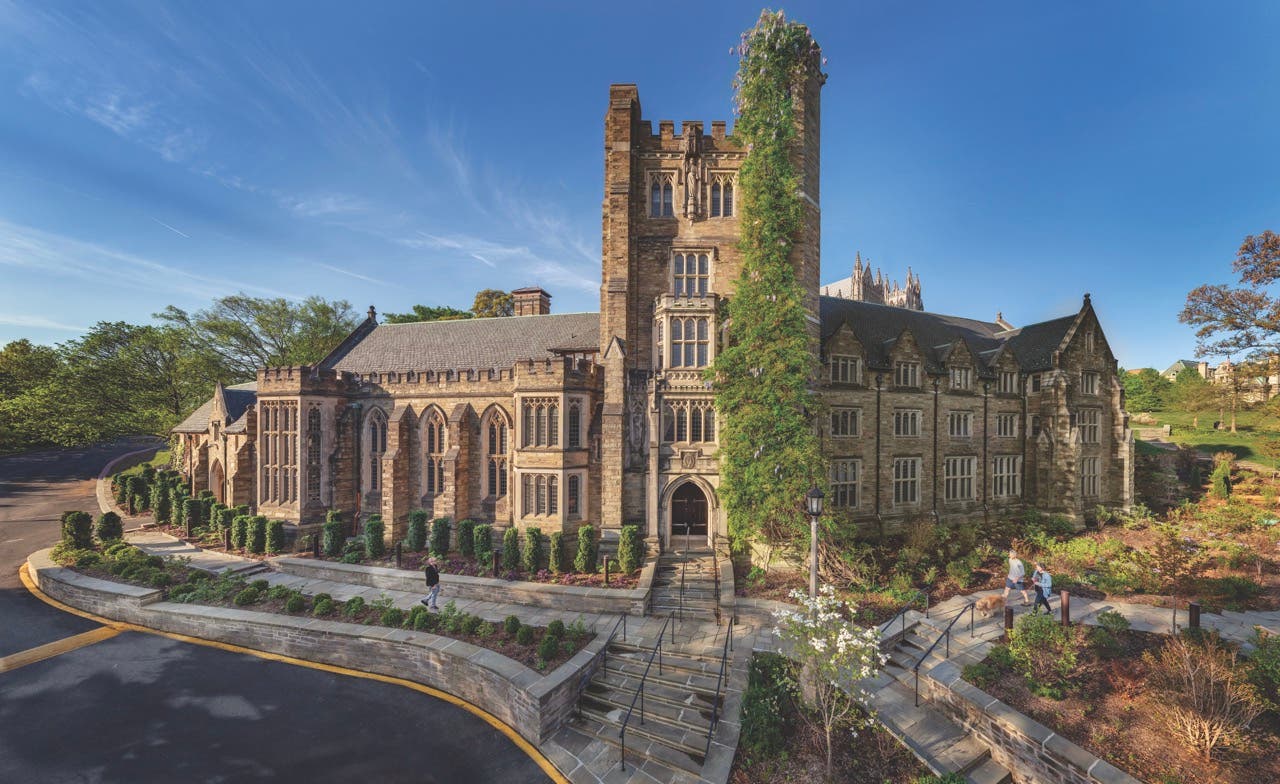
much needed restoration and renovation for its new life as a modern conference
and retreat center.
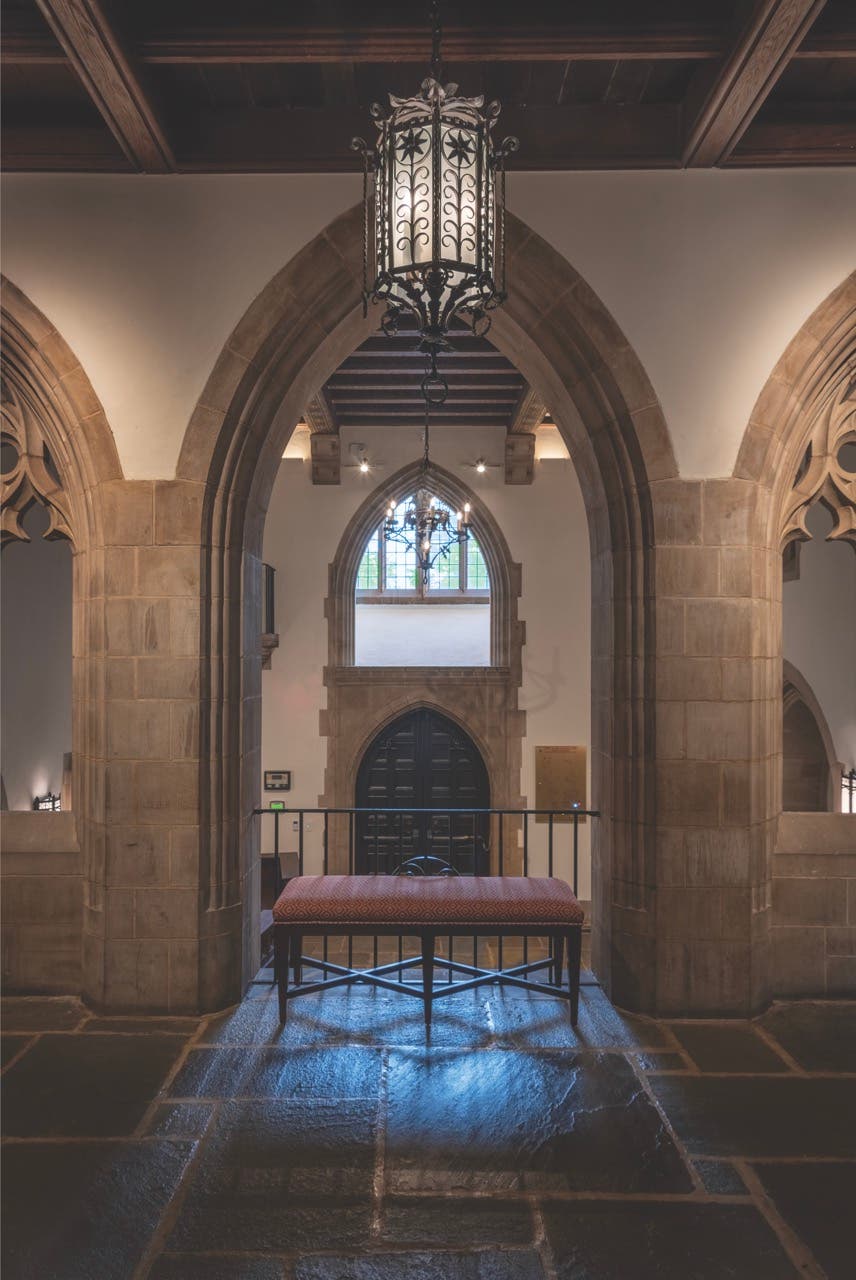
The rehabilitation and restoration demanded a soft touch in its signature historic spaces, including the refectory, library, chapel, and entrance hall. “[Those areas] have a lot of beautiful craft—millwork, plasterwork, decorative paint, stained glass—that were really important for maintaining the rich character of the building, and celebrating the design that the architects brought to create really special spaces for convening,” says Shepherd, formerly director of preservation and facilities for Washington National Cathedral before joining SmithGroup. At the same time, creating a space fit for modern use required an overhaul of the interiors to improve accessibility, introduce fire protection and other systems to meet code requirements, and rethink its most outdated elements—in particular, the monastic dormitory rooms designed for an era when communal bathrooms were the norm—across the building’s 15 levels. “There were so many little spaces configured in ways that didn’t make sense for modern use,” Shepherd says.
To achieve its ambitions in such a complicated footprint, SmithGroup and its design and engineering team devoted an uncommon degree of forethought. The team laser-scanned the building twice—once before the selective demolition phase, once after—and created a series of three-dimensional models, using those processes to help inform seamless approaches to fire protection—specifically, disguising new sprinkler systems in hewn beams and trusses in the refectory and chapel—and clever ways to incorporate ductwork, hot water piping, and mechanical systems. “It was integral to understanding how everything would work through the various levels and wings of the building,” says Susan Pommerer, Senior Principal and historic preservation project manager for SmithGroup.
The significant slope of the existing site presented a massive puzzle. Because the college is built into the hillside, the main northern entrance is two and a half levels lower, or roughly 20 feet, than the backside. “[That] made it quite challenging to provide accessibility not only across the public spaces on the first level, but also up through the various floors with all the guest rooms,” Pommerer says. In response, the renovation incorporates two elevators at critical intersections in the floorplan: a three-stop, three-door elevator in place of the stairs that formerly connected the lobby to the refectory and library, and another elevator on the building’s west side, connecting the chapel and the guestrooms. Additionally, an area formerly equipped with three stacked guest rooms was retrofitted with a fully code compliant three-story egress stair that corresponded with the existing doors and windows. Outside, the new design seized on the topography of the landscape to capture and mitigate the stormwater emanating from the adjacent cathedral, an improvement that was critical to the site’s anticipated LEED certification.
Modernizing the guest rooms was a riddle all its own, with SmithGroup searching for solutions that would introduce ensuite bathrooms while ensuring each room still aligned with the existing casement window openings embedded in decorative gothic limestone. “It was not just every square foot: we were trying to grab every inch,” Pommerer says. Ultimately, the bathrooms were interlocked back-to-back to share utilities, while four rooms on the third floor transformed partial attic spaces into sleeping lofts accessible by spiral staircases.
Elsewhere, the renovated Virginia Mae Center features a pair of suites intended for extended stays, including a two-level suite in the building’s central tower; a commercial-level kitchen adjacent to the refectory; and three meeting spaces—two smaller rooms on the main level and one on the third floor—that integrate woodwork and ornamentation sympathetic to the historic spaces in the structure. The team restored the steel casement windows with original hardware, retrofitted original iron light fixtures with LED lighting, introduced flagstone flooring that matches the interior’s historic stonework, and refreshed the decorative painted ceiling in the lobby.
Today, the site is an inviting, accessible addition to Washington National Cathedral’s campus—or, in priestly vernacular, the “Close”—as well as an enduring tribute to its namesake. “[Virginia Mae Critella Mars] was really the mustard seed for this project, the one who had faith that this would be the right thing to do for the building and at large for the Cathedral,” says Shepherd. “She was heavily involved with the project; she kept us all on our toes, and she wanted to make sure it was a wonderful space that fostered a conversation about faith and reconciliation. And she kept it going to the finish line.” TB

Manufacturer of handcrafted solid-bronze architectural hardware: door, window, bath, sink & cabinet hardware & kitchen accessories; 7 different finishes; traditional, contemporary & other styles.