

Religious Buildings
A Carpenter Gothic Church Comes Home
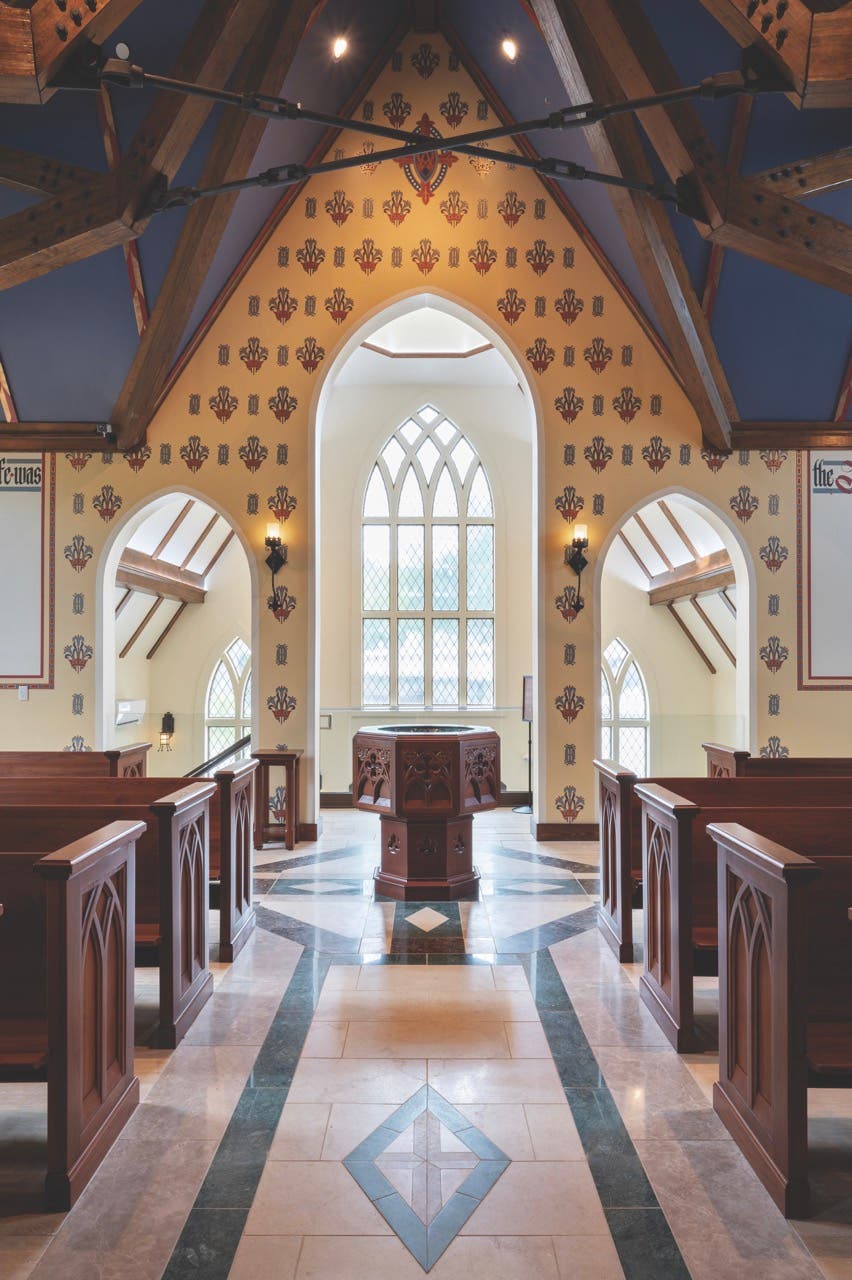
The baptismal font, at the end of the nave’s main aisle,
stands before the arched entry to a double-height stair
hall in the form of a Galilee Porch, a traditional space of
medieval origin for welcoming pilgrims.
Some two decades after the North Carolina resort town of Highlands was founded, The Church of the Incarnation made its home behind a white picket fence at the corner of Main and Fifth Streets in 1896.
The original Carpenter Gothic chapel, postcard pretty, was a charming place for prayer. Through the years, as the congregation grew, so did its footprint: The chapel was joined over the decades by a connected parish house, a social hall, and, in 2002, by a new worship space with offices below.
By 2018, the complex was a quirky set of interconnected spaces, hallways, stairs and levels that, at best, left worshippers confounded.
Cram and Ferguson Architects was called upon by the parish vestry and Rector Bentley Manning to create a cohesive renovation master plan that remained faithful to the original chapel’s spirit and better embodied the community’s liturgical traditions.
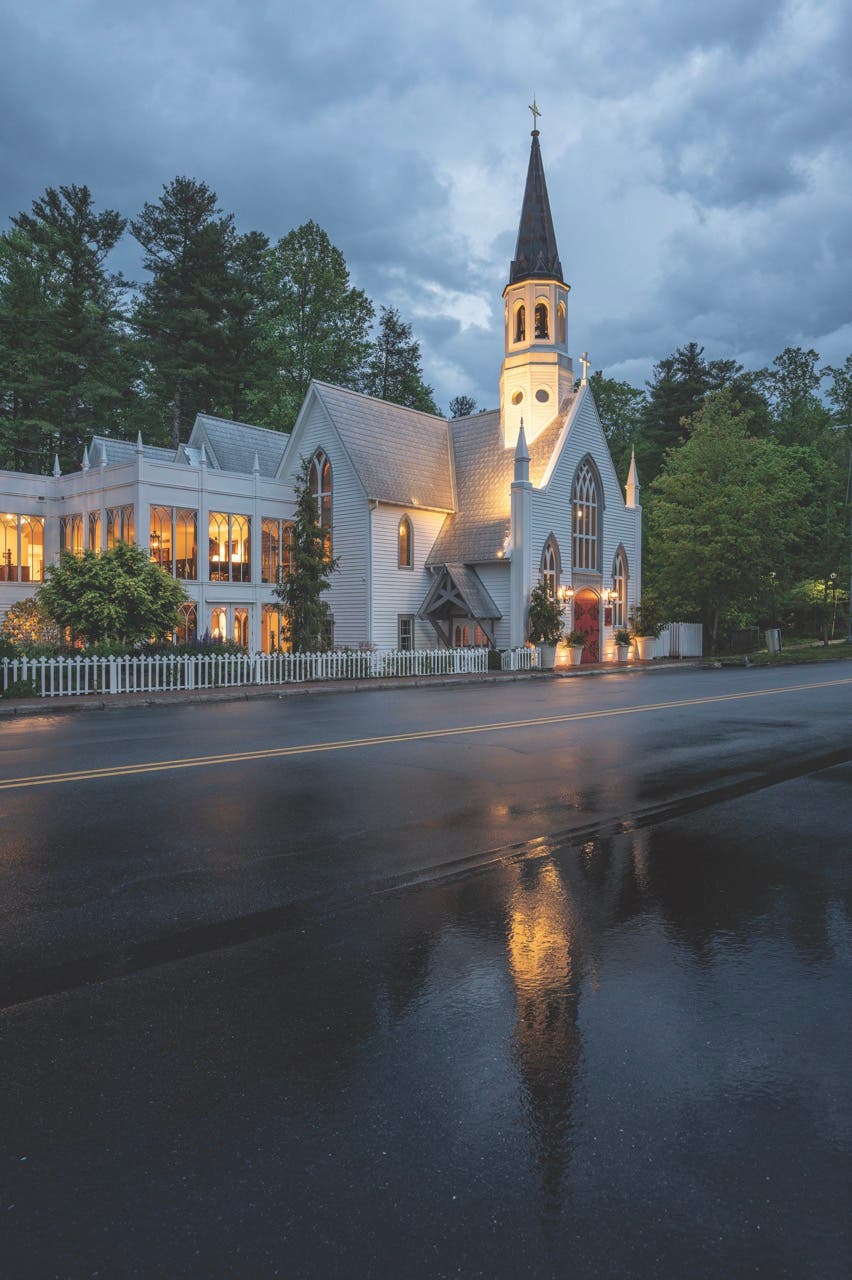
underwent an extensive renovation by Cram and Ferguson Architects. The front of
the church has a new entrance, new Gothic windows and a copper-clad steeple.
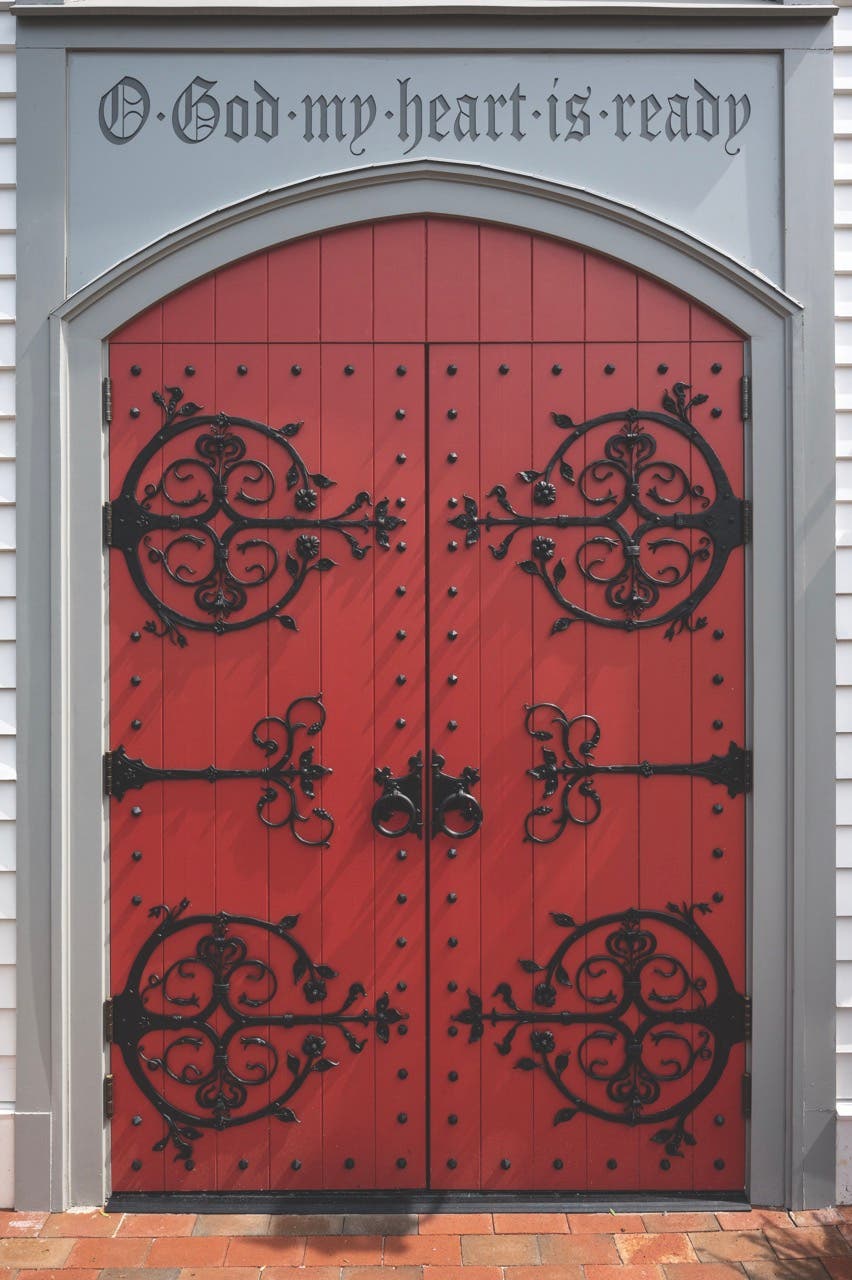
St. Mark’s Episcopal Church in Philadelphia.
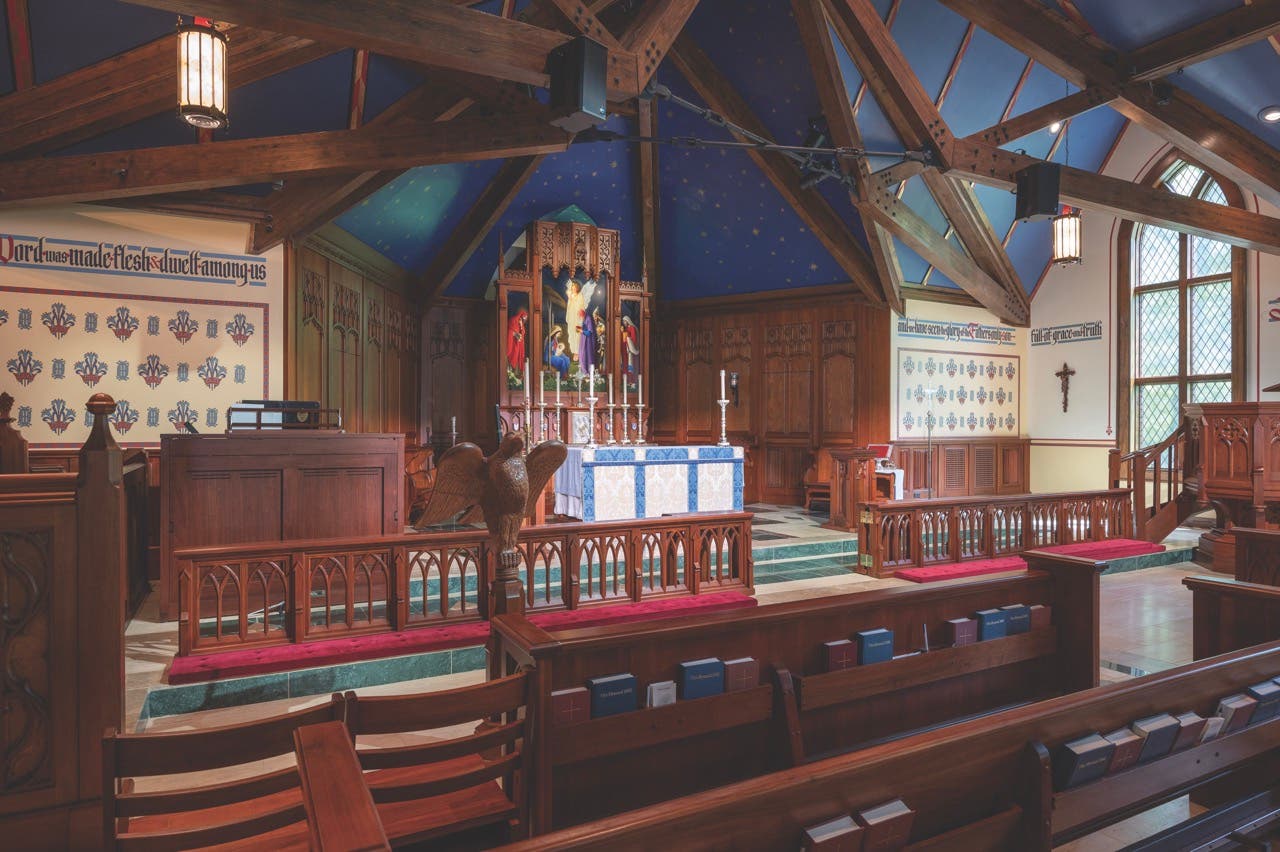
nave is new. The existing pews were rearranged, and the communion rail and pulpit
were reconfigured by Cram and Ferguson Architects to fit the new chancel layout.
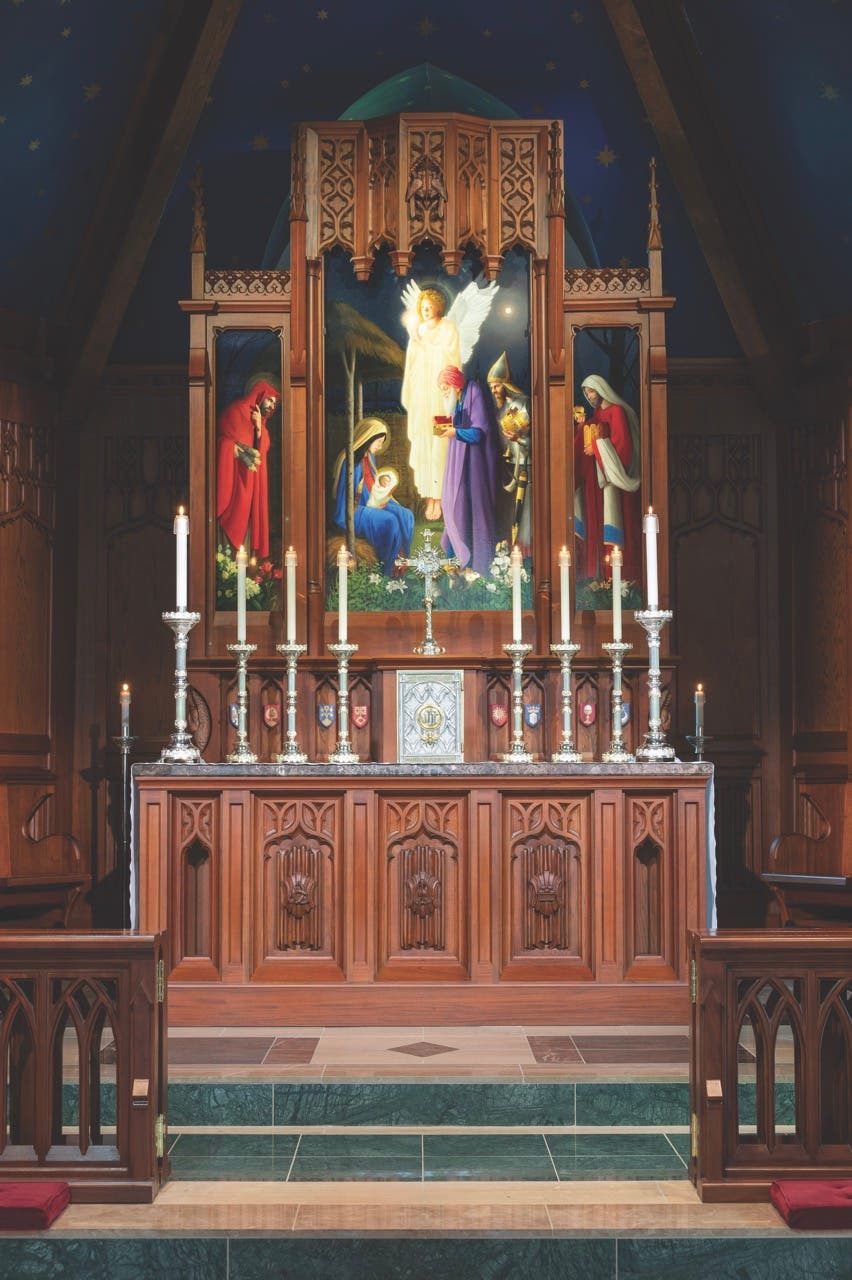
of the Adoration of the Magi by Edward Burne-Jones. The steeple of The Church of
the Incarnation is visible in the background.
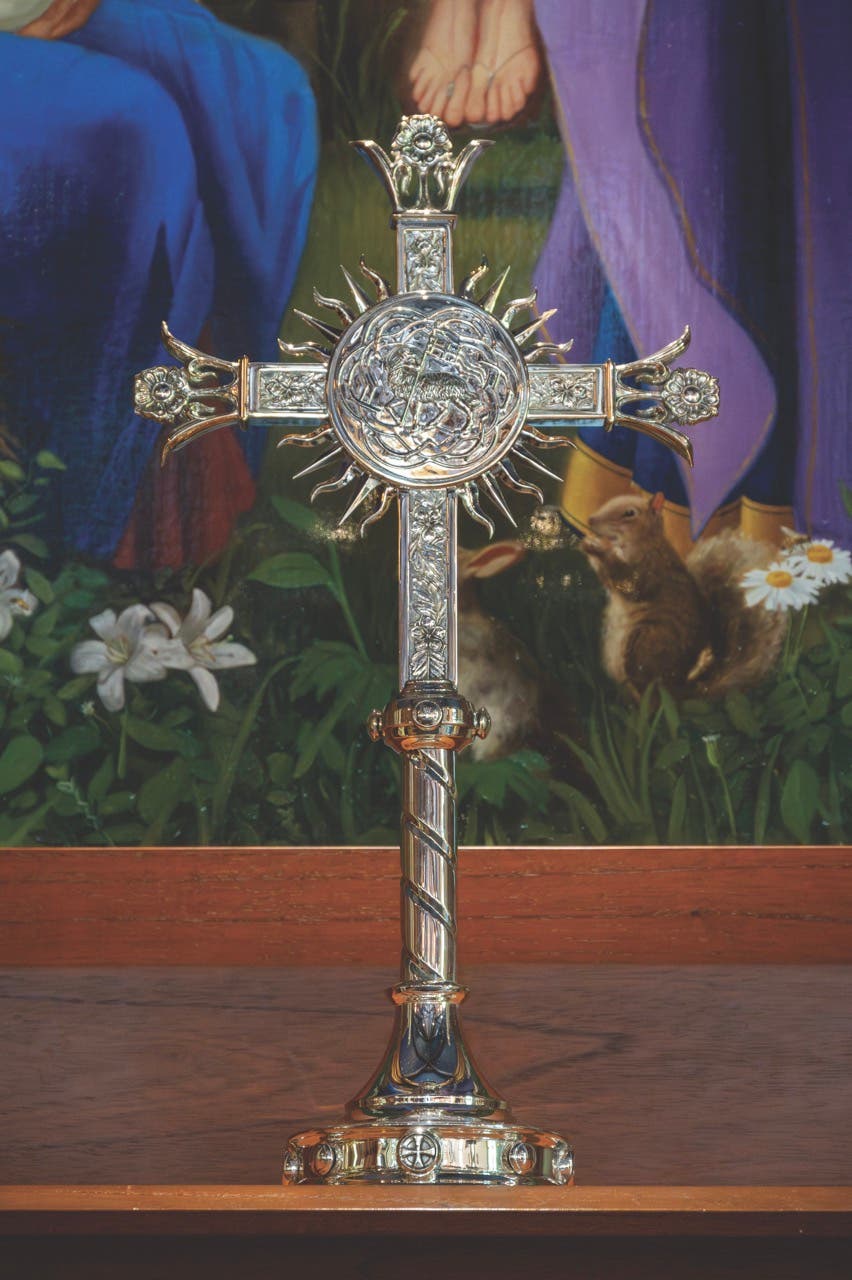
Paschal Lamb bearing a flag of victory at its center. It is surrounded by a crown of
thorns, with each arm decorated with reliefs of apple blossoms and terminating in
a motif of a rose-flanked by fleurs-de-lys.
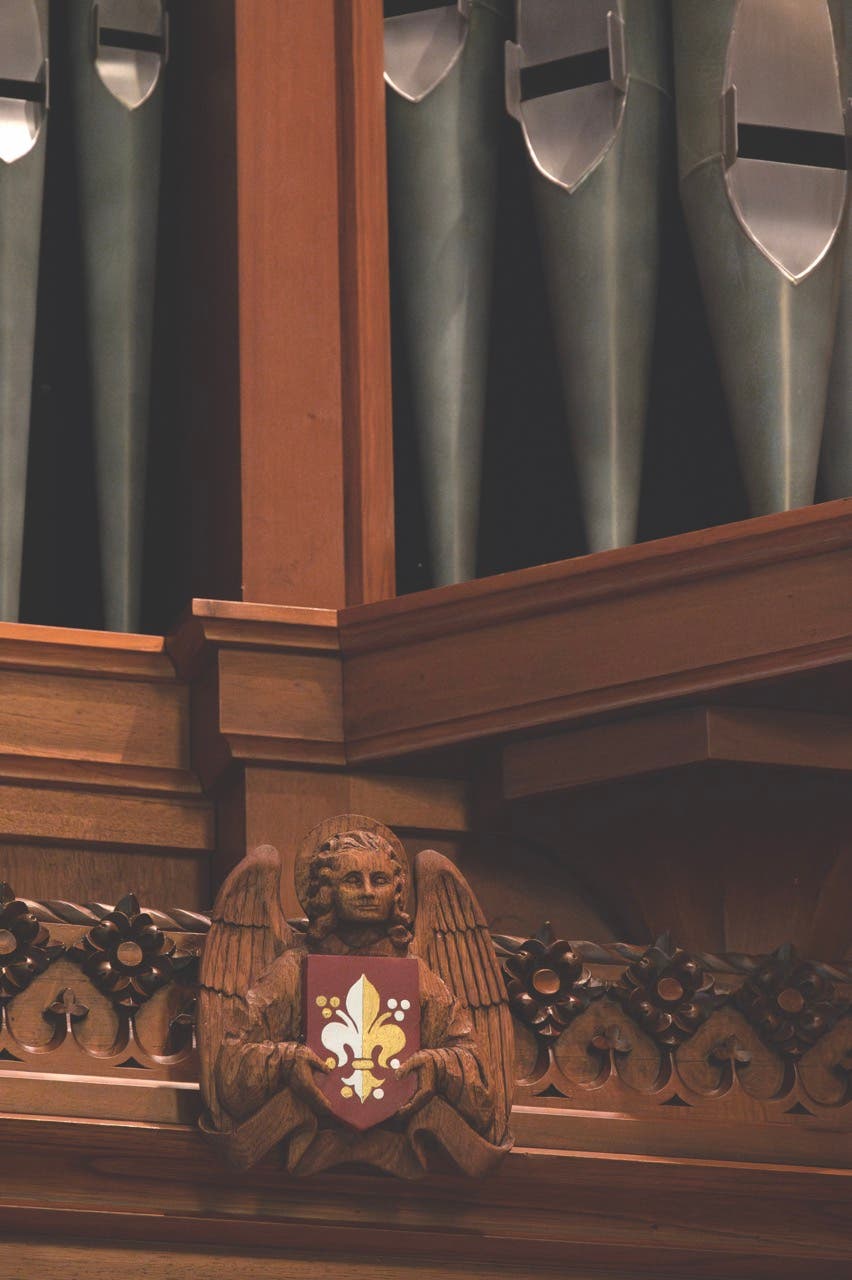
ledge supporting the organ pipes.
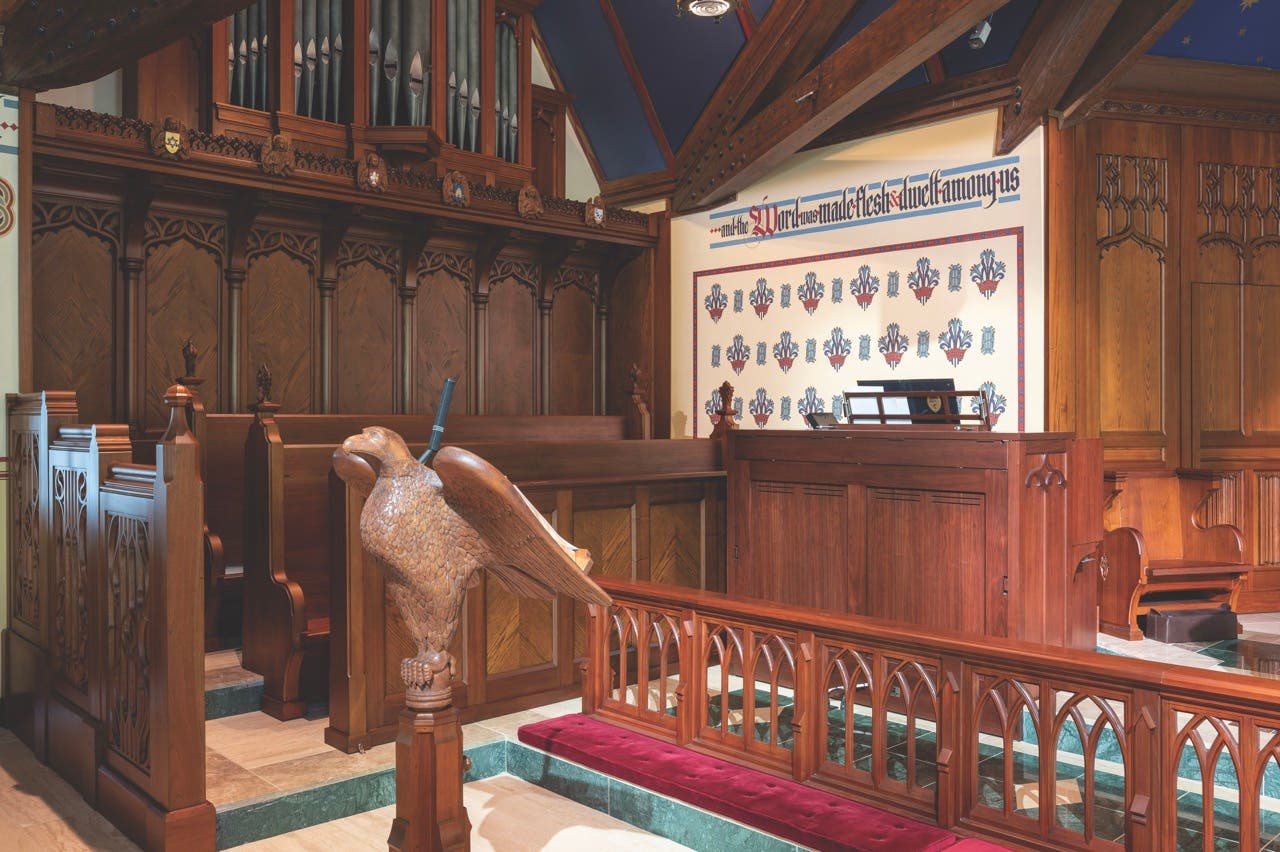
a challenge given the space constraints
stands before the arched entry to a double-height stair
hall in the form of a Galilee Porch, a traditional space of
medieval origin for welcoming pilgrims.
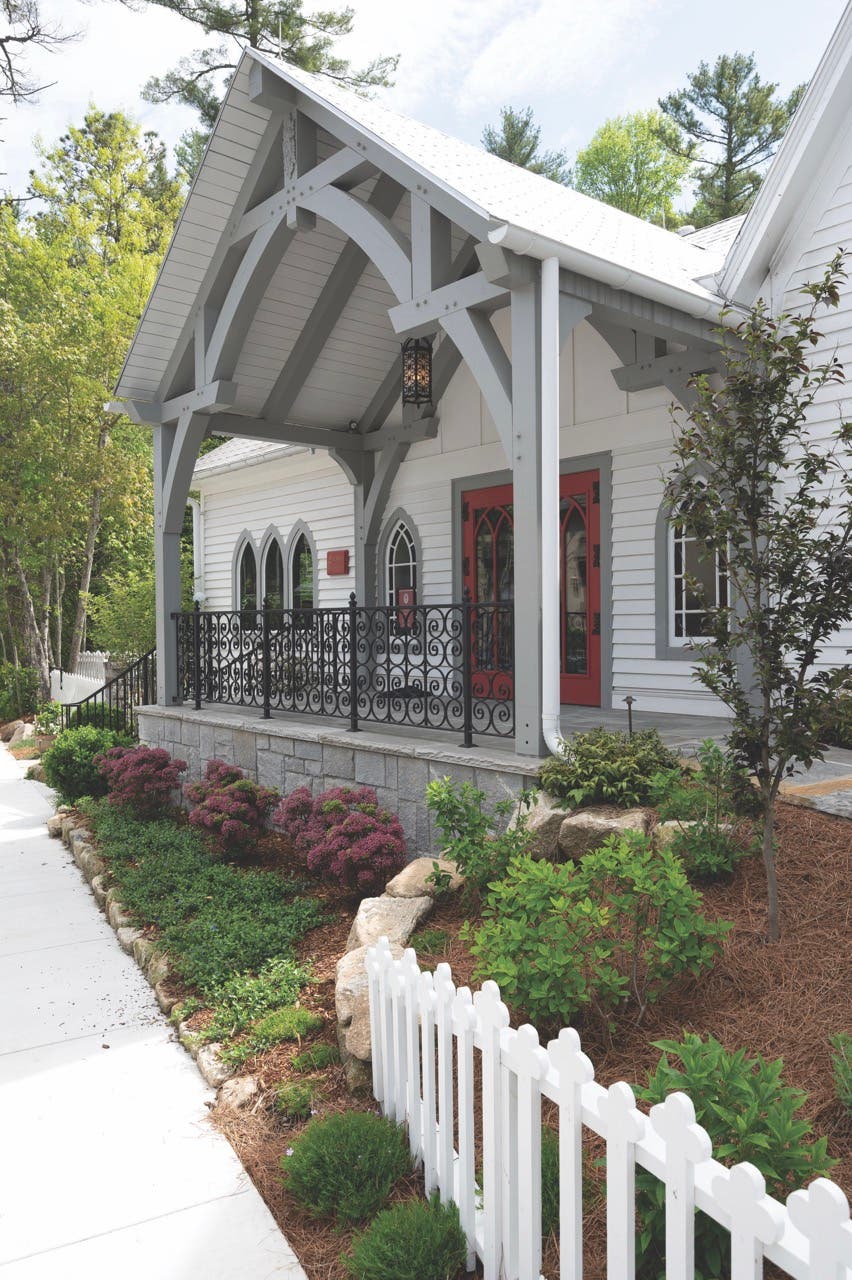
apex, replaces the undistinguished side entrance to the parish house and the
1896 chapel.
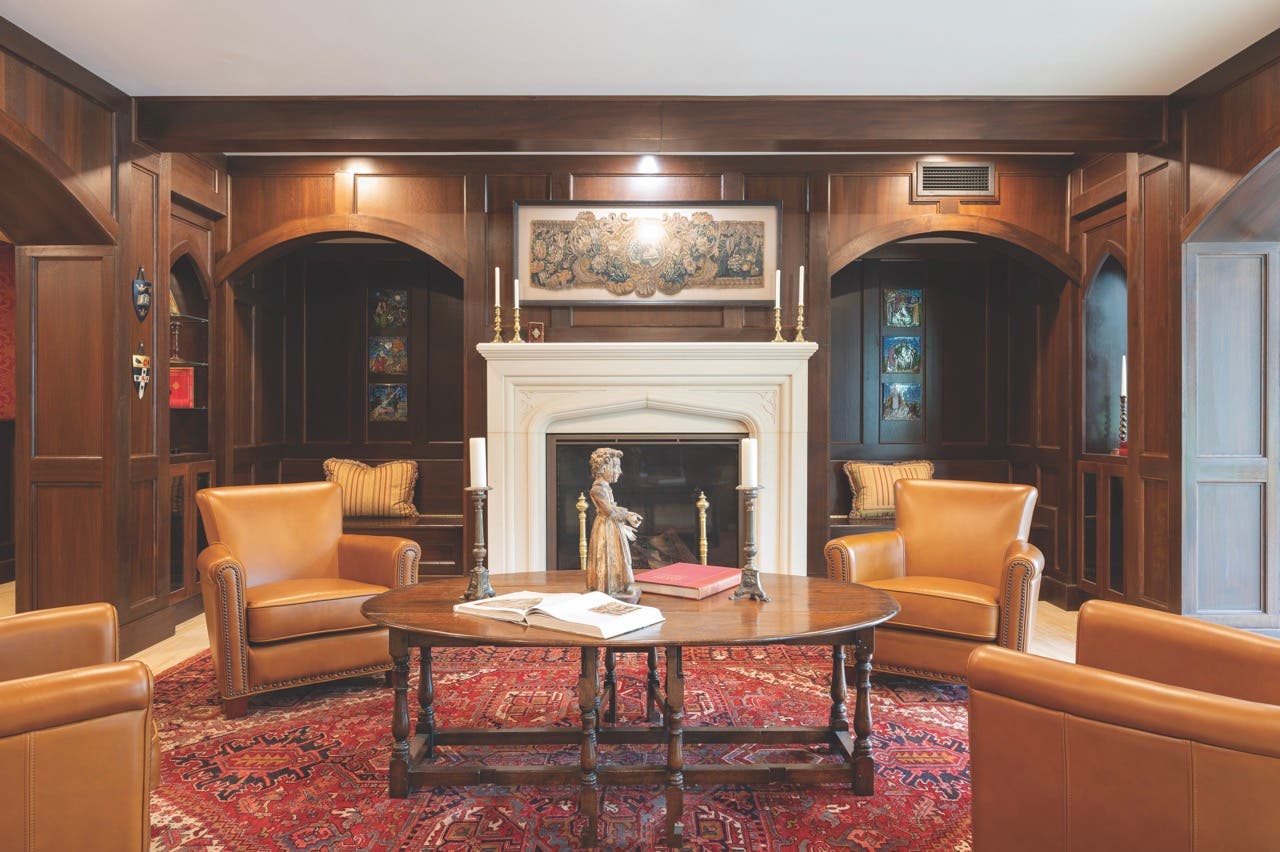
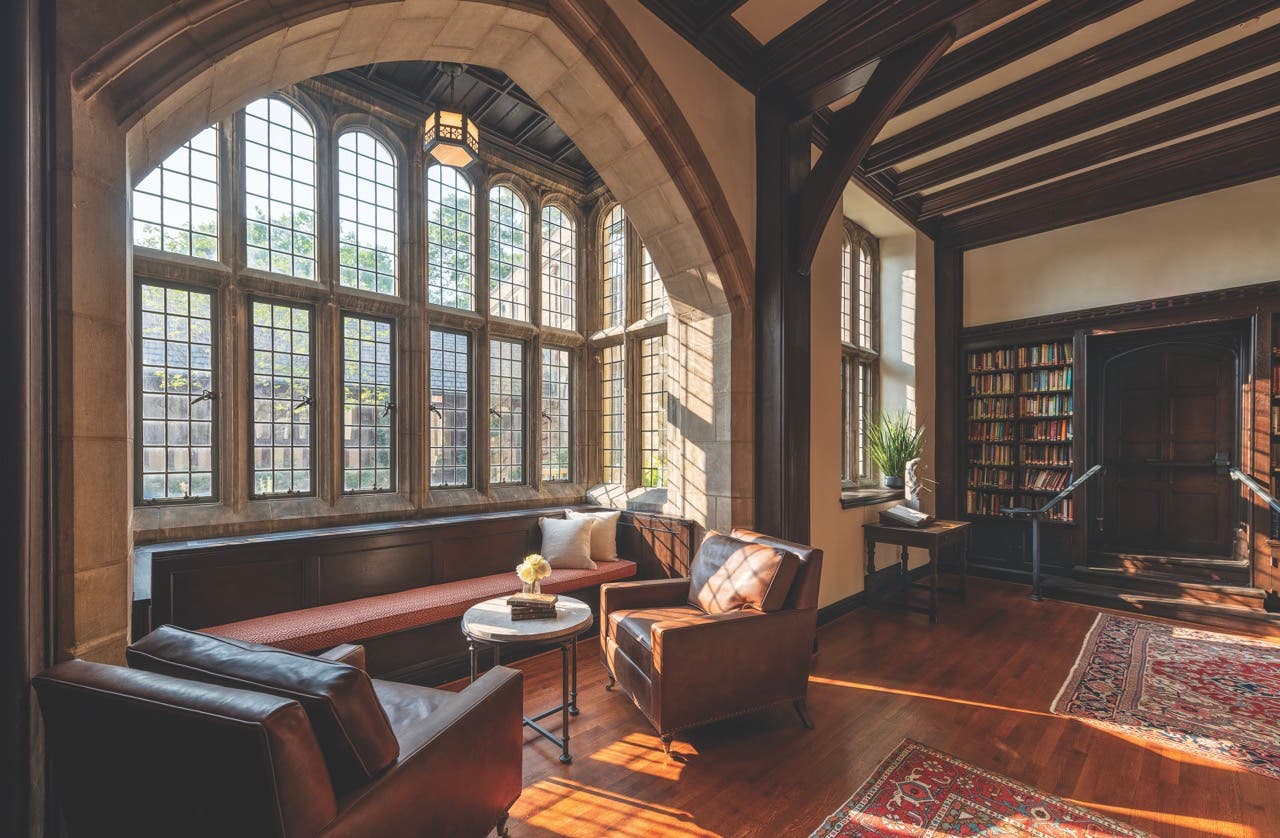
fireplace and wood-paneled, cushioned recessed reading nooks.
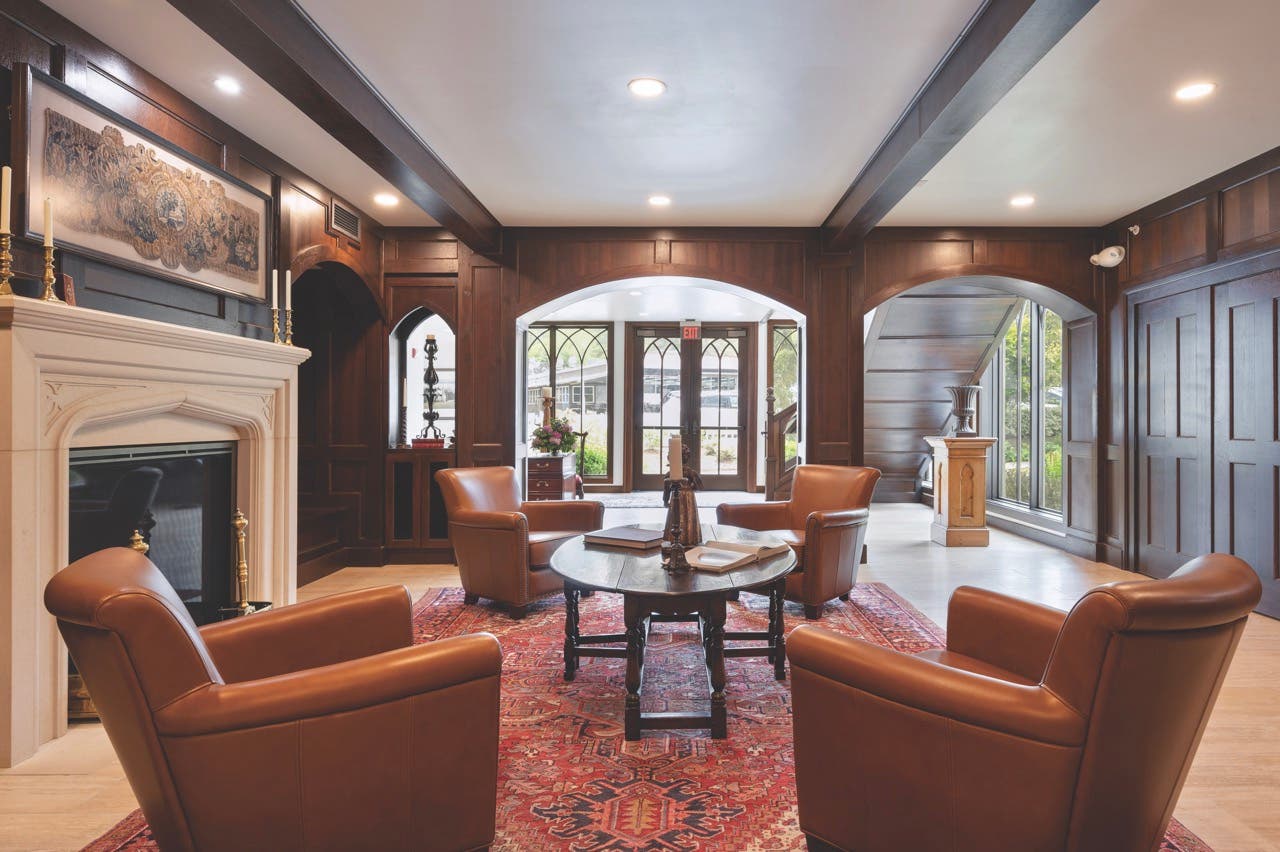
fireplace and wood-paneled, cushioned recessed reading nooks.
The result is profiled in the 2024 book Highlands Spirit: Building the New Church of the Incarnation in Highlands, North Carolina by Ethan Anthony, AIA, ICTP, Cram and Ferguson’s president and the project’s lead designer.
It didn’t help matters that the existing building was, as project designer Matthew Alderman called it, on a “tight lot that was built out to the edges.”
Moving was out of the question as the Episcopal chapel occupied such a prime piece of real estate and such a profound place in the hearts of the people in the cozy community.
One of the most pressing issues was the entrance to the main sanctuary. “Our goal was to create a path that was meaningful and beautiful with usable spaces that makes people feel at home,” Alderman says.
Cram and Ferguson’s team–led by Ethan Anthony and including Alderman, project manager Kevin Hogan, and design drafter Edward Anthony, plus a crew of independent American, Colombian, and English artists and craftworkers–created a greater sense of connection and community.
They created a new sanctuary entrance on Main Street, replacing a cramped exit stair with a double-height hall.
The new space is inspired by the medieval monastic tradition of the Galilee Porch, a place to welcome pilgrims. The large red doors, inspired by those of St. Mark’s Episcopal Church in Philadelphia, which fittingly feature sinuous black-iron straps festooned with Jack-in-the-pulpit blooms, are bolstered by the opening of Psalm 108, “O God, my heart is ready” over the entry.
New Gothic-arched windows were added in front, and inside, the sanctuary’s mundane glass was also replaced with diamond-pane leaded windows. A lofty custom steeple, an element the sanctuary lacked, now crowns the roof, and a pair of pinnacles flank a triumphant central cross.
The side entry on Fifth Street was given an elegant timber-frame porch with wrought-iron railings and a new handicap ramp, and a more direct and welcoming path, including a light-filled monumental stair, was charted through the parish house to the main sanctuary.
The 2002 parish house addition had an idiosyncratic glass frontage facing the garden that was at odds with the Carpenter Gothic style of the original chapel. It was replaced with an addition whose form and tracery windows harmonize with the architecture of the 1896 structure.
The changes Cram and Ferguson Architects made to the interior, which was devoid of color and liturgical iconography, are equally extensive.
The altar was moved farther back from the pews to give it prominence, make better use of the existing apse, and to improve the liturgical and functional flow of the space.
The new marble-topped freestanding altar is accompanied by a matching altarpiece directly behind it. Elaborately carved, it features a hand-painted triptych of the Adoration of the Magi titled “The Star of Bethlehem” painted by realist artist Eric Johnson of the Academy of Realist Art, Boston.
Based on a 19th-century tapestry by English pre-Raphaelite artist Edward Burne-Jones, the work includes images of local flora and fauna, and the figures were painted from live models.
The new silver altar cross, also designed by Cram and Ferguson Architects, has a central medallion featuring the Paschal Lamb holding the flag of victory, symbolizing the resurrection, framed by a crown of thorns.
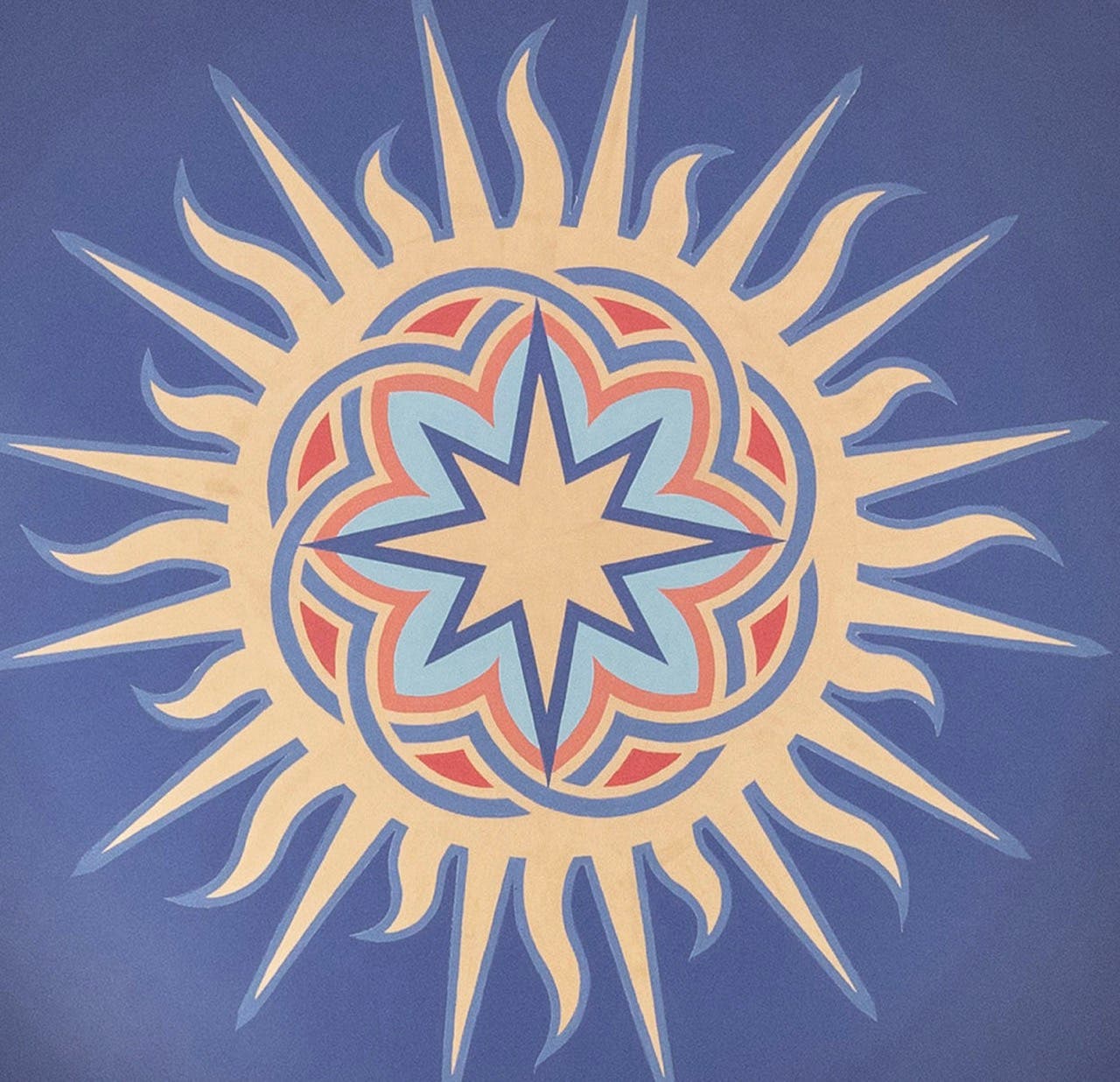
The chancel’s vaulted ceiling, which previously was a washed-out blue, now is a starry sky set on a rich, royal-blue background. Below, the walls are stenciled with symbols representing the 12 Apostles and other biblical figures, accompanied by a calligraphic inscription taken from the opening of St. John’s Gospel.
The floors, too, were replaced. The new ones feature various colors of marble, with that of the main aisle incorporating geometric symbols that lead the eye to the baptismal font at the end of the aisle. This is set before the triple-arched entry to the Galilee Porch that opens to the street below.
While the pews are not new, they were rearranged, and a new hand-carved eagle lectern was added, crafted by English woodworker Sarah Goss.
One of the more significant changes is the relocation of the choir. Instead of being pushed up against a wall that faces the congregation, the singers now sit to one side of the chancel, in pews based upon traditional English Gothic choir stalls.
This paneled space is under the new pipe organ facade. Six angels, four with shields bearing symbols referring to the history of church music, and two with musical instruments, crown the flower-crested ledge supporting the organ front.
In the newly renovated parish house, a first-floor paneled sitting area with a fireplace and recessed seating alcoves welcomes parishioners.
The new spire atop the steeple houses four new bells crafted by the Verdin Co.
When the renovation was complete and The Church of the Incarnation was dedicated, the pews were packed.
“The congregation really felt as though they had come home,” Alderman says. “All the different pieces of the project really came together in a complete work of art.” TB

Manufacturer of handcrafted solid-bronze architectural hardware: door, window, bath, sink & cabinet hardware & kitchen accessories; 7 different finishes; traditional, contemporary & other styles.