


Theaters
Hogg Memorial Auditorium Renovation Earns LEED Platinum at UT Austin
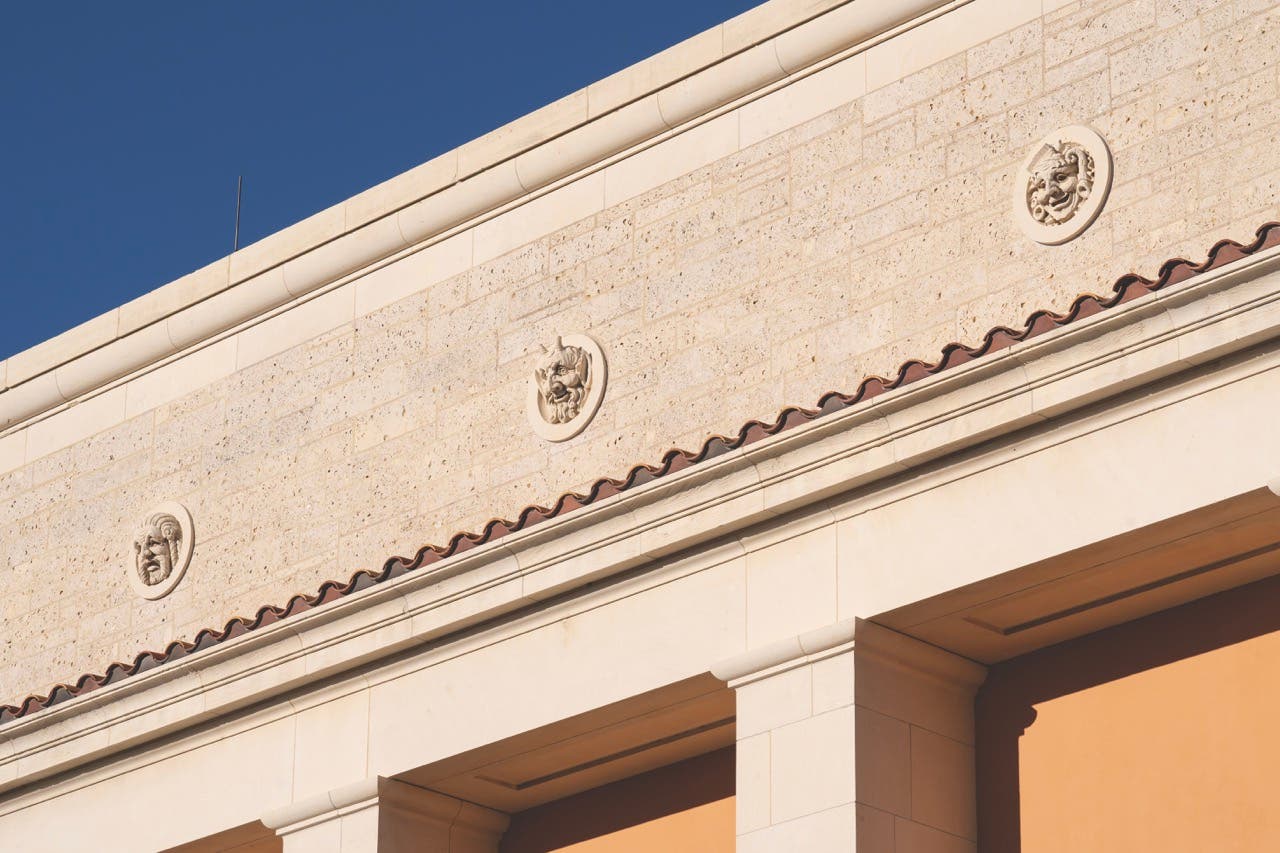
Hogg Memorial Auditorium’s limestone facade highlights carefully preserved
architectural details, including carved medallions.
Whether hosting student theatre productions or top-tier national performers, Hogg Memorial Auditorium has long been special to social and cultural life at the University of Texas at Austin—and now, after a long lag, it’s reclaimed that identity. In partnering with McKinney York Architects to realize a long-overdue renovation—the first on campus to receive LEED Platinum certification—the university has transformed a languishing theatre into a flexible 1,000-seat performance space that embraces leading-edge technology while honoring its past.
“It’s an iconic building on campus, [and] we saw it as a transformative renovation for a state-of-the-art auditorium inside a historic shell,” says Michelle Rossomando, President and Principal at McKinney York, “That was the basic, leading priority for us.”
Designed by Paul Cret—the storied architect behind some 20 buildings at UT Austin—Hogg Memorial Auditorium opened in 1933 as the first theatre on campus. In the nearly century since, the Beaux-Arts auditorium came to occupy a sweet spot on campus—more intimate than UT Austin’s Bass Concert Hall, greater capacity than the largest lecture halls—that elevated it as the primary gathering and performance space for decades, hosting countless theatre performances, concerts, debates, classes, and other events. It’s the sort of place with which every UT Austin student is familiar, says James Buckley, Director of Facilities and Operations for University Unions, the entity that oversees the auditorium. “Hogg might be the first building they were in as a freshman, then one of the last buildings they’re in as they get ready to leap into the world.”
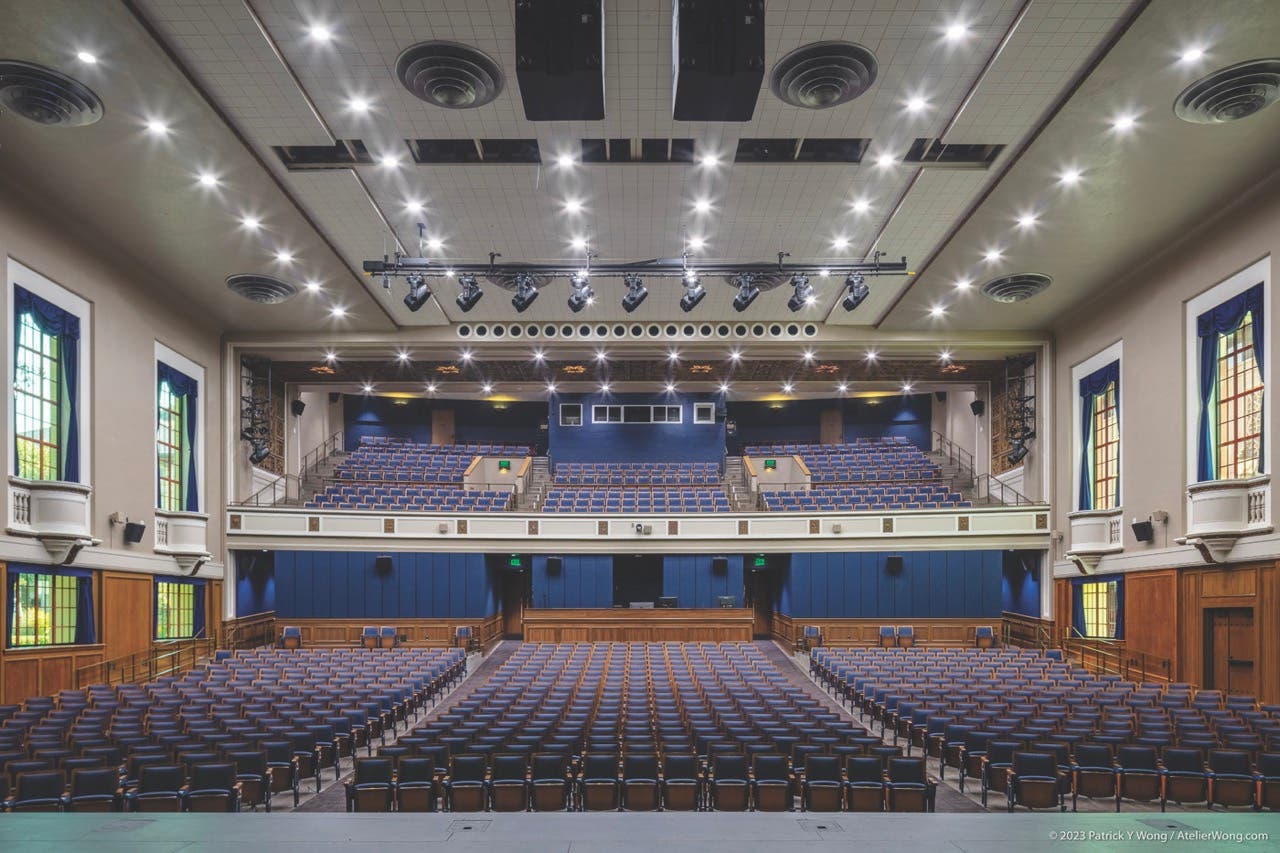
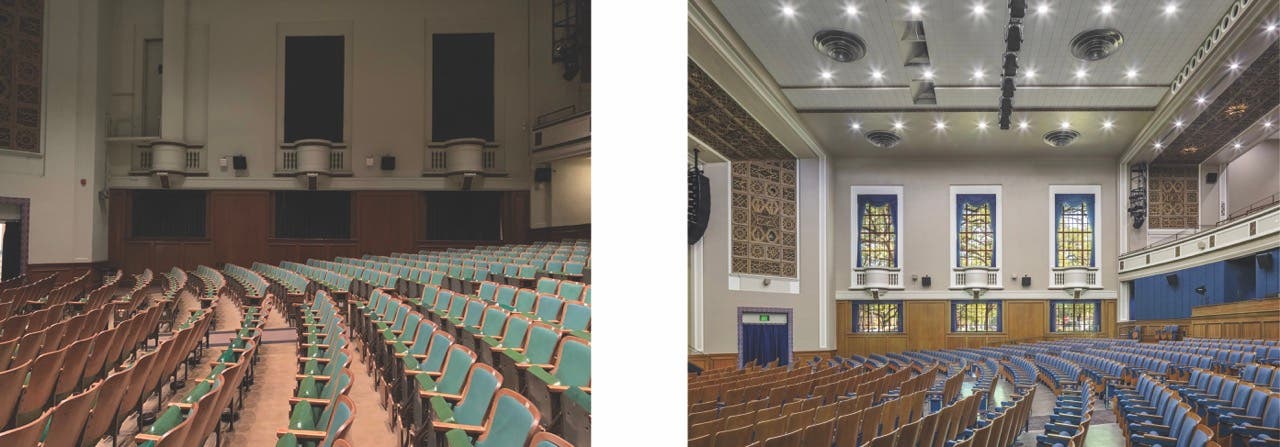
audiovisual systems, and improved acoustics boost the venue’s versatility and
functionality, balancing modern performance needs with historic preservation.
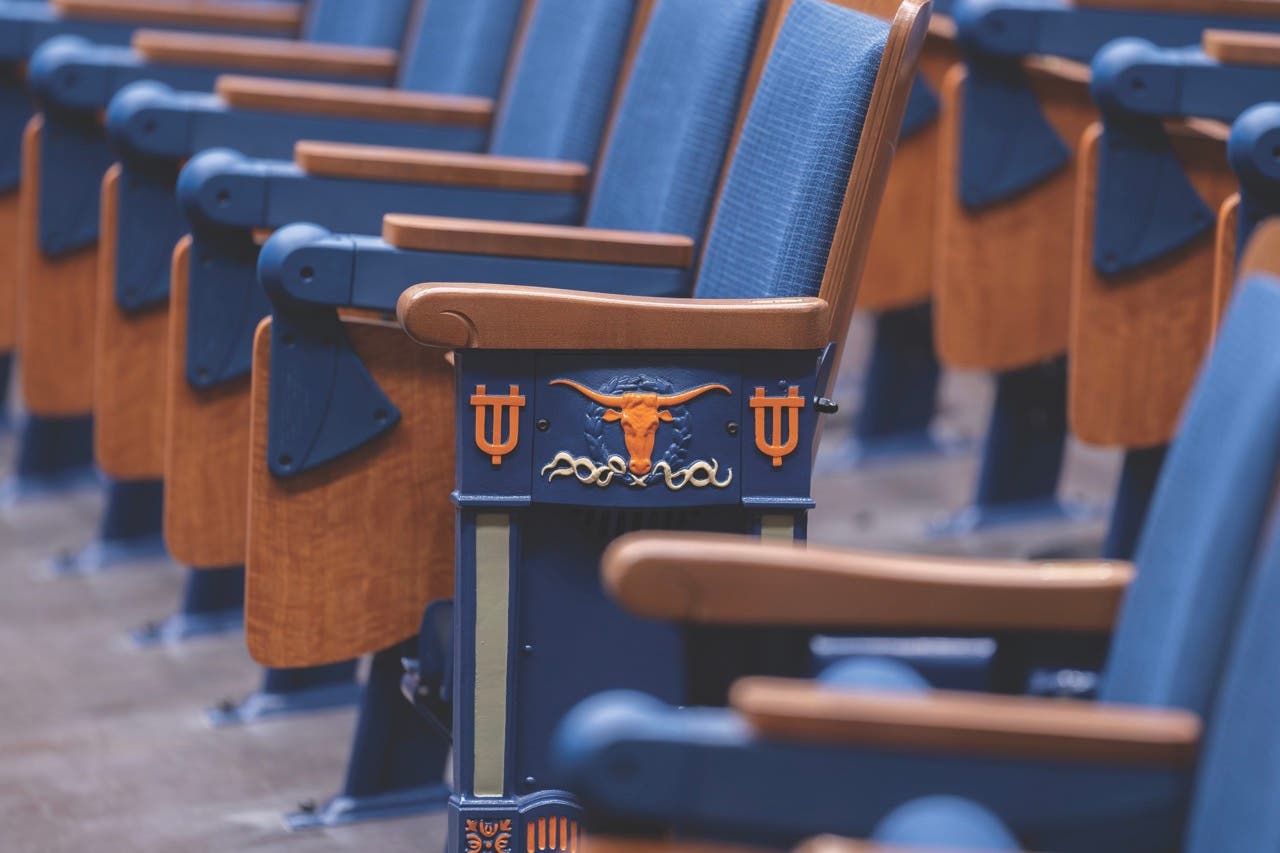
The original cast iron end caps served as the basis for the distinctive longhorn insignias adorning auditorium seating.
But by the 2010s, the 25,000-square-foot space had become timeworn and underutilized. Beyond cosmetic appearances, the auditorium—conceived right around the time Austin implemented its first building code and subject to round after round of deferred maintenance—had accumulated a critical mass of safety and accessibility issues. The mechanical, electrical, and plumbing systems were far beyond their useful life and fundamentally inadequate. The sightlines were woefully lacking, there were acoustic dead zones, and, because of the potential for noise, the building’s half-dozen or so toilets were adorned with signs warning against flushing during performances. There was so little room in the vestibule and lobby—the latter of which was acoustically connected to the performance space—for patrons to gather that they were frequently compelled to queue outside before being seated, no matter the weather. Austin-based McKinney York Architects, who had collaborated with the university on a range of projects including its admissions welcome center and Briscoe Center for American History, began formulating a vision for Hogg Memorial Auditorium—one that, beyond addressing its most exigent issues, embodied its values and honored its history in an attractive space that could serve the current and future needs of a broad cross-section of the campus community. “How do you let this building reach as many students as possible on campus, the school community, the university community, while also showcasing what the [University] Unions does on campus?” Rossomando says.
the university’s branding and provide better sound absorption.
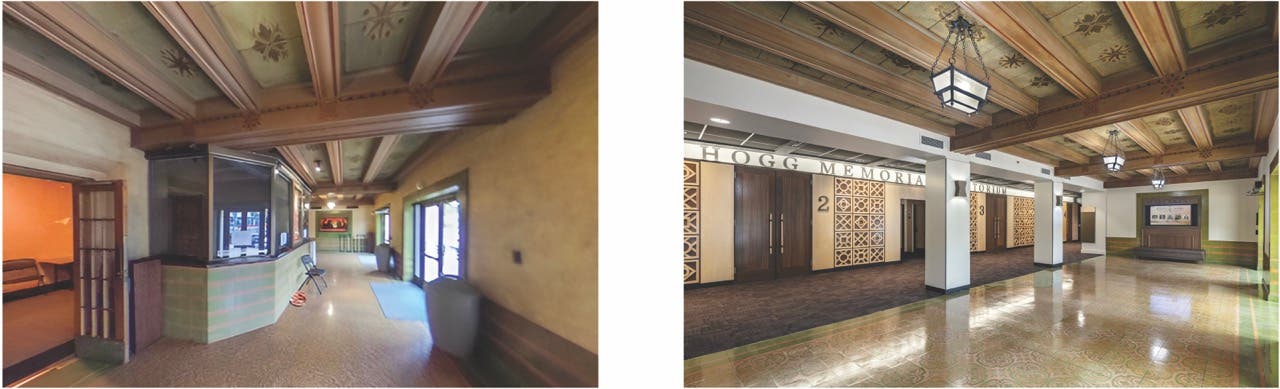
The vestibule—once too small to accommodate the crowds queuing up before
performances—was configured to suit the expanded lobby while preserving key
features including restored encaustic tile flooring, stenciled wood ceilings, and
retrofitted pendant lighting.
When work began in fall 2021, the starting point was reconciling the overhaul of the systems with the overarching aims of preserving the building’s historical presence, says Andrew Green, TKTTitleat McKinney York. To accommodate new, upgraded mechanical, electrical, and plumbing equipment within the existing footprint, the excavation crew jackhammered around the piers and footings in the basement, nearly doubling the space. (“Every architect, at one point in their life, has said, ‘Let’s excavate under the building to get more space,’ and that idea never works,” says Rossomando. “But in this case, it really did.”) It also meant searching for creative, clever opportunities within the existing footprint: the design called for tucking restrooms underneath sloped seating, for example, and positioning a sound mixing booth in the balcony overhang.
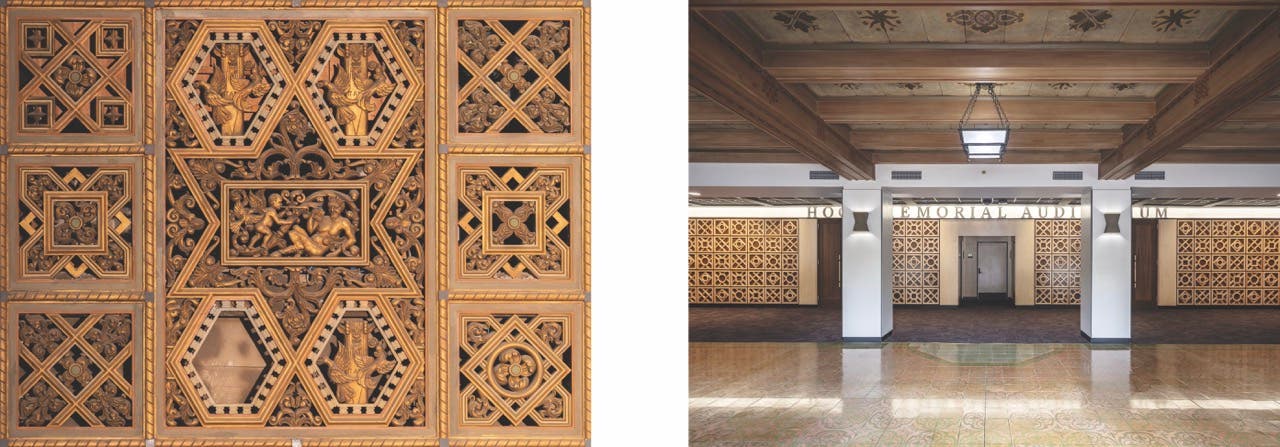
Renovating the vestibule and lobby centered on redefining the line of sound and security separation, repositioning that barrier to separate the lobby from the main performance space. Along with opening up another nook for additional restrooms, that critical adjustment enables audiences to convene in the lobby before performances as well as banquets and small events, taking in historical features like the refreshed encaustic tiles, stenciled ceilings, and a new, ornate wood wall whose pattern borrows from the carved plaster proscenium. “There was a lot of effort put into the restoration of some really critical historic features,” Green says.
That approach continued in reconfiguring a performance space originally designed for unamplified performances. Sound-absorbing panels, ceiling tiles, and modern technology fundamentally change the audio-visual dynamics, enabling engineers to fine-tune the sound in the room while immersing students in the newest tools of the trade. “There were audio visual upgrades that were needed to take this historic shell and bring it to a level they could use for teaching the next generation of theatrical, tech-production students,” Green says. The renovation involved removing back rows of seats and pouring raised slabs to improve accessibility and sight lines on the main floor, and upgrading to retractable upholstered seating to better absorb sound while conforming to egress requirements. In addition to a drop bar for theatrical spotlights, three sets of original windows in the auditorium—long boarded up to mitigate sound issues emanating from the adjacent service alley—were outfitted with motorized shades to increase the availability of natural light. Now, with the push of a button, the space transforms from a black-box theatre to an illuminated auditorium with views of the vaunted, 250-plus-year-old trees the community has long known as the Battle Oaks.
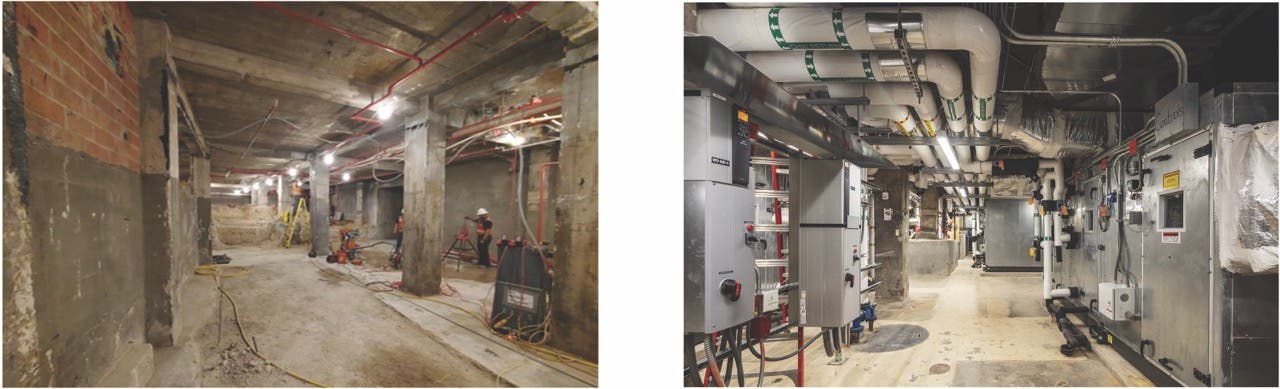
excavation work to house upgraded mechanical, electrical, and plumbing systems while staying within the building’s existing footprint.
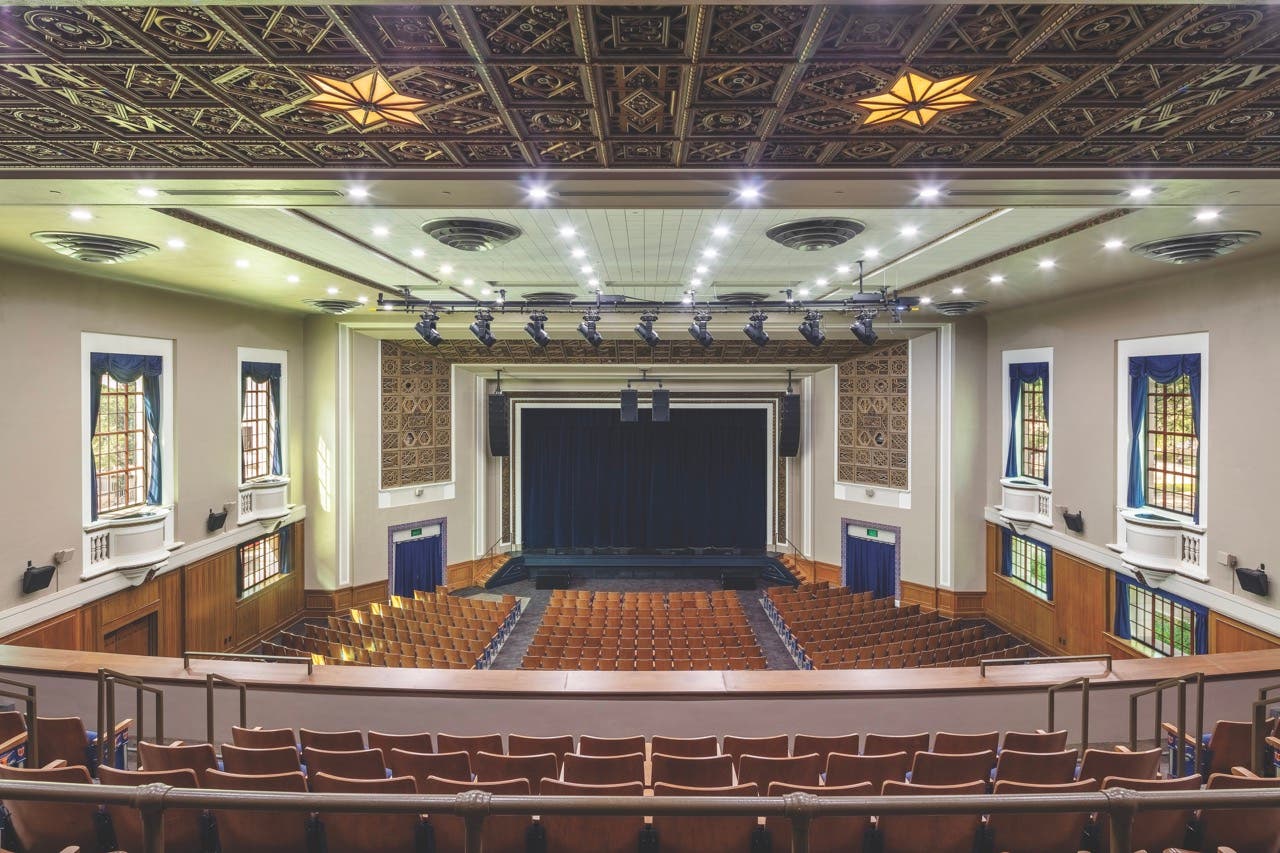
As part of enhancing the auditorium’s grandeur and historical significance, the decorative plaster ceiling panels—featuring intricate carvings
and compelling geometries in its design—were meticulously preserved.
Since the renovation wrapped in 2023, Hogg Memorial Auditorium has been buzzing with activity from more than 100 performances. Along with student performances, the likes of virtuoso guitarist Gary Clark Jr. to former Secretary of State Anthony Blinken have graced the stage, testament to a space that can flex across the sonic spectrum. And as ticket holders shuffle to their blue seats before showtime, the eagle-eyed among them might notice yet another nod to history: replicas of the iconic longhorn—the originals having all but vanished, owing to students who absconded with them over the generations—adorn the seats’ end caps. It’s a quiet, quirky variation on a theme that permeates all around. “I think we honored the past architecturally,” says Buckley, “yet we brought it into the future.” TB
| KEY SUPPLIERS |
|---|
| Architect McKinney York Architects Millwork K&J Woodworks Acoustics Armstrong Ceiling Solutions, Krieger Specialties (acoustical doors), Johns Manville (sound absorbing wall units) Flooring Interface, and Daltile Door Hardware Allegion Glass/Glazing Kawneer, Hopes Paint Sherwin Williams Signage TEN400 Windows Hopes Fixed Seating Irwin Theatrical Design Salas O’Brien |

Manufacturer of handcrafted solid-bronze architectural hardware: door, window, bath, sink & cabinet hardware & kitchen accessories; 7 different finishes; traditional, contemporary & other styles.