

Public Buildings
Moving Mrs. Frick’s Boudoir
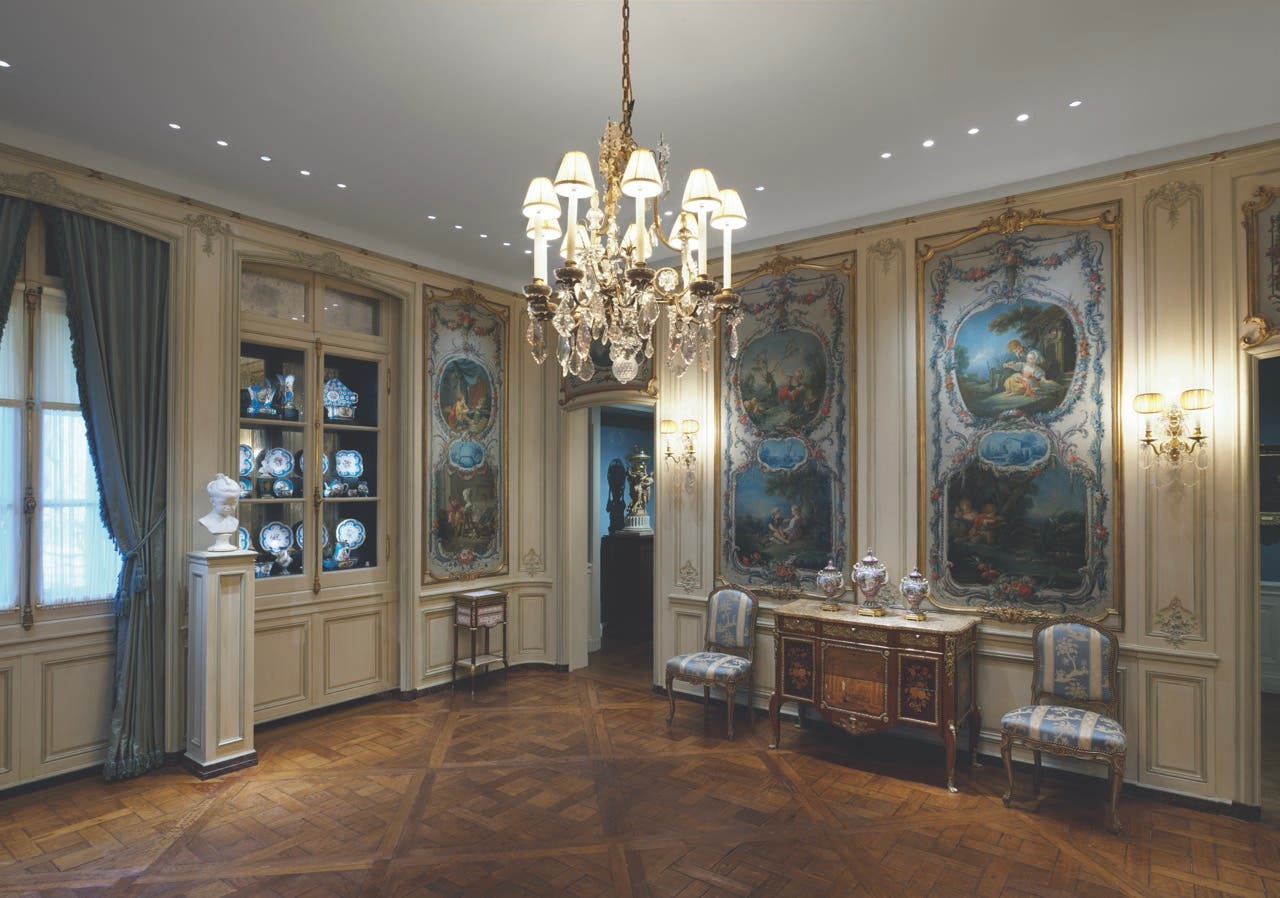
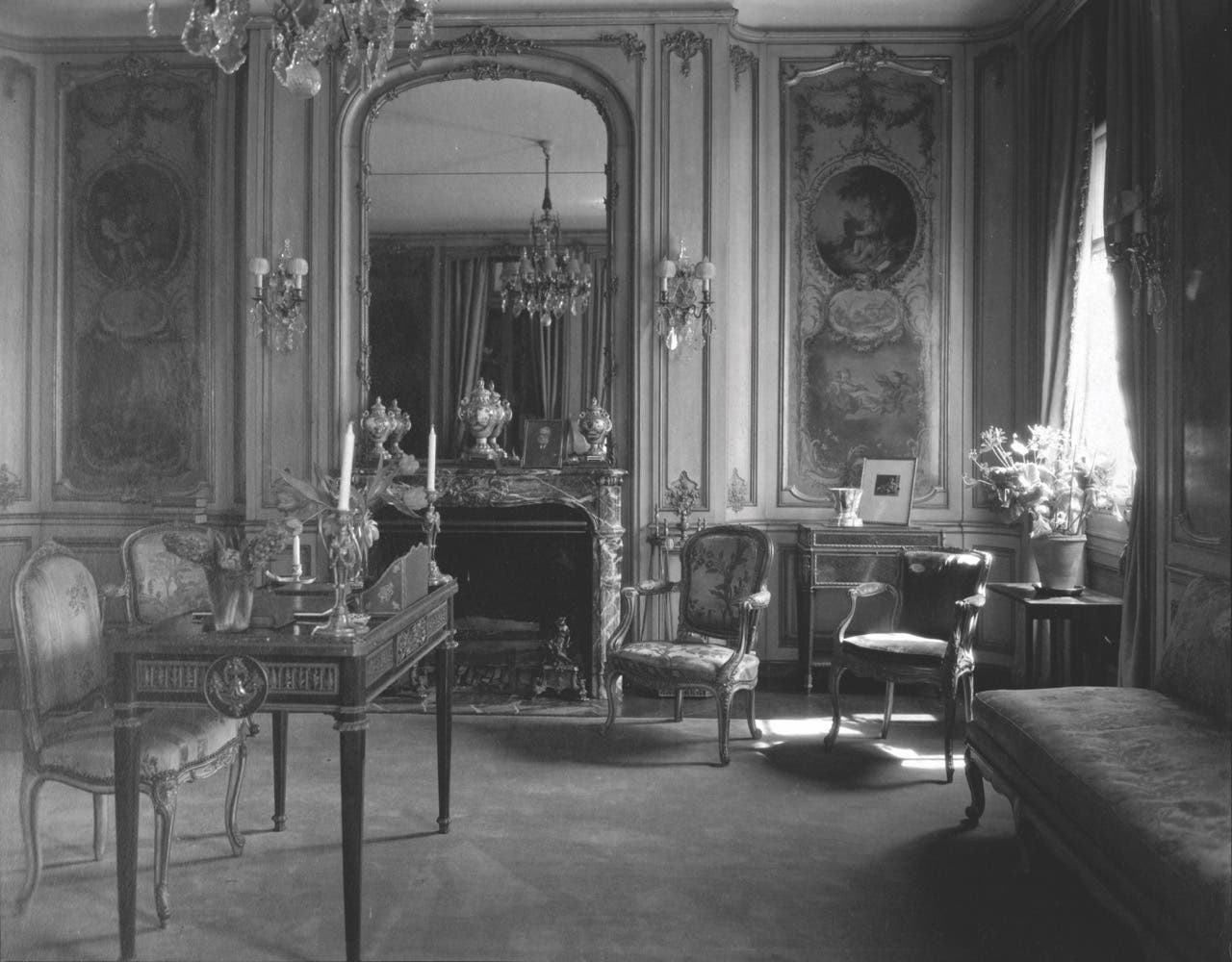
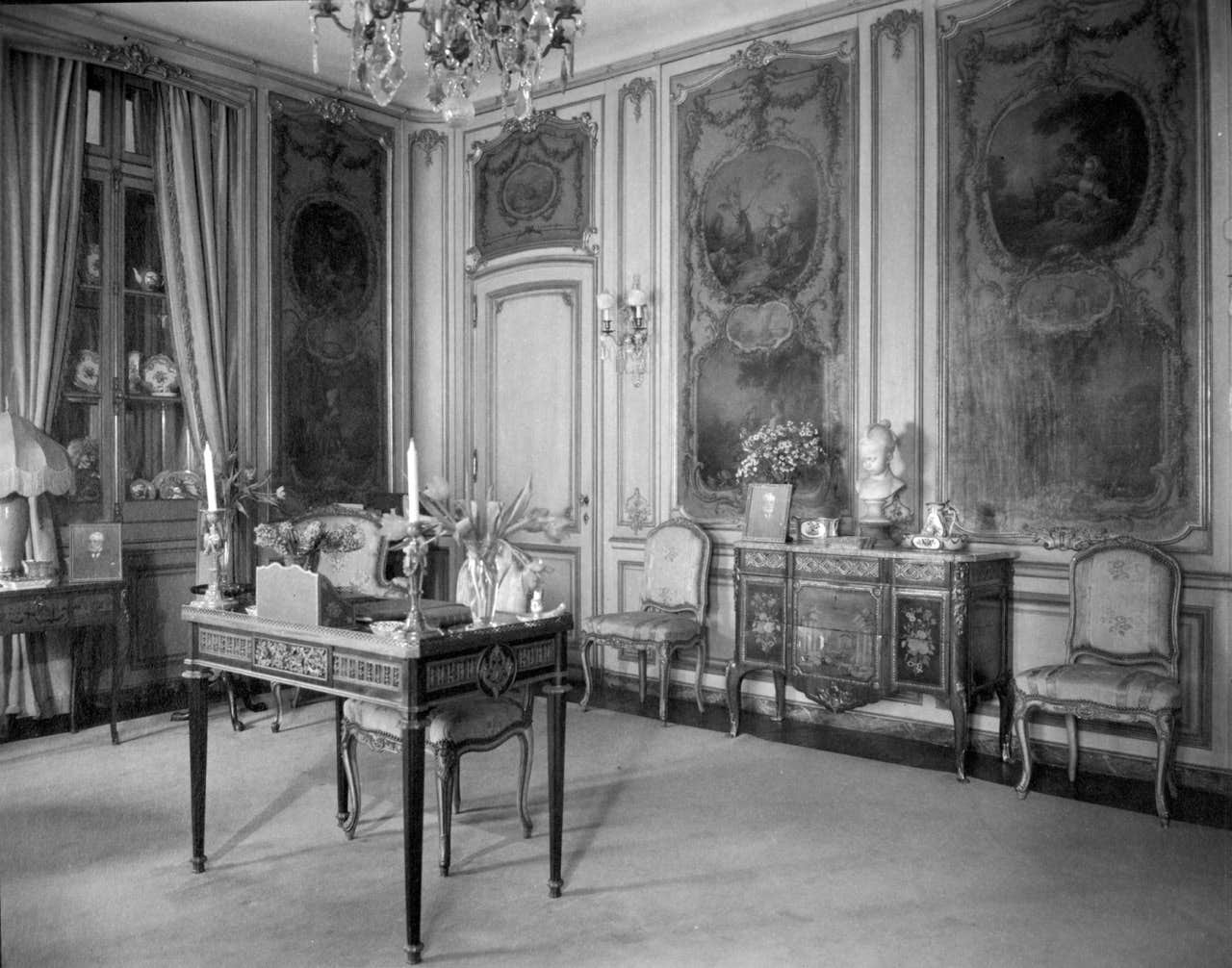
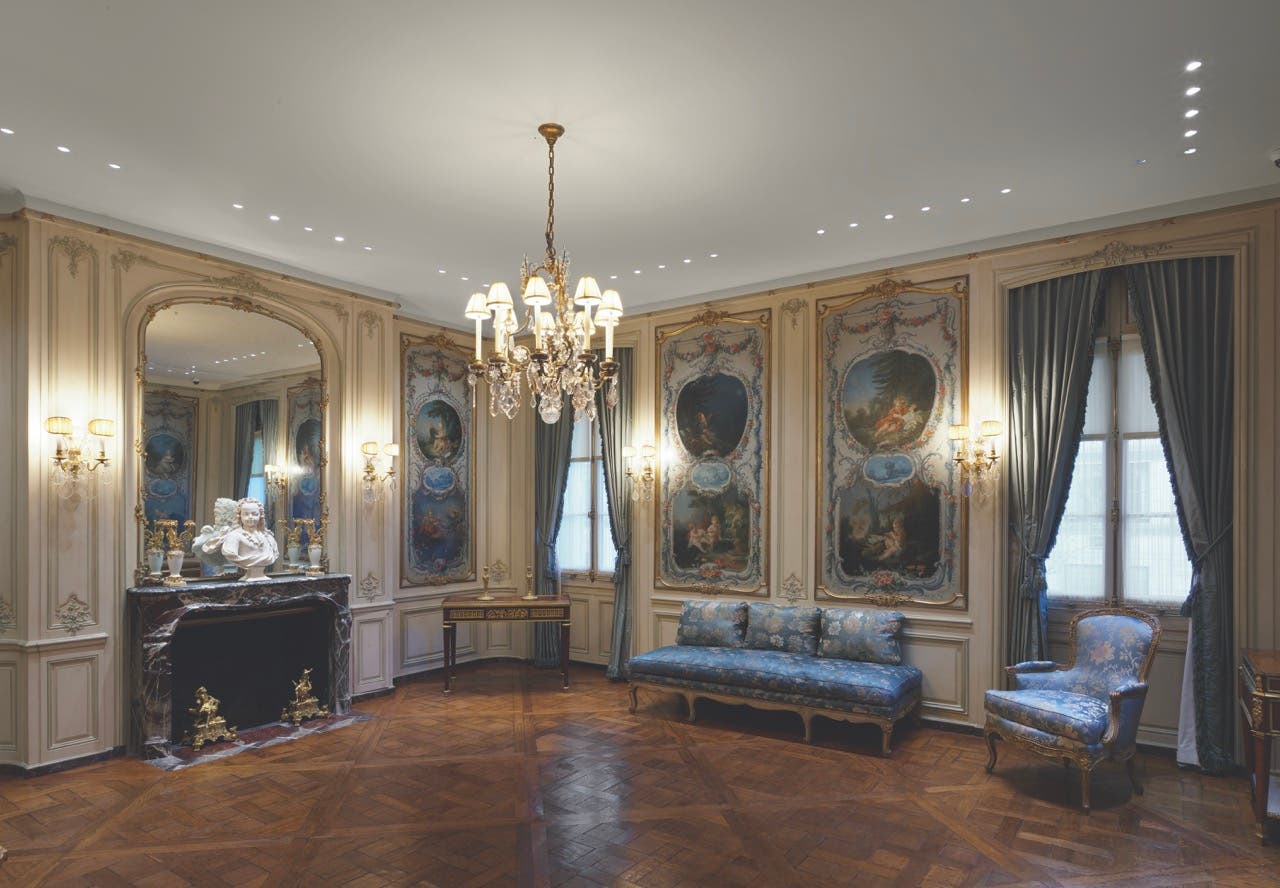
For James Boorstein, the Boucher Room was like a puzzle. The room, named after its works by 18th-century French painter François Boucher and his workshop, originally served as the private sitting room of Adelaide Frick, wife of Henry Clay Frick. After the Fricks’ deaths, the mansion was transformed into a museum, and the Boucher Room was moved—parquet de Versailles floor and all—to the ground level to make its accessible to visitors, while the second floor became offices. When The Frick Collection kicked off a major renovation in 2021, the museum decided to bring the room back upstairs. Now, it was up to a team of experts, including Boorstein, to return Mrs. Frick’s boudoir to its original place—and, to the extent possible, its original state.
“One of the very tricky parts of a room like this is that the woodwork drops down below the floor, so the floor traps the paneling,” says Boorstein, whose firm Traditional Line performs interior historic renovation and high-end general contracting. “So, the floor needs to go in first, but that means you have very little adjustability with the woodwork. There’s a relationship between the fireplace hearth and that first triangular floor panel, which creates two diagonals through the room, and those essentially establish where everything goes.”
The Boucher Room is a relatively small component of The Frick Collection’s expansive renovation project, which includes 60,000 square feet of repurposed space and 27,000 square feet of new construction. But with its connection to the Fricks, as well as its important objects such as the Boucher paintings and period furniture, the room provides a unique window into The Frick Collection’s history as both lived-in mansion and public museum.
“It’s never looked so good since it was originally installed, and it has proven to be one of the strengths of the second floor,” says Joe Godla, who retired after 20 years as the museum’s chief conservator after it reopened in April. “The room is very intimate, and it really has a broad appeal.”
Making New Spaces, Preserving History
The Frick’s renovation expanded the museum’s gallery space by 30 percent, opened the mansion’s second floor to the public, and improved accessibility. The project also included a new auditorium, an expanded education center, and updated back-of-house facilities.
While the renovation was substantial, it was characterized by a meticulous attention to detail, with builders and artisans using modern methods and technologies that, in many cases, made the Beaux-Arts mansion feel even more like its 1914 Gilded Age self. For example, the West Gallery’s skylights were replaced with condensation-resistant double-paned glass, as well as a hidden system of shades and artificial lights to create optimal lighting for that part of the museum. And after a new subterranean auditorium was built, landscape architect Lynden Miller recreated the 70th Street Garden above the theater, with a design that mirrors original landscape architect Russell Page’s deliberate misalignment of trees to create beautiful shapes in the negative space between them.
In the Boucher Room, these details get smaller and smaller—down to the level of the passementerie, the ornamental trimmings and decorations on the room’s drapery, such as tassels and pom-poms. The Frick hired Verrier Passementerie in Paris to make new bespoke silk trimmings using large wooden looms.
Architect Annabelle Selldorf’s firm led overall design for the Frick’s enhancement, while Beyer Blinder Belle served as executive architects, also providing project management and historic preservation expertise. Simultaneously, the renovation of the existing mansion was led by the institution’s curators and conservators, who engaged a long list of specialty firms. Selldorf says the museum’s early decision to bring the Boucher Room back to the second floor has made the room an “anchor” that gives visitors insight into the Frick’s private living quarters.
“It was a great privilege to observe the immense craft and care that went into refitting the slightly different proportions of the room—a real revelation once complete,” Selldorf says. “While the majority of the elements, and in particular the art works, are the same, the experience of the space is far more fulfilling.”
Creating an Authentic Experience
One of the major challenges of restoring the Boucher room was to recreate a cabinet for Sèvres porcelain along the room’s west wall. The cabinet was removed when the room was moved to the first floor in the 1930s, and the porcelain had largely been kept in storage for more than ninety years. Traditional Line designed a climate-controlled cabinet made from Obomodulan, an inert, cast polyurethane material.
“That’s the good thing about working in museums,” says Boorstein. “There’s always some cutting-edge thing. The cabinet was made from moving parts, to resemble woodworking, and the Frick team did a lot of experimentation with different densities.”
For the rest of the room, restorers deinstalled and reinstalled existing flooring and paneling, and used traditional materials to remake missing or damaged pieces. The entire west wall needed to be recreated, and Traditional Line made it from white oak, complete with elaborate carvings.
The room had been repainted a number of times, most recently in a bluish-green color that Godla likens to that of a wedding cake. After a careful analysis of the historic paint layers, the room was repainted in a cream color with subtle blue-green undertones. “That brightened the room and gave it more substance,” Godla says. “Somehow, it just made it feel more authentic.”
Ultimately, Godla says, the restored Boucher room is the result of countless details, any one of which might attract relatively little attention in isolation: repainted moldings; the new Sèvres porcelain cabinet; light from windows that didn’t exist in the first-floor setting; replacement of “very tired” draperies, complete with bespoke passementerie sourced from across the Atlantic. But these details, Godla says, add up to create an experience that visitors feel, even if some may lack the vocabulary to describe it.
“The typical visitor may not really understand exactly what it is about the Frick that they love so much,” Godla says. “It’s difficult to find other interiors like this anywhere in the country. So, they may not specifically notice the passementerie, or the profiles of the moldings. But I think somehow it sinks in.” TB
Manufacturer of handcrafted solid-bronze architectural hardware: door, window, bath, sink & cabinet hardware & kitchen accessories; 7 different finishes; traditional, contemporary & other styles.