

Peter Miller
WHAT I HEARD and SAW at this SUMMER’S ANNUAL CONFERENCES
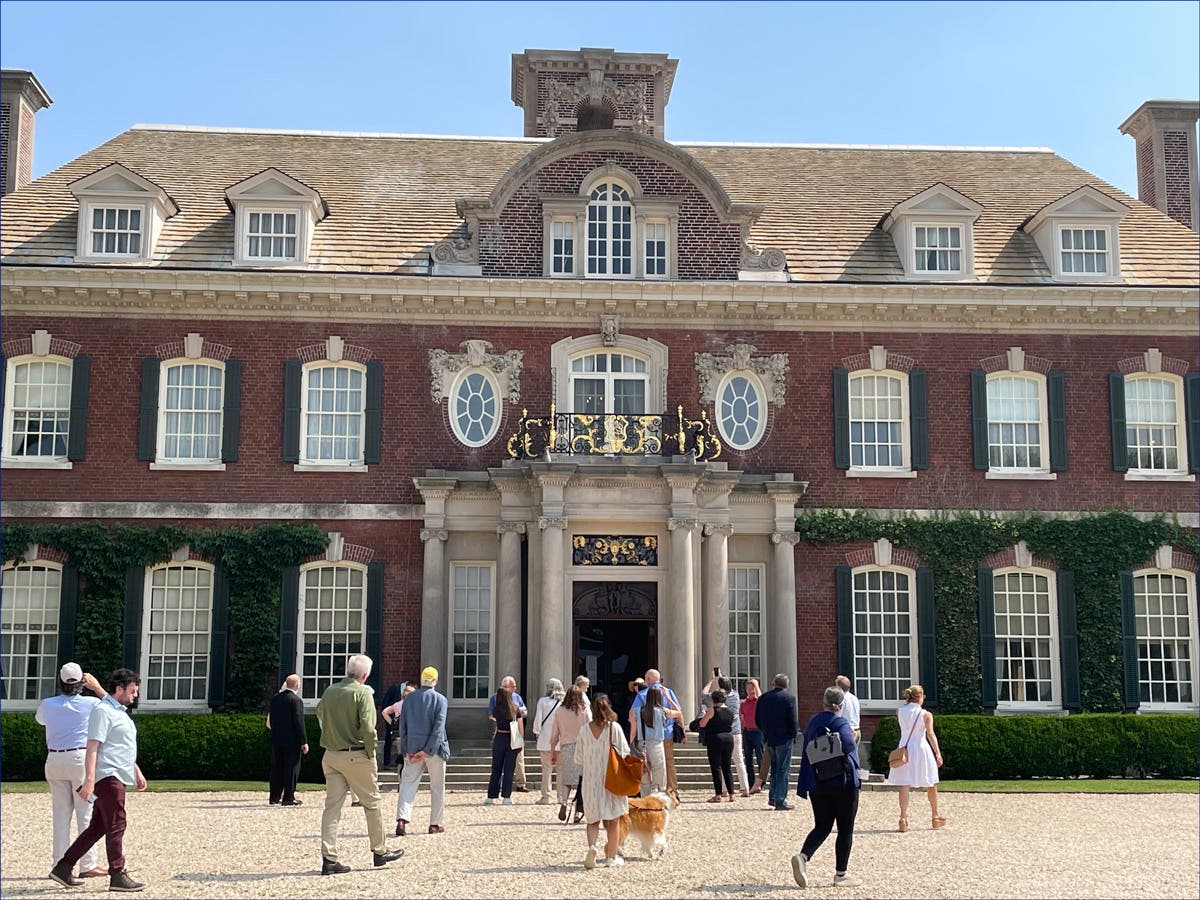
Most recently, I experienced Gilded Age and Edwardian glamour, the Mansion at Oyster Bay, where Traditional Building Conference attendees lived the good life on Long Island’s gold coast for two days. There was AIA CEU/HSW education; museum, architecture and garden tours; and the Palladio Awards annual Gala. This event in the 2023 Traditional Building Conference Series took place July 11-12.
The Mansion at Oyster Bay, a Colonial Revival house designed by Delano and Aldrich sits proudly between formal gardens and a lush golf course. Networking was easy on the mansion’s loggia where sea breezes tamed the heat. The mansion is a living laboratory for traditional building education. This was more fun than work!
On Tuesday evening, July 11, the conference area was transformed into a more formal setting for the annual Palladio Awards and dinner. White hydrangea and roses adorned each table of eight, and the room glowed with soft light as Palladio design award winners strode to the podium to accept their bronze trophies. The 2023 Palladio Award winners are featured again in our July issue of TRADITIONAL BUILDING
EDUCATION and TOURS
The first day of education began with a fascinating look at Stanford White’s own country house (1885) in Smithtown Long Island, still inhabited by his grandchildren. As it happens, one of these grandchildren is architect Samuel G. White, FAIA, PBDW Architects, who explained his restoration and renovation of his grandfather’s house, Box Hill.
Richard Off, AIA, and Senior Architect at Hoffman Architects and Engineers, presented a “Materials and Methods” case study of his copper roofing restoration and replacement on an institutional building.
2023 Palladio winners, Richard Bories, and James Shearron, shared the design- details of their award-winning, new period house under 5,000 square feet, project on a challenging site in East Hampton, L.I. N.Y.
J. Scott O’Barr, AIA, showed how he and his colleagues at Voith and Mactavish Architects use hand-drawing, watercolor rendering and computer aided design to develop ideas into final project plans. Mr. O’Barr led twelve participants, sketchbooks in hand, on an afternoon sketching tour of the Mansion and Oyster Bay.
Nearby museum, garden and architectural tours included excursions to Raynham Hall, Coe Hall, and Old Westbury Gardens. Participants traveled through three centuries of history and beauty.
Ann Rauch, Architect Strategic Marketing Manager, Marvin Windows, moderated a venerable panel of preservation architects who shared their insights about the nexus of historic preservation with affordable housing, adaptive reuse, social welfare, and the ever-challenging conundrum of “compatible but differentiated” traditional building renovations. Paul S. Alter, AIA, Skolnick Architecture and Design Partnership; Laura Heim, FAIA, Laura Heim Architect; and Daniela Holt Voith, FAIA, Voith and Mactavish Architects were the panelists for this discussion. The Q&A was lively!
Russ Oliveri, Oliveri Millworks, explained good specifications, sound installation and hurricane performance of windows and doors. Jason Savage, of Ecorad, explained the intricacies of restoring steam radiators for modern heating needs, including converting them to electric heat whilst preserving their historic look and feel.
MATERIALS, METHODS, and NETWORKING
Building material sponsors help underwrite Traditional Building Conference education for the architect, contractor, building owner and facilities manager attendees and many offer AIA registered, technical courses of their own. These suppliers and service providers are dedicated to serving the $170 billion traditional building market.
THE AMERICAN INSTITUTE of ARCHITECTS ANNUAL CONFERENCE and EXPOSITION.
Earlier this summer, June 7-10 I had some trepidation about traveling to San Francisco for the AIA Convention, after hearing so much bad news in the media, about the conditions of this city. But San Francisco was as charming as ever, a beautiful location for this important event.
I spent most of my time with our friends at the Historic Resources Committee, an AIA Knowledge Group which numbers 6,000 historic architects, many of whom do institutional traditional building work, like state capitols, national park lodges, universities or football coliseums.
Historic Resources Committee member Wendy Hillis, Assistant Vice Chancellor and campus Architect at U.C. Berkley presented a seminar about universal design at her storied university, “one of the largest university campuses in the world.” Ms. Hillis is well versed in ADA while also preserving the historic character of her campus buildings.
Matt Chalifoux, FAIA, Page Southerland Page Architects presented his mid-century modern case study of Louis Kahn’s Richards Labs towers at the University of Pennsylvania.
Peyton Hall, FAIA, Managing Principal at Historic Resources Group LLC, another HRC Advisory member and an adjunct professor at the University of Southern California School of Architectural Heritage Conservation Program, sat for a podcast interview with me about “substitute building materials.” Should we use them or not on historic buildings? That was my big question for Mr. Hall who said “yes,” when in-kind materials are unavailable, not up to code or too expensive. “But they have to look authentic,” explained Hall.
The Historic Resources Committee annual AIA luncheon was held at the venerable San Francisco City Club, which is adorned by Frida de Rivera paintings. It was a full house; HRC Chair Elizabeth Hallas presided, and the networking was as good as the food.
The lunch-time presentation was a panel of experts discussing the restoration and maintenance of San Francisco’s historic waterfront. Whether in San Francisco or Newport Rhode Island, rising sea levels and natural disasters challenge our historic resources. Panelist John Lesak of Page & Turnbull told us that $600 billion is spent on natural disaster repair, yet, he exclaimed, “architecture is optimism…but hard.”
Back in the convention hall I saw a few suppliers who serve the traditional building market segment including John Canning Co.; St Louis Antique Lighting; Ludowici Clay Tile Co. and Marvin Windows, all supporters of the AIA Historic Resources Committee.
A group of us traditionalists gathered at the historic St Francis Hotel on Nob Hill for dinner and agreed we’d do it again next year, when the AIA Convention will be in Washington, DC. By then, Lorraine Minatoishi, AIA, President of AEPAC in Honolulu and Guam, will be the next AIA Historic Resources Committee Chair.
Pilkington North America manufactures and markets glass and glazing products for the architectural and automotive markets.