

Peter Miller
Summer Reading
I was on a Fourth of July vacation this summer, relaxing on the New England Coast, when I read Tom Kligerman’s new book Shingle and Stone. I was a stone’s throw away from several Shingle Style houses, when I read on page 17, “A house should be much more than just a shelter . . . it is a declaration of independence.”
Maybe it’s because I vacation in a shingle-clad house, or that I have lived in two different shingle houses growing up, that I am partial to the Shingle Style. I paid $80 for Kligerman’s book without batting an eye, the second book of Tom Kligerman’s I’ve bought.
Or maybe it’s because Tom Kligerman has struck out on his own, an amicable parting with his partners Ike and Barkley. I wanted to see his new ship launch, so I bought his book and promised to write about it.
Shingle and Stone presents Kligerman’s work, of course, with an explanation for why he designs the way he does. In the first chapter, titled “American Inspiration,” he says “The history of American buildings, of American taste, has been influenced by so many other cultures, brought here by seekers of a new home in a place free from the conventions and strictures of their roots. . . . all these influences have trickled down into the melting pot that is American taste—and to be honest, I love them.”
Now read the next 10 chapters, 275 pages, and see what the author is talking about. In a heavy-stock paper, hardcover Monacelli masterpiece, he shows us shingle and stone examples of houses from Seattle to Sagaponack, Brookville to Bridgehampton, each more luscious than the last, with traditional forms that twist ever so slightly to be original. My favorite “original” design is “Origami,” on pages 120 to 139. It is the smallest building in his collection, a guest house, with diamond-pane windows and a shaped and folded gable that “suggests a traditional samurai helmet.” About this little folly Kligerman writes, “Nothing about the exterior is straight. The lower floor walls tilt back while flaring out over the stone foundation, as if the house is being stretched by tent pegs.”
Like many of our esteemed readers, Tom Kligerman was classically trained. But he applies classicism in new ways that show how contemporary architecture starts with the fundamentals and evolves into something fresh. Even his more modern, minimalist design is made more traditionally warm by his use of materials, not just shingle and stone on the outside but also highly crafted wood, metal, tile, and stone on the inside.
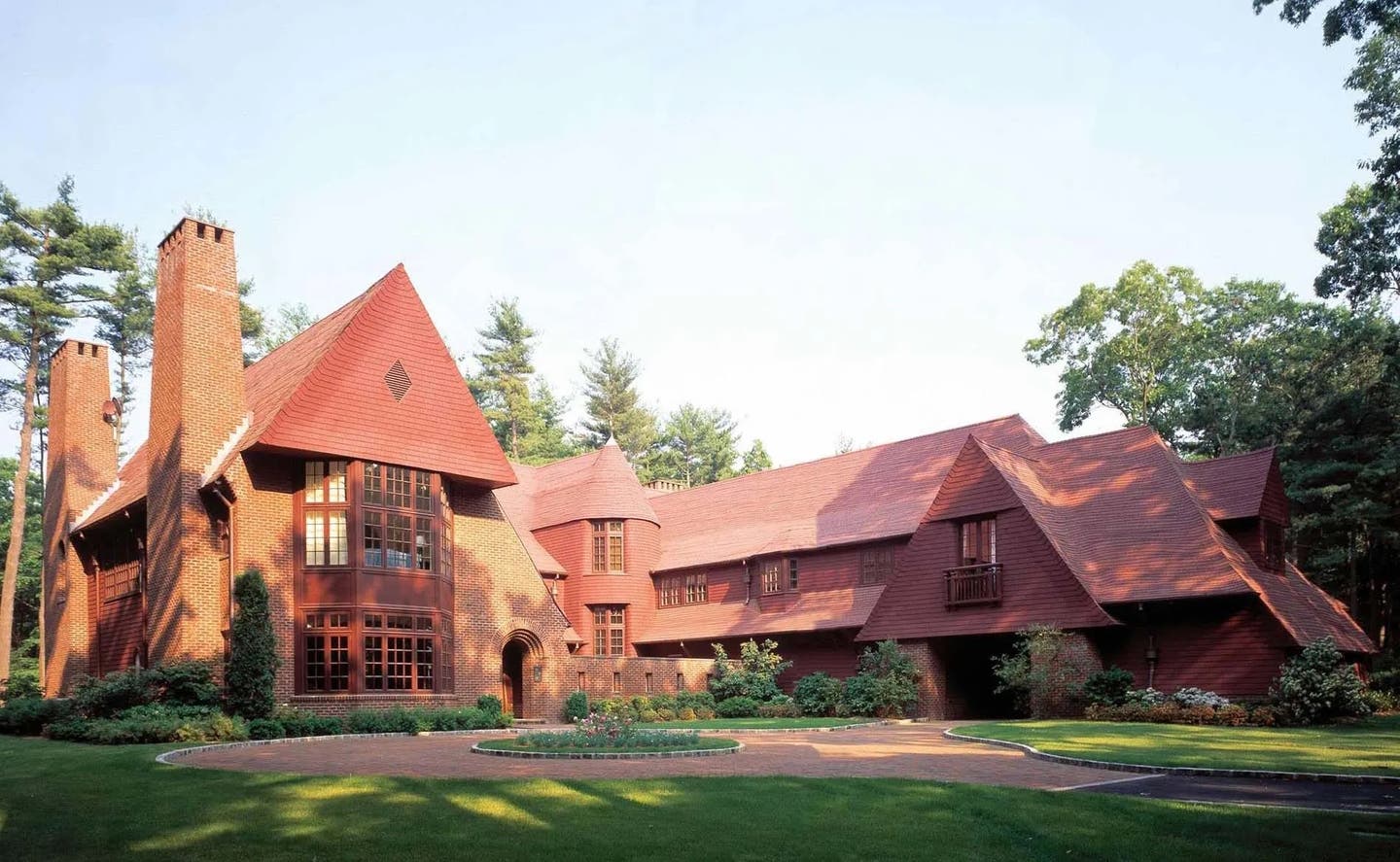
My next-favorite project in the book is a brick-red house in Brookville, pages 18 to 35 called “Woodland Red.” The house is “steeped in architectural precedent,” but not just one. The author admits this design is inspired by five different architects’ work, but the prevailing look and feel is English Arts and Crafts (Sir Edward Lutyens). The red brick and red terra cotta roof pops, like a knock-out red rose amidst its green leaves.
I have heard traditional design criticized for its lack of originality. I have debated the topic of architecture of its time versus architecture of its place. I like what this book says in the “American Inspiration” chapter, which quiets the debate, “The architects of the past that we most admire are those who have twisted tradition in order to reinvent it, to make it new again.”
My next favorite project in the book is a brick-red house in Brookville, pages 18-35 called “Woodland Red.” The house is “steeped in architectural precedent,” but not just one. The author admits this design is inspired by five different architect’s work, but the prevailing look and feel is English Arts and Crafts (Sir Edward Lutyens). The red brick and red terra-cotta roof pops, like a knock-out red rose amidst its green leaves.
I have heard traditional design criticized for its lack of originality. I like what this book says in the “American Inspiration” chapter, which quiets the debate, “the architects of the past that we most admire are those who have twisted tradition in order to reinvent it, to make it new again.”
- Format: Hardback
- Size: 10 1/4 × 12 1/2 in
- Pages: 280 pp
- ISBN: 9781580936040

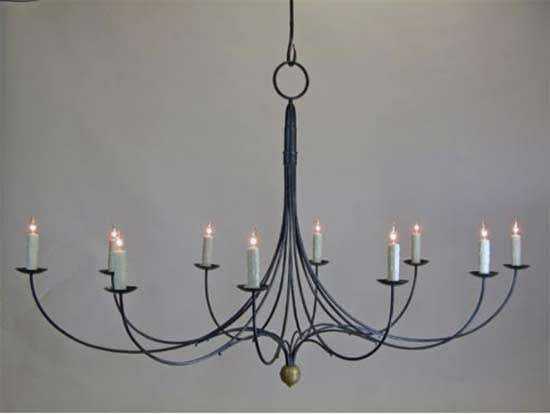
Manufacturer of custom lighting fixtures: chandeliers, sconces, pendants & lanterns; new designs, historic reproductions & custom work; handcrafted in wood, tin, brass or copper; glass, mica or alabaster shades.