


Peter Miller
Though Its Face Is Changing, Competition Is Fiercer Than Ever
Three years ago, there were three contractors bidding on one dollar. Now, there are seven contractors bidding on 50 cents. Business is scarce, and competition, the next “C” in my series, is fierce.
We are all busy chasing work that is slow to close. In the marketplace, I hear this: “Quoting is up, business is down. Competitors we’ve never heard of are stealing business from us, some of it with our past clients.”
Everyone is diversifying their businesses to sell into new markets—including yours. Although these new competitors might be posers, lacking authentic experience in historic restoration and renovation, your clients and prospects don’t necessarily know better. If they do, they are still seduced by a low price. When every job counts toward keeping the doors open on your business, losing jobs to the competition is particularly painful, sometimes even fatal.
What’s more, a new kind of competition has emerged in this challenging market: inertia. The uncertainty of these times has taken the urgency out of making decisions. “If I wait long enough,” some customers seem to be saying, “the right answer will be revealed.” Fear makes buyers freeze. (Certainty, or the lack thereof, in this market is one of my next “Cs.”)
Competition is a great motivator
Has it motivated you? Competition is good for the customer because it forces suppliers and service providers to be more innovative. I’ve seen a lot of innovation in this recession; adversity truly is the mother of invention.
Think differently about your competition. It’s not so much the other companies we bid against. It’s competing with ourselves to lower cost, increase efficiency, improve our execution, launch new products and services and be more relevant to our clients. Nowadays, it’s also about competing with our own clients’ inertia. What creative idea will cause a client to start a stalled project? What pressing problem can we solve to motivate a client to begin?
In a piece of research by Restore Media, government and university facility managers, important clients in our field, said the most telling thing their suppliers can do is “provide solutions.” This was followed closely by “provide technical expertise.”
The continuing recession has taken a toll on past clients; some are even out of business. Have you updated your client list to reflect this? Are you communicating with all the important influencers within client and prospect firms? The principals are not the only decision makers. The AIA’s survey of architectural firms reports an increasing number populated by unlicensed architects, many at the entry level. These are often the young professionals who show up to “lunch and learn” sessions because they’re asked to scout suppliers and service providers. Cultivate them. They need the technical expertise you provide.
How do you stand out from the competition? How do you compete with a lack of urgency in the market? How do you compete with yourself to improve your own performance? As the saying goes, “The more things change, the more they stay the same.” There will never be a better way to compete than to provide innovative, relevant solutions for clients who trust you.

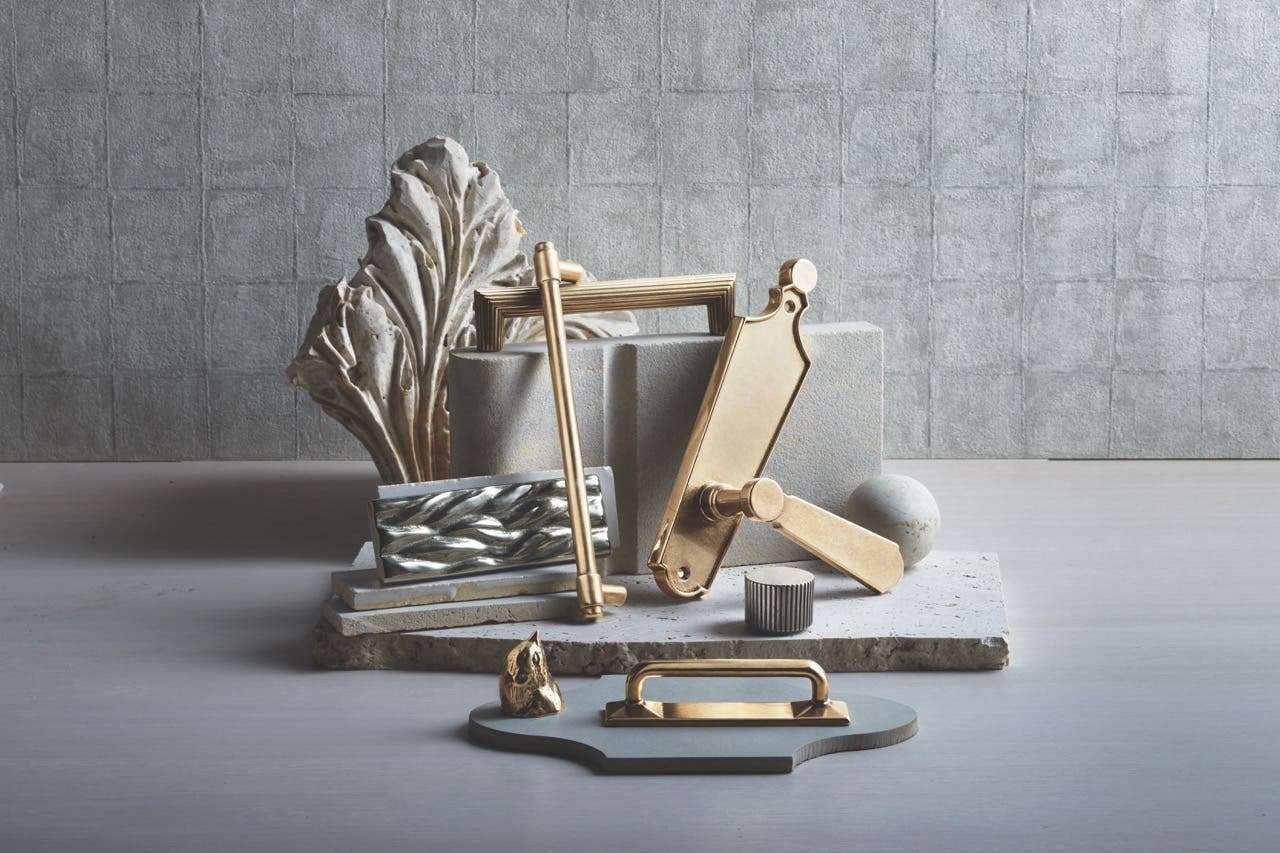
Manufacturer of handcrafted solid-bronze architectural hardware: door, window, bath, sink & cabinet hardware & kitchen accessories; 7 different finishes; traditional, contemporary & other styles.