


Peter Miller
The State of Things: January 2017
The Business of Architecture 2016, AIA’s Architecture Firm Survey Report, describes the health and well-being of our industry. According to this report, “U.S. architecture firms have experienced nearly a full recovery from the Great Recession.”
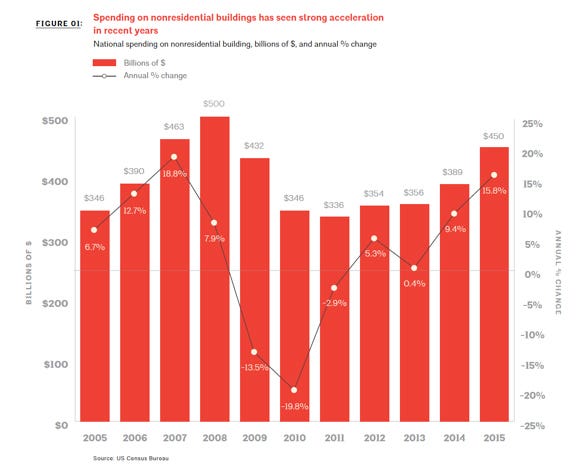
Profits are up from 10% of net billings to 13%, on average, for architecture firms, with 21.5% of the firm respondents reporting a “very profitable year.” Big firms have grown the fastest, and new, small firms were launched at a rapid rate just since 2010. Construction spending grew by about 30% from a trough in 2011 of $336 billion to $450-billion-year end 2015 and it continued growing through 2016. “This leaves spending about $10 billion below peak levels in 2008,” but anticipates “back to normal” or peak spending levels this year.
Net billings for U.S. architecture firms was $28.4 billion, on par with 2008. Average net billing per employee was $108,000, up from $94,000 just two years ago, according to the AIA Firm Survey.
Architecture firms continue to diversify, adding new disciplines to their practice including interior design and engineering. The gender composition of AIA firms has diversified too: women comprise 31% of all licensed and un- licensed positions in U.S. architecture firms. And while ten years ago, women held 16% of all principal and partner positions in firms, now women hold 20% of these positions.
Restoration, renovation and additions to existing buildings continues to grow share of the total construction market, now 45%. This is an increase of 10.6% since 2005. “There are several reasons why the renovation share of construction spending has been growing in recent years, including green building incentives and improved construction methods and products," according to the AIA Survey. "During downturns, new construction activity typically falls off more dramatically than renovations resulting in increased share of construction dollars going toward improvements and upgrades to existing facilities. Yet as the construction sector has recovered in recent years, the renovation share of design activity has not fallen as might be expected.” In north- east and mid-west regions, restoration and renovation accounts for 50% share of total construction spending.
But in the residential sector, new construction is growing the fastest, especially in the “luxury” market, defined as single family homes 4,000 square feet or larger and apartments of 1,800 square feet or more. Architecture firms report that almost 30% of new single family homes designed last year were 4,000 feet or more, up from 25% in 2011. Since 2013, residential construction has grown $7 billion.
Architect’s business comes from a variety of sources including from businesses and industrial companies or institutions, including state and local governments. The biggest increase in “source of work” for architects since 2013 has been commercial businesses which comprises 20% of architect billings. “Private individuals” account for 16% of architect gross billings up from 14% in 2013. State government business is down from 19% to 16% and work from the federal government is down from 7% to 5%. Repeat clients account for almost half of the new work for architects: 46% of gross billing came from past clients in a “noncompetitive” selection.
Millennials play an important role in the architecture field, comprising 27% of all employees at architecture firms. Over half of all architects are 44 years old or younger.
According to the AIA Firm Survey, these results represent an “estimated universe” of 18,262 AIA member firms, thirty-four percent of whom are firms of 2-4 employees. About 40% of firms have five employees or more and 28% are sole practitioners.

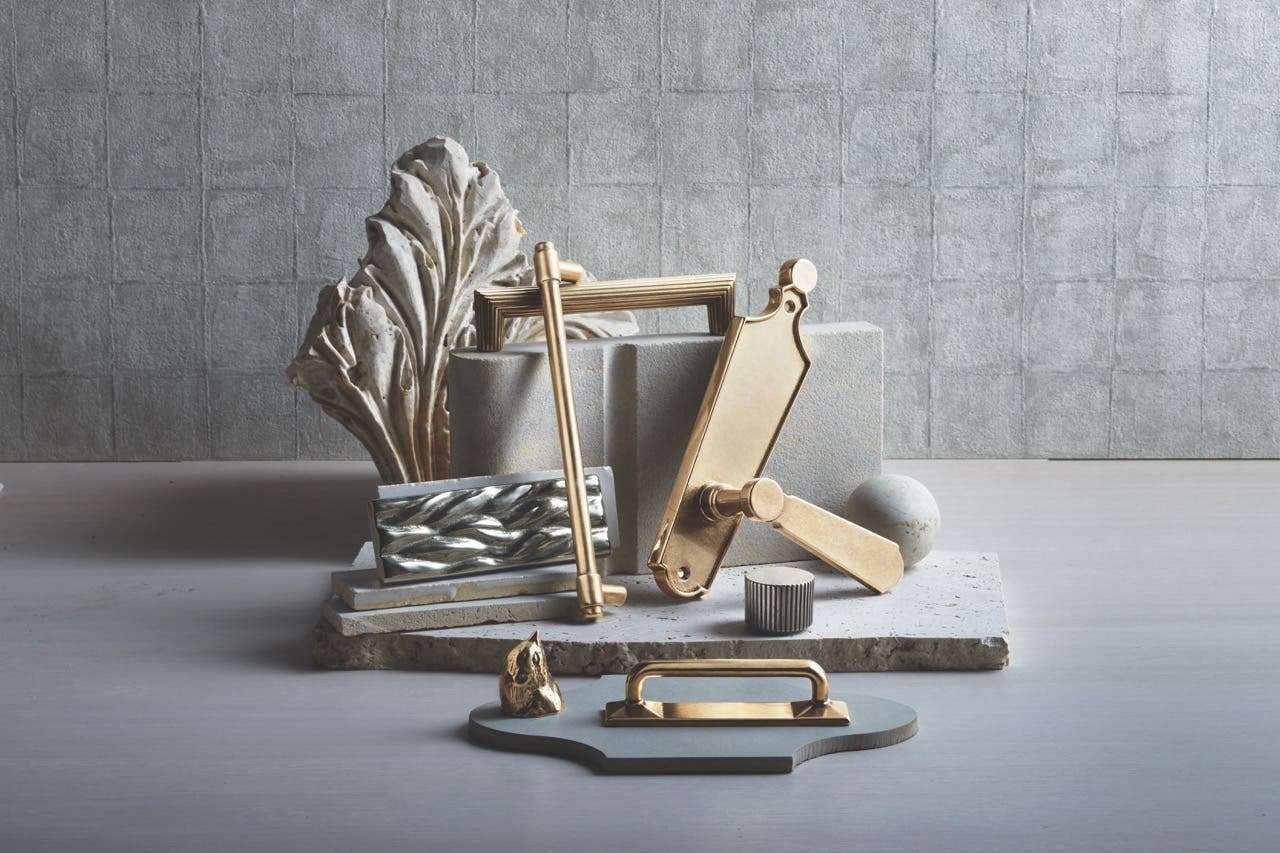
Manufacturer of handcrafted solid-bronze architectural hardware: door, window, bath, sink & cabinet hardware & kitchen accessories; 7 different finishes; traditional, contemporary & other styles.