

Peter Miller
A Word to the Wise
I press on with my “c” word series by writing about a big and important word, “change.” I’ve been thinking a lot lately about what permanent changes will take place as a result of the prolonged recession in the housing industry.
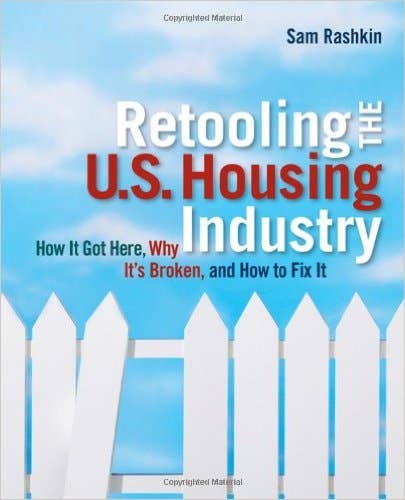
“Change” was the theme for the American Institute of Building Designers' annual convention, which I attended recently in historic Wilmington, N.C. Change was the topic of the AIBD’s keynote speaker, Sam Rashkin, chief architect at the Environmental Protection Agency (EPA) and author of a new book, “Retooling the U.S. Housing Industry: How it Got Here, Why It’s Broken and How to Fix It.”
Rashkin has managed the Energy Star Program for Homes since its inception in 1996. There are over one million Energy Star homes in the United States. Prior to joining the EPA, during his 20-year career as a licensed architect, Rashkin specialized in energy-efficient design and completed over 100 residential projects in California and New York. He serves on the development team for EPA’s Water Sense and Indoor airPlus labels.
Rashkin’s audience at the AIBD convention consisted of residential designers, some licensed, some not, who draw up the plans for much of the production housing in the American suburbs. His message was that the current housing “crisis” is a “learning moment.” We can and should design and build better houses moving forward. These houses should be “high-performance houses,” he said, better oriented to their sites and graced with quality construction, smaller footprints, and high-quality detailing and amenities.
As an industry, we need to do a better job of marketing and selling these new kinds of homes to home buyers, who for a long time have been conditioned to settle for less: badly planned developments with inefficient, shoddily built houses. Rashkin argued that for 50 years, low-cost production has been the primary driver in the housing industry; in striking contrast, he insisted, a new high-performance design ethic could keep energy costs down and offset higher construction costs.
Design Trumps Everything
In his keynote speech and in the book, Rashkin outlined five important components for “retooling” the housing industry: smarter, sustainable land development; more elegant design; high-performance design and construction; quality construction and effective home sales. In a chapter called “Design Trumps Everything,” he chides production home builders and custom builders alike for ignoring these basics.
The part of his argument to the convention that resonated most with me is how thoroughly regimented home builders are in this age of advanced manufacturing technology. There has been little attention paid to the use of local, natural materials; vernacular styles; authentic, traditional detailing and craftsmanship. Although the builders, architects and designers who read this blog are immersed in these topics, the subjects aren’t close to being on the radar of America’s corporate builders.
Another point Rashkin articulated well is how right-sized homes with generous circulation, multi-purpose rooms, good indoor-outdoor connectivity, day lighting, varied ceiling heights, contextual design and better architectural detailing are what buyers want but are not getting in spec or even semi-custom housing. It seems like the only question home buyers know to ask builders and designers is, “What is the price per square foot?” This question is analogous to asking an auto dealer, “How much per pound for that car?”
“It is time to recognize value in the [new-home] transaction process,” Rashkin said. “Retooled homes lower risk with more viable communities; [offer] superior designed homes which are more likely to stand the test of time and [provide] more affordability, improved indoor air quality, improved durability, greater disaster resistance, state-of-the art technologies and rigorous quality assurance.” However, “appraisals, mortgages and insurance practices are indifferent to these retooled improvements.”
While all this seems obvious to you and me, it was a good thing the message was directed at designers whose builder clients need to change. Congratulations to AIBD for giving Rashkin a bully pulpit! I wonder if retooled houses will be a permanent change when our industry recovers. As Steve Mickley, AIBD’s executive director put it, “We all know we can do better. After our event and the ‘Retooling’ presentation, we are better equipped to collectively and confidently move forward as ambassadors for responsible home design.”
It is encouraging to know that the EPA’s chief architect is on the same page you and I are. His book makes a good gift for your less enlightened clients and associates.

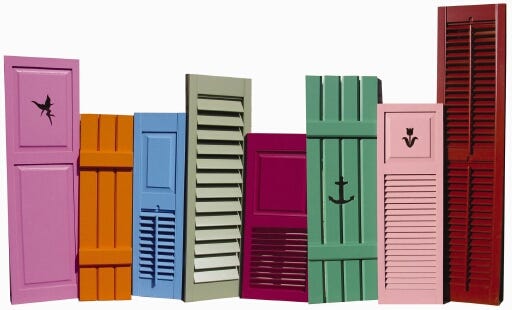
Manufacturer of authentic mortise-&-tenon wood shutters: cedar & mahogany, exterior movable & fixed louver, board & batten & raised panel; cutouts, capping, arches & more; hinges & holdbacks; interior louvers, Colonial panels & open frame; painting services; made in USA; family-owned company since 1986; ships nationwide.