


Features
What Is Neoclassical Architecture?
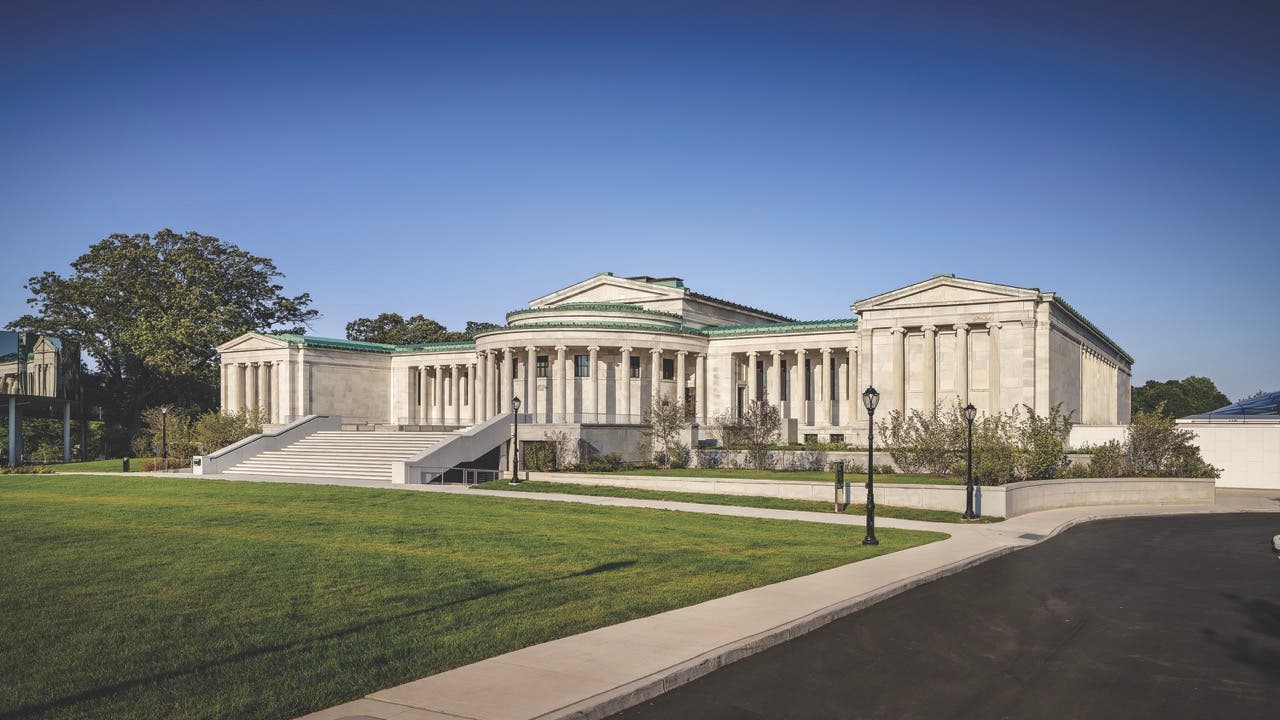
Albright-Knox Art Museum, Buffalo, NY
Neoclassical architecture refers to the revival of the classical architecture style that was hugely popular in Europe and the US in the mid-1700s and early 1800s. It emphasized the sensibilities of ancient classical Greek and Roman architecture. The style is also referred to as classical revival architecture.
Neoclassical buildings are typically large in scale, with symmetrical, balanced façades and classical design elements like columns and large triangular pediments. The style emphasizes understated grandeur, with fairly simple stone façades that reject the excess of the Baroque and Rococo styles and instead favor Romanesque columns, plain walls, and simple geometric forms.
Most major federal buildings in the US were designed in the neoclassical style—the White House, the Capitol, the Supreme Court building—as were many educational and museum buildings. The style is still used today in contemporary neoclassical buildings like residential properties and institutional buildings.
History of Neoclassical Architecture
Neoclassical architecture became popular in Europe in the mid-18th century. It was modeled after and inspired by ancient Greek and Roman forms, in part as a push back against the ornate excesses of Baroque and Rococo styles that were popular in Europe in the early 1700s.
The neoclassical style was instead influenced by the Enlightenment of the 1600s and 1700s, and its ideals of reason, order, and civic virtue. Artists and architects of the time looked toward classical Greek and Roman ruins and artwork to study their proportions and restraint. Key features of the architectural style include symmetrical façades, Greek orders, monumental scale, and plain surfaces.
Neoclassicism was born in Italy, as sites like Pompeii and Herculaneum were recovered and studied. The movement spread from Italy and France to Britain, Germany, and the rest of Europe, and later to the Americas and beyond. Prominent early proponents of the style included architects like Jacques-Germain Soufflot in France (who designed the Panthéon in Paris) and James Stuart and Nicholas Revett in Britain, whose surveys of ancient monuments in Greece and Italy were invaluable for providing accurate measurements and drawings of these ancient sites.
Neoclassicism quickly became the dominant public and institutional style for the US by the late 1700s, championed by architects like Thomas Jefferson. It was used for museums, government buildings, libraries, and monuments, emphasizing enlightened governance and restrained, elegant style. In the US, it’s historically been used for most federal architecture and memorials. By the 19th century, regional adaptations emerged—like France’s unornamented exteriors, Britain’s Regency variants, and later national styles in Latin America and beyond.
Neoclassicism stayed the dominant style in American architecture until the mid-20th century when modernism came into fashion, with its even greater emphasis on simplicity. Still, neoclassicism remains one of the most popular architectural styles in the US today, especially for federal and institutional buildings. Much public architecture today uses neoclassical touches or classical motifs.
Characteristics of Neoclassical Architecture
Neoclassical buildings are usually built on a large scale, but don’t have incredible intricacy to them like some earlier forms of architecture did. Instead, they are elegant and simple.
Symmetry & Balance
Neoclassical buildings emphasize symmetry, with windows, doors, and other features arranged in balanced patterns. This creates a sense of order, harmony, and stability.
Simple Geometric Forms
You’ll find simplicity rather than intricacy in most neoclassical buildings. They use clear geometric shapes and relatively clean, uncluttered designs. The emphasis is on proportion and structure rather than excessive decoration. Simplicity and symmetry were seen as virtues in ancient Greece and Rome.
Stone Façades
Stone façades, usually made of materials like marble, granite, or limestone, emphasize simplicity and grandness. The exterior walls are typically light in color with smooth, unadorned surfaces.
Classical Columns
You’ll often find columns, inspired by the ancient Greek and Roman architectural orders, adorning the façade of neoclassical buildings. The three most common types of columns are Doric, Ionic, and Corinthian.
Grand, Monumental Appearance
Neoclassical buildings are built on a grand scale. Features like large entrances, wide staircases, tall columns, and huge, domed roofs add to this impressive and formal look. Neoclassicism is commonly used for government buildings, museums, academic buildings, and other public structures to convey a sense of importance.
Large Triangular Pediments
Many neoclassical buildings have triangular pediments above their entrances or façades, inspired by the temples of ancient Greece and Rome and contributing to the building’s “grand” appearance.
Examples of Neoclassical Architecture
Some of the most famous buildings in the US and beyond were designed in the neoclassical style, like the White House, the Capitol, and the Pantheon in Paris. Read on for more famous examples of the architecture style.
Virginia State Capitol, Richmond, VA
Designed in 1785 by Thomas Jefferson, the Virginia State Capitol building in Richmond was based on the Maison Carrée in Nîmes, France, an ancient Roman temple. It was the US’s first public building constructed in the style of a classical Roman temple, making it one of the spearheading buildings of the US neoclassical movement.
The White House, Washington, D.C.
A stately building in the neoclassical style, the White House has an elegant exterior made of sandstone painted white, with simple ornaments like unfluted Ionic columns and uncomplicated geometric forms. It was designed by Irish architect James Hoban, inspired by Dublin’s Leinster House along with the classical works of Palladio and Vitruvius, and was first occupied in 1800.
The Pantheon, Paris
Built in the mid to late 1700s, the Pantheon in Paris was modeled after Rome’s Pantheon, with a stone dome and Corinthian columns—it’s a fairly ornate example of neoclassical architectural design. It’s been a mausoleum for notable French citizens since 1791, housing the remains of people like Victor Hugo, Jean-Jacques Rousseau, and Voltaire.
Kenwood House, London
Remodeled in the mid-1700s, Kenwood is a country house in typical neoclassical style set in London’s Hampstead Heath. The stately home has a white stucco exterior, and is today owned by the city and is a popular tourist attraction.
US Capitol, Washington, D.C.
Built in the late 18th century, the US Capitol building is a huge, grand structure in the neoclassical style. Inspired by the gravitas of ancient Roman and Greek buildings, the capitol has all three Greek order columns: Doric, Ionic, and Corinthian.
Albright-Knox Art Museum, Buffalo, NY
This museum in Buffalo’s Frederick Law Olmsted-designed Delaware Park is anchored by the neoclassical Albright Art Gallery, built in 1905 by Edward B. Green. The property recently went through an extensive restoration and refurbishment that was finished in 2023.
Museo del Prado, Madrid
One of Europe’s finest examples of neoclassical architecture, the Prado museum in Madrid, Spain was designed in 1785. It features simple Doric columns and a large relief sculpture on the façade, and it houses some of Europe’s most important works of art.

Designer & custom fabricator of ornamental metalwork: doors, windows, hardware, stairs, balustrades, registers, fences, lighting, gutters, columns, weathervanes, snow guards, cupolas, planters, fireplace tools & more; iron, bronze, aluminum & steel; restoration services.


