

News
Preservation Professionals Encourage Congress Members to Oppose Section 106 Changes
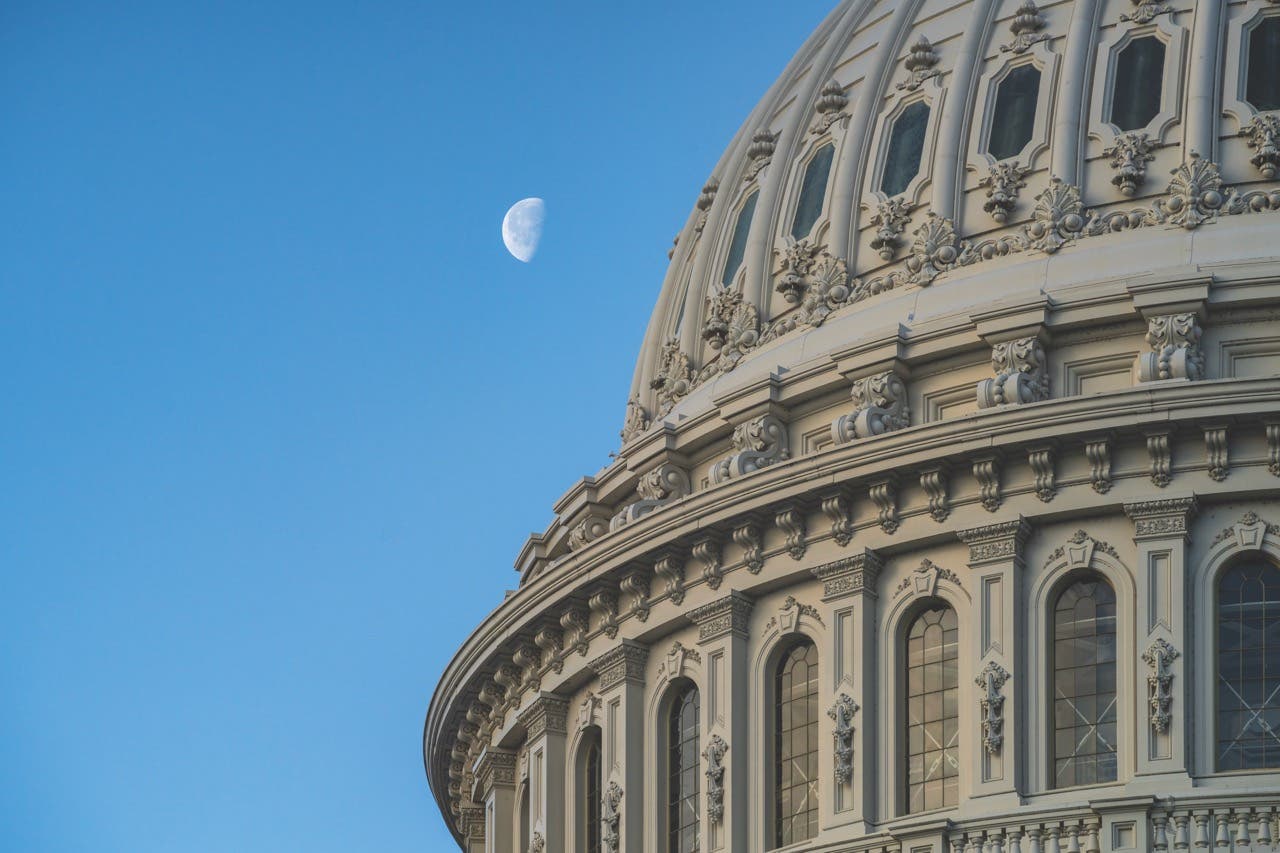
The dome of the Capitol Building.
Last month, the Advisory Council on Historic Preservation (ACHP) proposed sweeping changes to Section 106 of the National Historic Preservation Act, aiming to weaken regulations that help ensure new projects either avoid or minimize damage caused to the US's historic buildings and neighborhoods.
On September 24, the Advocacy Day of the National Trust for Historic Preservation's (NTHP) National Preservation Summit which ran from September 22-24, professionals from the NTHP, with support from the American Institute of Architects (AIA), met on Capitol Hill and delivered handouts (below) to Congress members encouraging them to oppose the proposed changes to Section 106.
"My colleague and I were able to visit the offices of four of our ten members of Congress," said James Malanaphy, AIA, a historic architect and the 2006 chair of the AIA Historic Resources Committee. "Congressional staff in each office listened to our requests and promised to share them with their members of Congress."
The NTHP and AIA have formed a coalition with other organizations like the National Park Service (NPS) and the Society of Architectural Historians. The standard regulatory organizations like the US Commission of Fine Arts and the Capitol Planning Commission have been gutted by the current administration.
The ACHP's proposed changes to Section 106 strip many significant legal protections for historic and cultural places. Among them: Federal agencies would no longer have to minimize damage done to historic architecture and landscapes, local governments would no longer have to be notified when a federal agency proposes to damage or destroy a historic place within their jurisdiction, the public would no longer have the right to comment on historic preservation issues, the federal government would no longer have to consult with Native American tribes, and significant landscapes (like the Grand Canyon) would no longer be considered historic places and protected as such.
"It took nearly 76 years [with efforts beginning in 1890] for the AIA to begin a movement that led to the creation of the National Historic Preservation Act (NHPA) as it was enacted by Congress...in 1966," said Malanaphy. The NPS began protecting the country's significant landscapes and cultural resources in the 1910s under President Theodore Roosevelt. Then, in the 1930s, under President Franklin Roosevelt, the Historic American Building Survey (HABS) began protecting historically and culturally significant buildings. In 1966, the HABS became the current ACHP, and it's been protecting the US's important properties ever since.
Therefore, said Malanaphy, "the changes being proposed by the ACHP to Section 106 of the NHPA will undermine more than 60 years worth of effort, but closer to 136 years of effort (1890-2026). And they challenge the goals and objectives and values of generations of American citizens."
Currently, Section 106 of the National Historic Preservation Act provides significant legal protections for historic and cultural places.
"Since the enactment of NHPA 60 years ago, Section 106 has been the foundational requirement for federal agencies to 'take into account' the effects of their actions on historic properties and places, enabling public participation and comment in the process, empowering state and local governments and tribal communities to have a voice in the process, and often improving the project and enhancing the outcome," reads the print-out that the NTHP handed out on Capitol Hill last week.
"For over six decades, Section 106 has provided a flexible program to allow meaningful collaboration to successful outcomes for local communities," reads a statement by the Society for American Archaeology. "The process lends significant weight to local voices before historically significant places are lost forever to federally funded developments. This draft regulation would upend all of that."
Learn more about the proposed Section 106 changes on the NTHP website or in the below handout. The NTHP encourages folks who'd like to do more to contact their governor and/or Congress members.
Currently, interested parties like nonprofit organizations, business and trade associations, and local and tribal governments can request meetings with the Office of Information and Regulatory Affairs (OIRA). The next step in the process, coming soon: the ACHP will publish a Notice of Proposed Rulemaking (NPRM) in the Federal Register, during which time it will be open for public comment.

Designer & custom fabricator of ornamental metalwork: doors, windows, hardware, stairs, balustrades, registers, fences, lighting, gutters, columns, weathervanes, snow guards, cupolas, planters, fireplace tools & more; iron, bronze, aluminum & steel; restoration services.


